Whether Bite Work Makes a Belgian Malinois Dangerous
It's a common, and completely understandable, fear when people see a powerful dog like a Belgian Malinois engaged in bite work: does this kind of training turn an already intense dog into a dangerous weapon? The image of a Malinois locking onto a sleeve or a suit can be intimidating, leading many to worry that these dogs become unstable, aggressive, or prone to attacking without provocation. This guide is here to unravel that perception, explaining what bite work truly means for a Belgian Malinois and how responsible training actually contributes to a highly controlled, rather than dangerous, canine partner.
The Misconception: Bite Work Creates Dangerous Dogs
Let's be honest, the sight of a Belgian Malinois, teeth bared, engaging a decoy in a full-body bite suit is enough to send a shiver down anyone's spine. It looks aggressive, it looks terrifying, and for those unfamiliar with the sport or working dog world, it's easy to jump to the conclusion that this training is creating a menace. Many people mistakenly believe that teaching a dog to bite makes them indiscriminate biters, ready to attack anyone at any time, or that it simply amplifies any existing aggression. This couldn't be further from the truth in the context of proper, ethical training.
Why the Fear is Understandable
The media often sensationalizes stories involving powerful breeds, and images of police or military dogs in action, while impressive, can sometimes fuel the idea that these dogs are inherently dangerous due to their training. People hear "bite work" and envision a dog that has been "trained to attack," without understanding the nuanced control, criteria, and specialized environment where this work takes place. They might worry about the dog being overstimulated, making mistakes, or simply reverting to some primal, uncontrolled instinct. It's a natural human response to perceive something powerful and seemingly aggressive as a threat, especially when it involves an animal known for its intensity. This perception is compounded if someone has encountered an untrained or poorly socialized dog of any breed that has shown aggression.
The Problem with Misinformation
This widespread misunderstanding leads to unfair breed discrimination and fear-mongering. Owners of Malinois who participate in bite sports often face scrutiny, prejudice, and even legal restrictions in certain areas. Imagine trying to explain to a nervous neighbor that your dog's bite work actually makes them more stable and controllable, not less. The misinformation paints a picture of owners actively fostering aggression, when in reality, they are honing highly specific, controlled behaviors. Without a clear understanding of the protocols, selection criteria, and immense training effort involved, the public can easily conflate a trained protection dog with a truly dangerous, unstable animal. This harms the breed's reputation and makes life harder for responsible owners.
The Reality: What Bite Sport and Protection Training Actually Entail
To truly understand why bite work, when done correctly, doesn't make a Belgian Malinois dangerous, we need to peel back the layers and look at what this training actually involves. It’s a far cry from simply "teaching a dog to bite." It's about channeling natural drives into a highly structured, rule-bound activity.
Channeling Natural Drives, Not Creating Aggression
Belgian Malinois are a breed bursting with natural drives: prey drive, defense drive, and a strong desire to work. These aren't artificial constructs; they're innate parts of their genetic makeup, historically crucial for herding and protection work. Bite work doesn't create aggression; it channels these drives into a sport or a specific working role. Think of it like this: a high-performance sports car has immense power, but it's the highly skilled driver and the carefully engineered controls that make it safe and effective on the track. The power isn't dangerous in itself; uncontrolled power is.
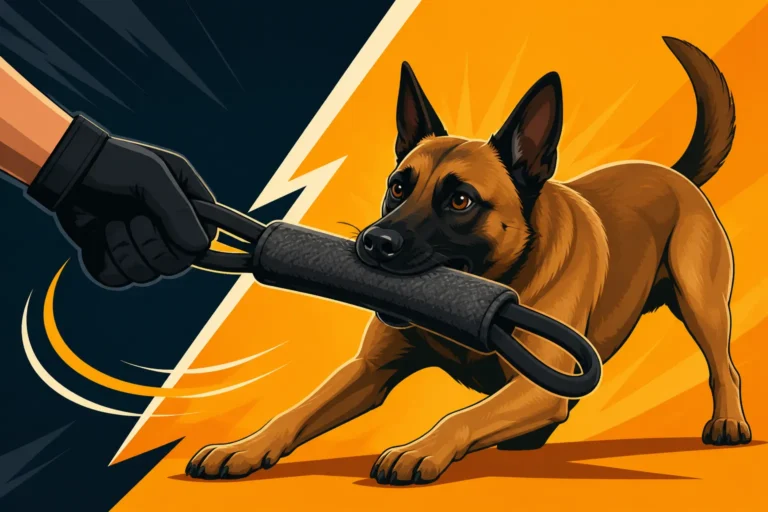
In bite work, the dog learns to engage a specific target (a bite sleeve, a suit) on command, to hold that target firmly, and perhaps most critically, to release it instantly on command, regardless of arousal. This isn't about biting a human being out of malice; it's about engaging a piece of equipment, a game with rules that the dog learns to play with intense focus. The dog learns where, when, and how to use its mouth. For a Malinois, this is an incredible outlet for their innate intensity, often leaving them more calm and settled in their everyday life because their mental and physical needs have been profoundly met.
The Rigorous Control and Structure of Bite Work
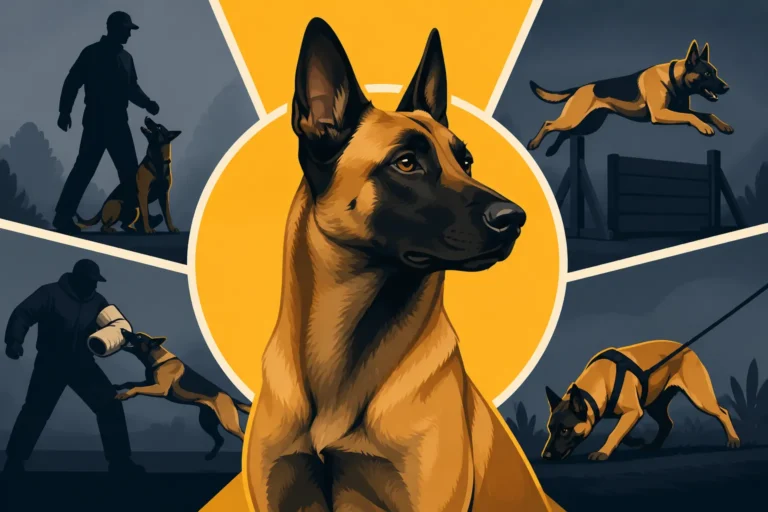
The core of any legitimate bite work program, whether it's for sport like IGP (formerly IPO/Schutzhund) or Ring Sports, or for real-world police and military applications, is absolute control. This isn't a free-for-all. Every session is meticulously structured. The dog learns:
- Target Discrimination: The dog learns to bite the equipment, not the handler, not bystanders, not other dogs. It’s a specific target, always.
- On/Off Switch: This is paramount. The dog must learn to engage with incredible intensity (the "on" switch) and then, crucially, to release and disengage completely (the "off" switch) on a single command. This "off" switch is practiced countless times and is a hallmark of a truly trained protection dog. Without it, the dog is not safe or effective.
- Handler Control: The handler is always in command. The dog does not initiate action independently. Every engage, every hold, every out, every guard is dictated by the handler. This builds a powerful bond and understanding between dog and handler. You can read more about Building an Off Switch Into a Belgian Malinois.
- Scenario-Based Training: As dogs advance, training involves increasingly complex scenarios, but always within controlled environments, reinforcing the rules and the handler's authority. This kind of work actually improves a dog's general obedience and stability because it requires such extreme focus and precision.
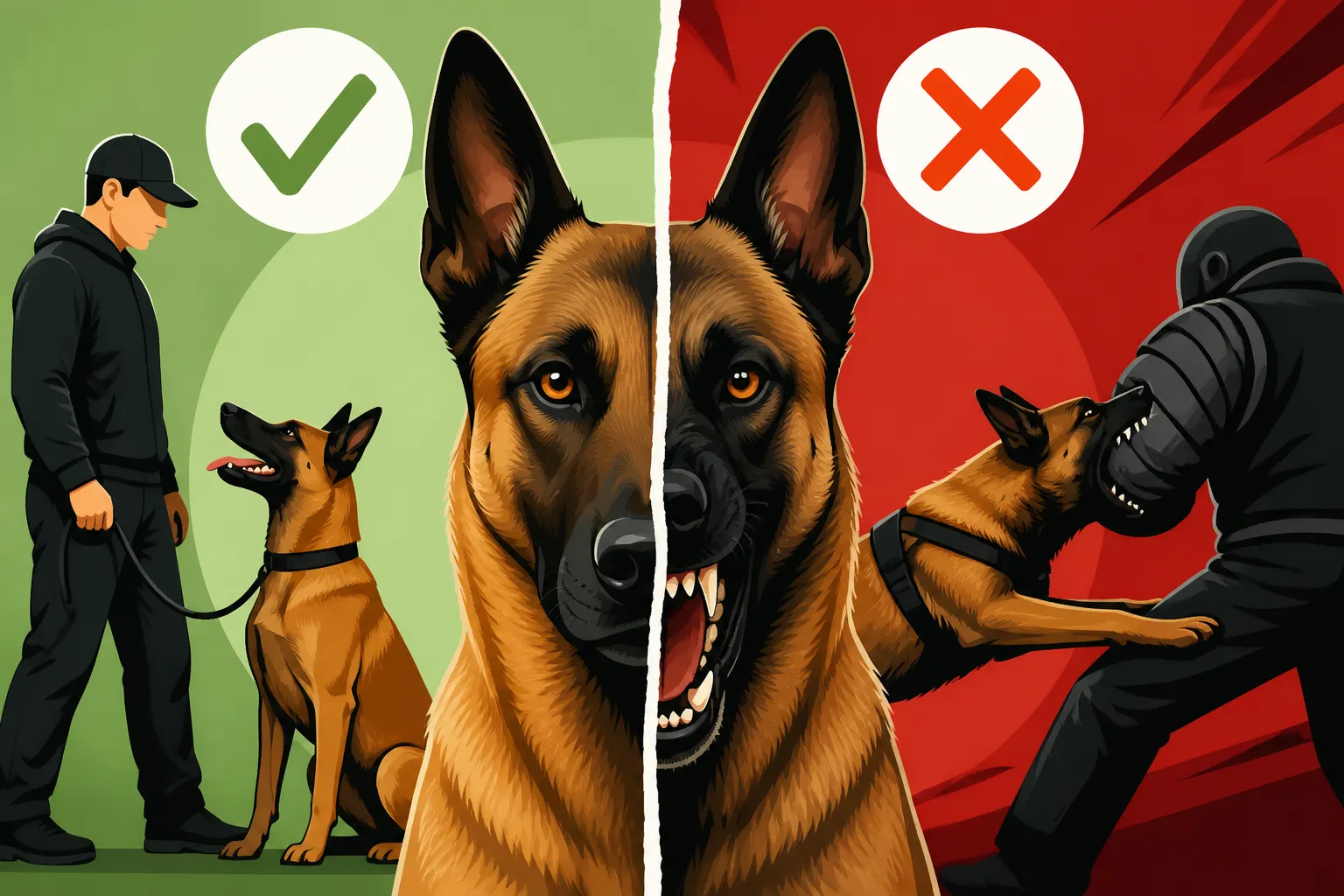
Here's a quick comparison to illustrate the difference between an untrained, potentially dangerous dog and a highly trained working Malinois:
| Feature | Untrained / Unstable Dog | Trained Working Malinois |
|---|---|---|
| Bite Motivation | Fear, insecurity, uncontrolled aggression | Drive-based, sport/work related, highly channeled |
| Bite Target | Indiscriminate, whatever is perceived as threat | Specific equipment (sleeve/suit) or trained target |
| Control | None, unpredictable, difficult to stop | Absolute, handler-directed, immediate "out" command |
| Temperament Impact | Increases anxiety, reactivity, overall instability | Builds confidence, focus, stability, mental fulfillment |
| Socialization | Often poor or non-existent, leads to fear-aggression | Excellent, necessary for public safety and composure |
| Public Safety Risk | High, due to unpredictability and lack of control | Low, due to rigorous training, control, and clear boundaries |
Why Bite Work Can Be a Positive Outlet
For a Belgian Malinois, who inherently possess immense energy and an insatiable desire to have a job, bite work provides unparalleled mental and physical stimulation. Imagine trying to tire out a Malinois with just walks – it's like trying to bail out a sinking ship with a thimble! Why Walks Alone Do Nothing for a Belgian Malinois is a topic many Malinois owners quickly discover. These dogs need a purpose.
Bite work taps into their deepest instincts in a constructive way. It gives them a challenge, a problem to solve, and an opportunity to use their physical and mental prowess. When a Malinois has a legitimate outlet for its drives, it often translates into a calmer, more manageable dog in the home environment. They've "worked" their brain and body, and the need to self-entertain (often destructively) is significantly reduced. This is why many owners say that a well-trained protection dog is often more reliable and stable than an idle, under-stimulated Malinois that hasn't found its purpose. It's a structured way to harness their power, not unleash chaos.
Beyond the Bite: The Foundation of a Stable, Capable Malinois
While bite work itself is highly controlled, it doesn't exist in a vacuum. The foundation upon which that training is built is absolutely critical. A Malinois isn't just thrown into bite work; they come from specific lines and require comprehensive training and a responsible handler.
The Importance of Genetics and Temperament
First and foremost, not every Belgian Malinois is suited for bite work. Reputable breeders select for specific temperament traits:
- Environmental Soundness: The dog must be confident and unflappable in various environments, not easily spooked by sounds, sights, or strange surfaces.
- Strong Nerves: This means the dog can handle pressure, recover quickly from startling events, and isn't prone to fear-based aggression.
- Work Ethic & Drives: A strong desire to engage, retrieve, and problem-solve is essential.
- Clear Head: The dog needs to be able to think and process information even under high arousal.
A Malinois with weak nerves, fear issues, or inherent instability would never be successful (or safe) in bite work. In fact, attempting to push such a dog into bite work would indeed be dangerous. The training reveals and hones innate qualities; it doesn't manufacture them. This is why it's so important to seek out ethical breeders who prioritize temperament and health, and to always ask about Asking a Breeder for Malinois Ataxia Results and other health clearances.
Comprehensive Obedience: The Bedrock of Control
Before a Malinois ever touches a bite sleeve, it must have a rock-solid foundation in obedience. This isn't just about sitting politely; it's about reliable recall, precise leash manners, a strong "place" command, and absolute handler focus, even amidst distractions. Obedience a Malinois Needs Before Protection Work is a critical prerequisite. This foundational work establishes the handler as the leader, builds communication, and instills the discipline necessary for advanced tasks.
Think of it: if a dog won't reliably "sit" or "stay" in a calm environment, how could it possibly be trusted to "out" a bite sleeve in a high-drive situation? Comprehensive obedience training ensures that the dog understands and respects commands, which then translates into control during bite work sessions and, more importantly, in everyday life. Many owners start with online resources like BAXTER & Bella, which offers fantastic foundational training programs that can set your Malinois puppy up for success before any specialized work begins. Establishing clear communication and trust from a young age is invaluable.
The Role of the Responsible Handler
Perhaps the single most important factor in whether a Belgian Malinois, engaged in bite work or not, becomes "dangerous" is the handler. A responsible handler understands the breed's needs, commits to ongoing training, and prioritizes safety above all else. This means:
- Continuous Education: Learning from experienced trainers and understanding canine behavior.
- Self-Awareness: Knowing their own capabilities and limitations.
- Ethical Training Methods: Using fair, consistent, and effective methods that build confidence and control, not fear.
- Environmental Management: Never putting their dog in a situation where it might be unsafe or create a risk for others.
- Commitment to Socialization: Ensuring their Malinois is well-socialized and neutral in public, not reactive or aggressive. Socializing a Belgian Malinois Puppy Safely is essential from day one.
A dog is only as good as its handler. An unstable dog with a responsible, knowledgeable handler is still a risk, but a stable dog with an irresponsible, negligent handler can quickly become a liability. The handler is the dog's guide, interpreter, and protector, and their commitment to responsible ownership is what ensures the dog remains a valuable partner, not a danger.
Responsible Ownership: Mitigating Risks and Ensuring Safety
Even with the best genetics and training, owning a Belgian Malinois—especially one involved in bite work—comes with immense responsibility. It's about constant vigilance, proactive management, and an unwavering commitment to public safety.
Proper Training Facilities and Equipment
If you're considering bite work for your Malinois, choosing the right training club and decoys is paramount. Look for facilities that:
- Prioritize Safety: Clear protocols, controlled environments, and experienced decoys who understand dog behavior.
- Focus on Control: Emphasize the "out" command and handler control above all else.
- Use Appropriate Equipment: High-quality bite sleeves, suits, and tugs that protect the decoy and provide clear targets for the dog. You'll find a wide range of essential training gear on platforms like Amazon, from heavy-duty tugs to conditioning items.
- Promote Education: Offer seminars, workshops, and mentorship for handlers. Finding a Club That Will Take a Belgian Malinois is often the first, and most crucial, step.
Avoid any "trainer" who promotes aggression, uses punitive methods, or encourages indiscriminate biting. Legitimate bite work is a sport and a discipline, not a means to make a dog vicious.
Ongoing Socialization and Exposure
A well-trained protection dog is not a dog that is aggressive towards strangers or other animals in everyday life. In fact, they must be neutral and well-behaved in public. Continual socialization and exposure to different sights, sounds, people, and appropriate dog interactions are vital. A Malinois that does bite work should be able to walk calmly through a crowded street, ignore other dogs, and be polite when introduced to new people (when appropriate and under controlled circumstances). This neutrality is a testament to their stable temperament and effective training. Without this, the dog, regardless of its bite work skills, would indeed pose a public safety concern.
Legal and Insurance Considerations
It's also crucial to be aware of the legal landscape in your area regarding specific breeds and "dangerous dog" classifications. Some areas have breed-specific legislation that can impact Malinois owners, regardless of their dog's training or temperament. While training enhances control, it doesn't always override these laws.
Additionally, homeowners' insurance policies can be a significant factor. Many insurers have breed restrictions or higher premiums for breeds like the Belgian Malinois. It is imperative to discuss your dog and its activities (if applicable) with your insurance provider to ensure you have adequate liability coverage. Homeowners Policies and the Belgian Malinois is an important topic to research thoroughly before acquiring one of these powerful dogs. This proactive approach ensures you're protected and compliant, further demonstrating responsible ownership.
In conclusion, the idea that bite work makes a Belgian Malinois dangerous is a profound misunderstanding of the sport and the breed. When conducted responsibly, with a stable dog from sound genetics, under the guidance of experienced professionals, and with a dedicated, educated handler, bite work is a highly structured activity that channels a Malinois's immense drives into a controlled, disciplined, and fulfilling endeavor. It fosters stability, confidence, and an unbreakable bond, creating not a dangerous animal, but an incredibly capable and reliable partner.
Disclaimer
This article is for general informational purposes only and does not constitute professional advice. Laws, prices and regulations vary by location and change over time. Consult a qualified professional for guidance on your specific situation.