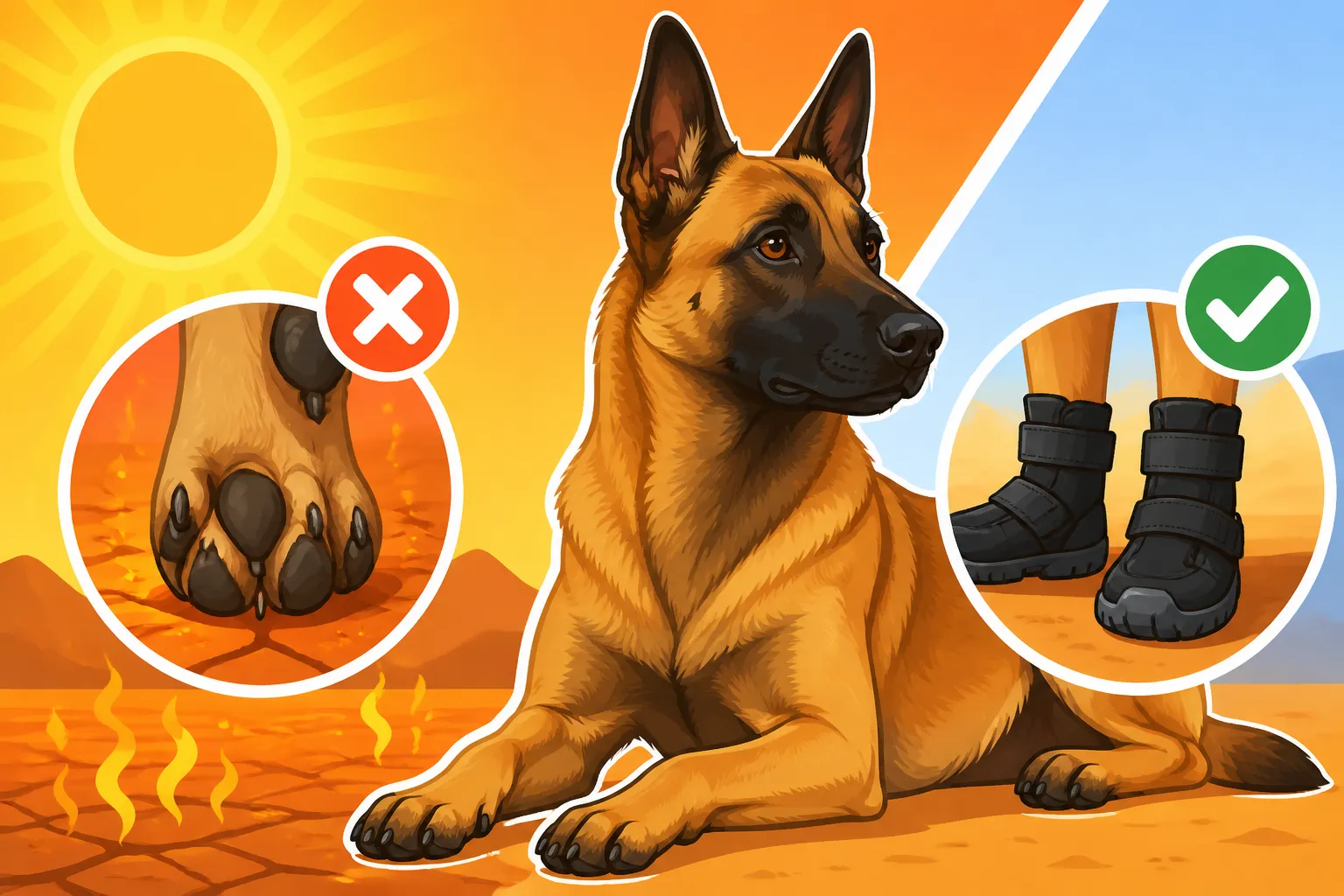
Whether a Belgian Malinois Needs Boots on Hot Ground
It’s a scorching summer day, the kind where the asphalt shimmers and you can almost feel the heat radiating up through your shoes. You’re getting ready for your daily walk or training session with your high-drive Belgian Malinois, and a familiar worry nags at you: how hot is that pavement for their sensitive paws? It's a legitimate concern for any Malinois owner, as these active dogs often push their limits, and their paw pads, while tough, aren't immune to severe burns. This guide will walk you through understanding the risks, knowing when paw protection is essential, and how to choose the right gear to keep your Malinois comfortable and safe on hot ground.
Understanding the Risk: How Hot Surfaces Affect Malinois Paws
Our Malinois are renowned for their toughness and seemingly boundless energy, often appearing impervious to discomfort. But when it comes to hot surfaces, their paw pads are far more vulnerable than many owners realize. Ignoring the temperature of the ground can lead to serious, painful injuries that can sideline your dog for weeks.
The Anatomy of a Malinois Paw Pad
Think of your Malinois's paw pads as their natural shock absorbers and traction control. They are made up of a thick layer of keratinized epithelial tissue, which is essentially tough skin, designed to withstand a good amount of pressure and friction. This specialized tissue provides grip and protects the underlying bones, ligaments, and nerves from impact and minor abrasions. They're thicker and tougher than human feet, certainly. However, this doesn't mean they're made of steel or insulated against extreme temperatures.
The surface of the pad itself has a network of blood vessels that help with heat exchange, which is why dogs sweat minimally through their paws to help regulate body temperature. But this system is designed for cooling in normal conditions, not for protection against direct, intense heat from a superheated surface. Prolonged contact with hot asphalt or concrete can overwhelm this natural defense, leading to rapid heat absorption and cellular damage. Despite their rugged appearance, those pads are still living tissue, just like the soles of our own feet, and they can burn.
The Dangers of Thermal Injury to Paws
Thermal injuries to paw pads are not just uncomfortable; they can be incredibly painful and debilitating for a Malinois. We're talking about burns ranging from mild redness (first-degree) to severe blistering and tissue loss (second and third-degree). Just a few minutes on pavement that's too hot can cause significant damage. Imagine walking barefoot on a scorching beach or asphalt parking lot in the middle of summer—that's precisely the intense, stinging pain your Malinois experiences.
When a paw pad gets burned, it's not just a matter of immediate pain. The aftermath can involve open sores, which are highly prone to infection, especially given how much dogs use their paws. Recovery often requires bandaging, restricted activity, pain medication, and frequent vet visits. This can be a nightmare for a high-energy Malinois who needs constant stimulation and exercise. A severe burn can even lead to permanent scarring or changes in the pad's texture, making it more sensitive to future damage. This is why vigilance is absolutely key to preventing these kinds of injuries.
Assessing Pavement Temperature – The Five-Second Rule
So, how do you know if the ground is too hot? You can't just guess. The air temperature doesn't tell the whole story, as pavement can absorb and retain heat far more efficiently than the air around it. A seemingly pleasant 75°F (24°C) day can result in asphalt temperatures exceeding 125°F (52°C) in direct sunlight. This is where the simple yet effective "Five-Second Rule" comes in handy.
Before you and your Malinois step out, place the back of your own hand flat on the pavement for five seconds. If you can't comfortably hold it there for the full duration, then it's too hot for your dog's paws. Seriously, use your hand – it’s a quick and accurate indicator. Don't just tap it or guess; commit to the five seconds. If it's too hot for your hand, it's definitely too hot for their paws, and you should consider alternative walking surfaces or times. Remember that different surfaces heat up differently: asphalt tends to get hotter faster than concrete, and both will be significantly warmer than grass or shaded dirt paths. Always prioritize natural, cooler surfaces when possible.
Here's a quick guide to pavement temperatures:
| Air Temperature (Fahrenheit) | Pavement Temperature (Approx. Fahrenheit) | Risk Level |
|---|---|---|
| 77°F | 125°F | High |
| 86°F | 135°F | Extreme |
| 90°F | 143°F | Danger |
| 102°F | 150°F | Critical |
Note: These are approximate temperatures and can vary based on sun exposure, surface material, and humidity. Always use the 5-second rule!
When Paw Protection Becomes a Necessity for Your Malinois
While avoiding hot surfaces is always the best primary defense, there are many situations where a Malinois, especially a working or sport dog, simply cannot avoid challenging terrain. In these instances, paw protection moves from being an option to a critical necessity.
High-Intensity Activities on Unforgiving Surfaces
For many Malinois, "just a walk" isn't enough. These dogs thrive on rigorous training, whether it's agility, IGP, mondioring, or police and military work. These activities often take place outdoors on varied surfaces that aren't always ideal. Imagine an IGP Malinois performing tracking exercises across a gravel parking lot that’s been baking in the sun all afternoon, or a detection dog working an urban area with endless stretches of hot concrete. During these high-intensity sessions, your Malinois is focused on the task, not on the discomfort in their paws. This laser focus, combined with the repeated impact and friction, makes them even more susceptible to burns and abrasions.
Boots aren't just for heat protection in these scenarios; they also shield against sharp objects, rough terrain, and general wear and tear that can lead to issues like Pad Injuries on a Belgian Malinois in Training or Torn Nails on a Malinois Working Hard Surfaces. If your Malinois is doing protection work, running detection drills, or simply engaging in vigorous exercise on anything other than soft, cool grass, boots become an essential piece of their gear kit, no different than a quality harness or bite sleeve.
Environmental Factors Increasing Risk
The local climate and specific environmental conditions play a huge role in determining when boots are a must. In regions with hot, sunny summers, the pavement can reach dangerous temperatures even on days that feel only moderately warm to us. Take the American Southwest, for example, where even a spring morning can see asphalt hitting scorching levels by noon. Contrast this with an early morning walk in a cooler, coastal climate, and the difference is stark.
Time of day is also a critical factor. Midday sun, roughly from 10 AM to 4 PM, is when UV radiation and surface temperatures are at their peak. Trying to get work in during these hours without protection is inviting trouble. The sun beats down, heating the ground rapidly. Even if the air feels okay, that asphalt is absorbing and radiating heat, creating a furnace for delicate paw pads. It's not just about direct sunlight, either; pavement can retain heat for hours after the sun goes down, so even an evening walk might be risky in some climates. Keeping a Belgian Malinois Out of Midday Sun isn't just about preventing heatstroke; it's also about protecting their feet. Humidity can also indirectly impact paw health by making overall heat stress worse, further emphasizing the need for comprehensive protection, especially when considering Heat Stroke in a Belgian Malinois in a Patrol Car.
Sensitive Paws or Recovering from Injury
Some Malinois are simply more predisposed to paw issues than others. They might have naturally thinner or more sensitive paw pads, or perhaps they've had a previous injury that makes them more vulnerable. A Malinois recovering from a cut, blister, or even just general soreness will find hot surfaces excruciating and detrimental to their healing process. In these cases, boots provide a protective barrier, allowing the paw to recover without constant irritation or re-injury.
Moreover, if your Malinois has any underlying skin conditions or allergies that affect their feet, hot surfaces can exacerbate these problems, leading to inflammation, itching, and potential secondary infections. Boots can act as a shield against environmental irritants as well as heat. Even if your Malinois doesn't typically need boots, having a pair on hand for unexpected injuries or particularly harsh conditions is a smart move for any responsible owner. After all, a healthy, sound dog means a happy and capable working partner.
Choosing and Using Boots for Your Belgian Malinois
Deciding that your Malinois needs boots is only the first step. The market is flooded with options, and picking the right ones, then getting your high-drive dog to actually wear them, can be a challenge. But with the right approach, it’s entirely achievable.
What to Look for in Malinois Boots
When it comes to outfitting your Malinois, quality and fit are paramount. A cheap, ill-fitting boot is worse than no boot at all, as it can cause rubbing, blisters, and frustration for both you and your dog. Here's what to prioritize:
- Material and Durability: Look for boots made from robust, flexible, and breathable materials. Many reputable brands use combinations of Cordura fabric, synthetic leather, and sturdy rubber soles. The sole should be thick enough to provide insulation from heat and protection from sharp objects, but flexible enough to allow for natural paw movement. Remember, a Malinois will put any gear through its paces, so "heavy-duty" is the name of the game. Check product reviews on sites like Amazon or Chewy to see what other active dog owners recommend for durability.
- Traction: The sole should offer excellent grip on various surfaces. A good tread pattern will prevent slipping on smooth pavements or loose gravel, which is especially important for agile Malinois involved in sport.
- Secure Fastening System: Malinois are masters of shedding unwanted gear. You need boots that will stay on. Look for multiple adjustable straps, usually Velcro or buckle systems, that cinch snugly around the ankle and higher up the leg. Some boots even have a gaiter extension to prevent debris from getting in and to provide extra security. Avoid boots that rely on simple elastic or loose ties.
- Fit: This is crucial. Boots should be snug but not tight. Too loose, and they'll twist, fall off, or rub. Too tight, and they'll restrict circulation and cause discomfort. You'll need to measure your dog's paw width and length carefully according to the manufacturer's guidelines. Don't guess. Many brands, like Ruffwear or Muttluks, provide detailed sizing charts. Keep in mind that front and back paws can differ in size, so you might need two different sizes.
| Feature | Description | Why it Matters for a Malinois |
|---|---|---|
| Durable Sole | Thick, rubberized, heat-resistant material | Protects from extreme heat and sharp objects on varied terrain. |
| Breathable Fabric | Allows air circulation to prevent overheating and moisture buildup inside the boot | Essential for active dogs to reduce paw sweating and skin irritation. |
| Secure Straps | Multiple adjustable Velcro or buckle closures | Prevents the boot from slipping, twisting, or being kicked off during high-drive activities. |
| Good Traction | Treaded sole pattern | Ensures stability and grip on hot, slick, or uneven surfaces, crucial for agility and sport. |
| Proper Fit | Snug around the paw and ankle, allowing natural movement | Avoids rubbing, chafing, and discomfort, and ensures the boot stays on without impeding gait. |
Conditioning Your Malinois to Wear Boots
A Malinois suddenly presented with strange contraptions on their feet might react with anything from confused high-stepping to outright rebellion. This isn't something you can just spring on them five minutes before a training session. Conditioning is key, and it requires patience and positive reinforcement, much like Muzzle Conditioning Before a Malinois Ever Needs One.
Start indoors, in a low-distraction environment.
- Introduce the Boot: Let your Malinois sniff the boots. Reward curiosity with treats.
- One Boot at a Time: Gently put one boot on a front paw. Immediately offer high-value treats and praise. Leave it on for only a few seconds, then remove it. Repeat a few times, then try another paw. The goal is to make it a positive, brief experience.
- Gradual Increase: Once they tolerate one boot, try two, then three, then all four. Keep sessions short (1-2 minutes) and positive. Walk them around the house, encouraging them with treats. Don't laugh at their funny gait – they're figuring it out!
- Practice Short Walks: Once they're comfortable indoors, try short walks outside on a cool, familiar surface. Increase the duration gradually. Consistency is vital; make it part of your routine.
- Timing is Everything: Introduce boots when your Malinois is calm and receptive, not when they're already amped up for a walk or training. Associate boots with positive experiences, like a favorite toy or a special treat, rather than just forcing them on.
Alternatives to Boots and Best Practices
While boots are the most effective solution for direct paw protection on hot surfaces, they aren't the only tool in your arsenal. Sometimes, boots might not be practical for a very short errand, or you might be in a situation where you don't have them on hand.
- Adjust Your Schedule: The simplest and often most effective strategy is to avoid the hottest parts of the day. Schedule walks, training sessions, and outdoor activities for early mornings or late evenings when surface temperatures are significantly lower. This not only protects paws but also helps prevent overall heat stress, a serious concern for Malinois, as discussed in The Temperature a Belgian Malinois Should Not Train In.
- Seek Cooler Surfaces: Stick to grass, shaded trails, or indoor facilities whenever possible. Even a strip of grass along a hot sidewalk can offer a brief reprieve for your dog's paws. Always try to choose routes that maximize shaded areas.
- Paw Balms (Limited Use): While paw balms can help moisturize and toughen pads over time, they offer minimal to no protection against scorching hot pavement. Think of them like lip balm for your dog's paws – great for conditioning, but not sunscreen or a heat shield. Don't rely on them for thermal protection.
- Regular Paw Checks: Make it a habit to inspect your Malinois's paws regularly, especially after any outdoor activity. Look for redness, blisters, peeling, cuts, or any signs of tenderness. Early detection of minor irritation can prevent it from escalating into a serious burn. This also ties into overall foot health, including ensuring proper nail length.
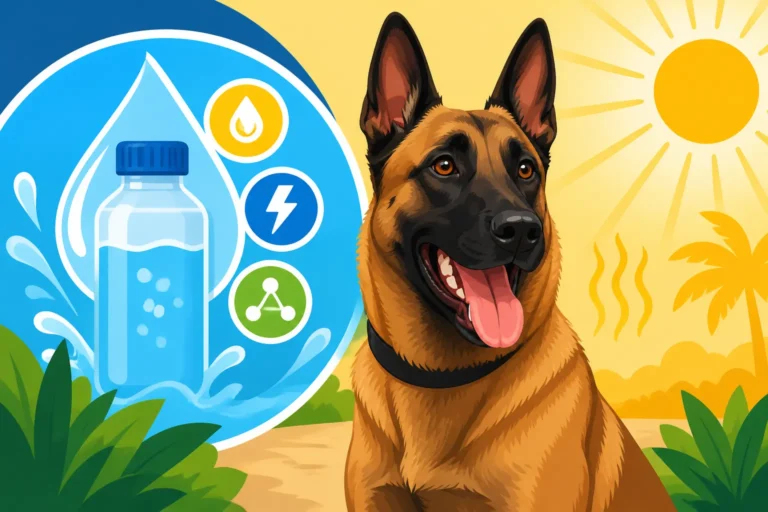
- Provide Ample Hydration: While not directly related to paw heat, keeping your Malinois well-hydrated is crucial when working or exercising in warm weather. Hydrating a Belgian Malinois During Training helps them regulate their body temperature more effectively overall, which can indirectly contribute to their comfort.
The Verdict: Are Boots Essential for Your Malinois?
After exploring the risks and solutions, the question remains: does your Belgian Malinois need boots on hot ground? The answer, like many things with this complex breed, is nuanced, but it leans heavily towards preparedness.
It Depends on Your Environment and Activities
For some Malinois owners, boots might be an absolute daily necessity. If you live in a climate with long, hot summers, especially if your activities involve urban environments, pavement, or prolonged outdoor training sessions during warmer daylight hours, then yes, boots are likely essential. Think of a police K9 working a patrol route in Arizona in July, or a sport dog training on an outdoor field in Florida. In these scenarios, boots aren't optional; they're a vital piece of protective equipment.
However, if you live in a cooler climate, routinely walk on shaded trails, or only exercise your Malinois during the coolest parts of the day on natural surfaces, you might not need boots every single day. But even then, unexpected heat waves, travel to warmer locations, or specific training scenarios could arise where having a well-fitting pair on hand would be invaluable. The key is to be adaptable and observant. Always perform the five-second pavement test, and if there's any doubt, err on the side of caution.
Prioritizing Your Malinois's Comfort and Safety
Ultimately, the decision to use boots boils down to prioritizing the comfort, health, and safety of your incredible canine partner. Belgian Malinois are dogs that give their all, whether they are working, training, or simply playing in the yard. They rely on us, their handlers and owners, to make responsible choices that protect them from harm.
Preventing paw burns is not just about avoiding immediate pain; it's about safeguarding their mobility, their ability to work, and their overall quality of life. A dog with sore, burned paws cannot perform, cannot train, and cannot enjoy their energetic lifestyle. Investing in quality boots and taking the time to properly condition your Malinois to wear them is a small price to pay for preventing serious injury and ensuring they can continue to thrive in whatever demanding environment they find themselves in. Be proactive, be observant, and always put your Malinois's well-being first.
Disclaimer
This article is for general informational purposes only and does not constitute professional advice. Laws, prices and regulations vary by location and change over time. Consult a qualified professional for guidance on your specific situation.