The Temperature a Belgian Malinois Should Not Train In
As a Belgian Malinois owner, you know the boundless energy and intense drive these dogs possess. It's tempting to want to work them hard every day, pushing their limits in pursuit of perfection or simply to tire them out. But there's a real danger in training your Malinois in unsuitable temperatures, risking not just their performance but their very health. This guide is here to walk you through the critical temperature considerations, helping you understand when to train, when to modify, and when to call it a day to keep your high-drive companion safe and sound.
Understanding the Malinois and Heat Stress
Belgian Malinois are incredible athletes, built for endurance and speed, but their physical prowess also makes them susceptible to environmental extremes, especially heat. We often see owners, myself included, caught up in the enthusiasm of a training session, only to realize too late that the ambient temperature has crept into dangerous territory. It's a common, heartbreaking mistake, and understanding why it happens is the first step to preventing it.
Why Malinois Are Prone to Overheating
You might look at your Malinois's short, sleek coat and think they'd be fine in the heat, but that's a misconception many owners hold. While they don't have the dense, insulating double coat of a Husky, for instance, their physiology and intense drive work against them in warm weather. First, these dogs generate a tremendous amount of internal heat during exercise. They are constantly moving, constantly thinking, and constantly using their powerful muscles. This metabolic activity, combined with their dense muscle mass, means their core temperature rises rapidly during work.
Secondly, dogs cool themselves primarily through panting, which isn't as efficient as human sweating, especially in humid conditions. When the air is already saturated with moisture, the evaporative cooling effect of panting is significantly reduced, making it much harder for your Malinois to dissipate that internal heat. Think about working out yourself on a muggy summer day – you sweat buckets, but it just doesn't evaporate, leaving you feeling sticky and overheated. It's similar for our dogs, but with higher stakes. High-drive dogs, particularly those in detection or protection work, often don't self-regulate well; they'll push themselves past the point of safety if you let them. They live to work, which makes it your responsibility to be their thermometer and their limiter. This is a crucial aspect of reading a Belgian Malinois's condition by hand when assessing their readiness for work.
Recognizing the Early Signs of Heat Stress
Spotting the subtle cues of heat stress early on can be the difference between a minor break and an emergency trip to the vet. This isn't just about common sense; it's about being acutely attuned to your dog's specific body language and knowing their baseline. The first sign is often excessive panting – not just the heavy breathing after a good sprint, but a deep, labored pant where their abdomen is visibly heaving. Their tongue might also look wider, longer, and a darker red or purple, rather than its usual healthy pink.
Another key indicator is a change in their demeanor. A Malinois who is usually eager and engaged might start to lag, seem less interested in the toy or task, or even appear disoriented. They might stumble slightly, or their movements could become less precise. Some dogs will seek shade or water instinctively, while others, particularly those in high-drive training, will fight against that instinct, trying to continue working because they are so focused on the task. Keep a close eye on their gums; they might become sticky or dry, and their capillary refill time (how long it takes for color to return after you press on them) can be prolonged. If you ever see thick, ropy saliva, that's a red flag indicating severe dehydration and heat stress. Knowing these signs intimately is part of Reading Heat Stress on a Malinois Mid Session.
The Dangers of Pushing Too Hard
The consequences of pushing a Malinois too hard in high temperatures are severe and can be life-threatening. The progression from mild heat stress to heatstroke can be frighteningly quick. Once a dog's core body temperature rises above a certain threshold (typically around 104-105°F or 40-40.5°C), their internal organs begin to suffer damage. This can lead to kidney failure, liver damage, brain swelling, and disseminated intravascular coagulation (DIC), a severe bleeding disorder.
Long-term, even if they survive an acute heatstroke episode, there can be lasting neurological damage or a predisposition to future heat-related incidents. Beyond the immediate health crisis, pushing your Malinois to this extreme can also cause psychological setbacks. A dog who has experienced severe heat stress might develop an aversion to training in certain conditions, or even associate discomfort with the work itself, undermining all the hard training you've put in. It's never worth the risk. Prioritizing your dog's well-being means knowing when to back off, even if it means missing a training session.
Ideal vs. Risky Training Temperatures
So, what are the actual numbers? It’s not just a feeling; there are general guidelines to follow, but it's important to remember these are just guidelines. Every dog is an individual, and factors like humidity, direct sun exposure, wind, and even your dog's individual fitness level play a huge role.
The "Goldilocks Zone" for Malinois Training
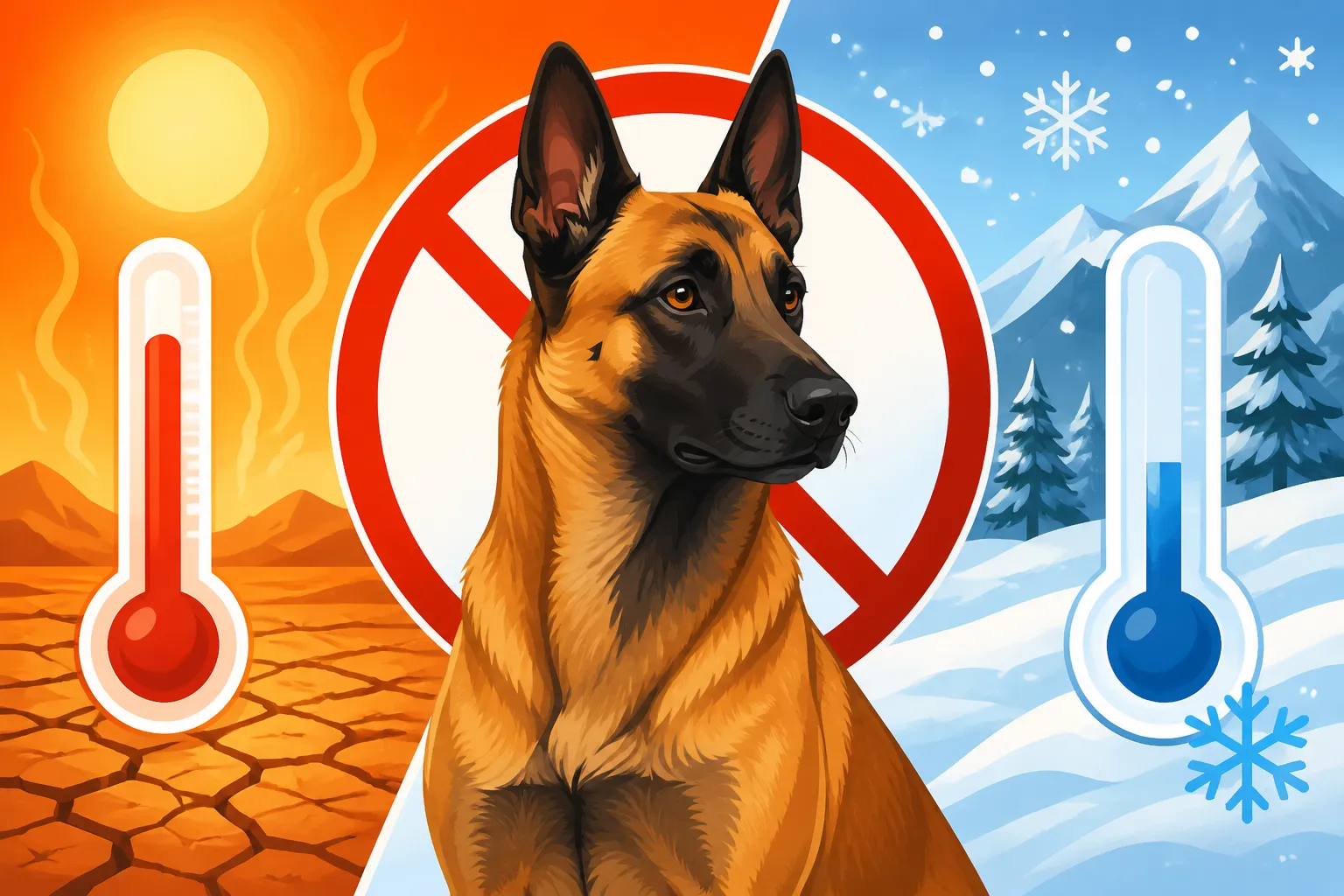
For most Belgian Malinois, the "Goldilocks Zone" for intense training, where they can work effectively and safely, is generally between 30°F (-1°C) and 65°F (18°C). In this range, with proper warm-up and cool-down, they can typically perform at their peak without excessive risk of overheating or severe cold exposure. These are the days where you can really push conditioning, practice complex bite work, or engage in high-speed agility drills.
Within this ideal range, you still need to be mindful. For instance, a Malinois doing intense bite work at 60°F (15°C) might still need more breaks and water than one doing light tracking at 40°F (4°C). Always factor in the intensity and duration of the activity. Early morning or late evening sessions are always preferable during warmer months, even if the ambient temperature is within a tolerable range, because the sun angle and ground temperature will be lower. This is also when you'd consider specific performance formulas when Feeding a Malinois That Is Never Not in Drive.
When to Modify Training Routines
Once temperatures start to climb above 65°F (18°C) or drop below 30°F (-1°C), it's time to seriously consider modifying your training routine.
| Temperature Range | Training Modification Strategy |
|---|---|
| 65-75°F (18-24°C) | Caution Zone: Shorten sessions, increase water breaks, focus on lower-intensity work (e.g., shorter drills, scent work in shade), train in early morning/late evening, use cooling vests. Monitor closely for panting/fatigue. |
| 75-85°F (24-29°C) | High Risk/Short Window: Limit to very brief, low-impact mental work (e.g., puzzle toys), or no outdoor physical training. Focus on indoor, air-conditioned sessions. Provide constant access to cool water. Watch for any signs of discomfort. |
| 85°F+ (29°C+) | Extremely Dangerous: NO outdoor training. Period. Focus on mental enrichment indoors. |
| 30-15°F (-1 to -9°C) | Caution Zone: Shorten outdoor sessions, ensure continuous movement, consider protective gear (e.g., booties for icy surfaces), bring warm water. Be mindful of exposed paw pads. |
| 15°F- (below -9°C) | High Risk: Limit to very short outdoor potty breaks. No sustained training. Risk of frostbite and hypothermia. |
When you're in that 65-75°F (18-24°C) range, think about what you can do, not what you want to do. Maybe instead of a full protection session, you work on a few intense grip exercises, followed by a long cool-down and plenty of water. Or perhaps you shift to indoor obedience or precision work in an air-conditioned space. For days when it's just too warm for intense physical activity, focus on mental enrichment. Keeping an Old Belgian Malinois Mentally Busy applies to all Malinois when physical exertion is limited.
When to Absolutely Halt Training
There are hard limits, and as responsible Malinois owners, we need to respect them without question. When the ambient temperature hits 75-80°F (24-27°C), especially with any significant humidity, all strenuous outdoor physical training should cease. Above 80°F (27°C), it becomes actively dangerous, and frankly, negligent, to ask a Malinois to perform any rigorous physical task outdoors. The risk of heatstroke, even for a few minutes of work, is simply too high. This is particularly true if your Malinois has a darker coat, which absorbs more sunlight.
Similarly, in extreme cold, generally below 15°F (-9°C), outdoor training should be severely limited or stopped entirely. While Malinois are generally robust, extreme cold can lead to hypothermia, frostbite on paw pads and ears, and muscle strains as their bodies struggle to stay warm. Remember, the wind chill factor makes it feel much colder than the thermometer reads. If you're uncomfortable standing outside for more than a few minutes, your Malinois likely is too, even with their natural fur coat. Their focus and drive might mask their discomfort, but the physical effects are still occurring.
Practical Strategies for Training in Warmer Weather
It's not always possible to avoid warmer days, especially for those of us living in hotter climates or during summer months. However, smart planning and proactive measures can allow for some modified training, or at least keep your Malinois comfortable and safe.
Hydration and Cooling Techniques
Water, water, water – it's your Malinois's best friend in warmer weather. Always have fresh, cool water readily available, not just before and after, but during training sessions. Offer frequent, small drinks rather than letting them gulp down a huge amount at once, which can sometimes lead to stomach upset. You can also add ice cubes to their water or use a portable water bottle with a wide bowl attachment for easy access. Electrolyte supplements can be beneficial for highly active dogs working in the heat, helping to replace vital minerals lost through panting. Products found on sites like Chewy or Amazon often offer these.
Beyond drinking, active cooling is essential. Cooling vests, bandanas, or mats can help bring down core body temperature. Look for ones that use evaporative cooling. A quick rinse with cool (not icy!) water on their belly, armpits, and groin area can also be highly effective. Never use ice-cold water directly on a severely overheated dog, as it can cause peripheral vasoconstriction, trapping heat in the core and potentially leading to shock. Instead, a gentle stream of cool water is better. For dogs prone to conditions like Pannus, which can be exacerbated by sunlight, Keeping a Belgian Malinois Out of Midday Sun is a non-negotiable rule.
Adjusting Training Intensity and Duration
When the mercury rises, it's time to scale back. If you're used to 45-minute high-intensity sessions, cut them down to 15-20 minutes, focusing on short bursts of work with longer cool-down periods. Shift from high-impact activities like jump work or full-field retrieves to precision obedience drills in the shade, scent detection, or even calm, focused leash work on cooler surfaces.
Instead of pushing for maximum reps, aim for quality over quantity. Break down complex tasks into smaller, manageable steps. This allows your Malinois to use their brain without over-taxing their body. Remember, mental stimulation can be just as tiring as physical exercise for these intelligent dogs. Indoor training, even if it's just practicing duration in a "place" command or working on shaping a new trick, can be incredibly valuable on hot days. Embrace flexibility in your training schedule; if the forecast calls for a heatwave, plan a lighter week or shift your most strenuous work to the coolest parts of the day.
Utilizing Gear and Resources
Modern dog gear offers many solutions for managing training in challenging temperatures. Cooling vests, as mentioned, are a game-changer for many working dogs. Paw protection like dog booties can shield sensitive pads from scorching asphalt in summer or icy surfaces in winter. For long car rides to training venues, especially if you're traveling with your Malinois in a crate, vehicle heat alarms are absolutely vital. These devices monitor the temperature in your vehicle and can alert you if it gets too hot, preventing catastrophic consequences. Many police and military handlers rely on these for their K9 partners.
Portable shade structures, like pop-up canopies, are a must-have for outdoor training sessions, creating a cool refuge for your dog between reps. Even something as simple as a spray bottle filled with cool water for misting your dog between exercises can make a difference. Consider specialized nutrition too; while no food prevents heatstroke, some performance kibbles are formulated to support active dogs and their recovery, and fresh food options from brands like Ollie might be easier on their system in hot weather, as long as it's kept cool. Hydrating a Belgian Malinois During Training means having all these resources at the ready.
Cold Weather Considerations for Your Malinois
While our primary concern with Malinois is often heat, don't overlook the challenges that cold weather can present, especially if you're training in regions with harsh winters. A Malinois isn't a fluffy northern breed, and they require thoughtful care when temperatures plummet.
Malinois Cold Tolerance
Despite their short coats, Malinois generally have a decent tolerance for cold temperatures, especially if they are actively working. Their high metabolism and constant movement generate a lot of body heat. However, this tolerance has its limits. A working Malinois moving continuously will be much more resilient than one standing still, waiting for its turn, or crated in an unheated vehicle. The key factor is usually their activity level.
Their short, dense double coat provides some insulation, but it's not designed for prolonged exposure to extreme cold or icy conditions without movement. Young puppies and older Malinois are particularly vulnerable, as their thermoregulation systems aren't as efficient. Furthermore, the ground itself can be a major source of heat loss. Standing or lying on frozen ground or snow for extended periods can quickly draw warmth from their bodies, leading to chilling. Remember, while they are tough dogs, they are still susceptible to the elements. For more on what keeps them safe in cooler climates, consider Cold Tolerance in a Short Coated Belgian Malinois.
Preventing Cold-Related Issues
To prevent cold-related problems, keep outdoor training sessions shorter in winter. Focus on continuous movement rather than static drills. A thorough warm-up is even more critical in cold weather to prevent muscle strains and injuries. Consider protective gear like paw booties, especially if you're working on abrasive, icy, or salted surfaces. These not only provide warmth but also protect against chemical irritants.
For dogs that might be waiting their turn or riding in a vehicle between sessions, consider blankets or insulated crate covers to help them maintain body heat. A thick, elevated bed or mat can also insulate them from the cold ground. Always dry your Malinois thoroughly after any wet activities (like playing in snow or training near water), as wet fur loses its insulating properties rapidly, making them much more prone to hypothermia. Even their water needs attention; Keeping a Belgian Malinois's Water Cold in a Kennel might be a concern in summer, but ensuring water doesn't freeze in winter is equally important.
Training Adjustments for Winter
Winter training often means adapting your approach. Instead of long, drawn-out sessions, plan for multiple shorter, high-intensity bursts. Focus on activities that keep your Malinois moving, such as fast retrieves, active obedience drills, or tracking work. If possible, utilize indoor arenas or heated facilities for more extensive training sessions during the coldest months.
When training outdoors, choose locations that offer some natural shelter from the wind, which can significantly amplify the cold. Be mindful of ice and snow, as these can pose a risk for slips, falls, and injuries to joints or muscles. A Malinois performing agility on slick surfaces, for example, is at a much higher risk of injury. Keep an eye on your dog's energy levels and body language – shivering, hunching, or lifting paws are all signs they are getting too cold. Just as you need to be aware of heat stress, knowing Reading a Belgian Malinois Hip Result and Elbow Problems in a Jumping Belgian Malinois becomes even more critical when training in conditions that might exacerbate joint issues. Always prioritize their comfort and safety over hitting specific training goals in adverse weather.
Disclaimer
This article is for general informational purposes only and does not constitute professional advice. Laws, prices and regulations vary by location and change over time. Consult a qualified professional for guidance on your specific situation.