The Scissors Bite a Malinois Judge Checks For
It can feel overwhelming to navigate the intricate world of breed standards, especially when you're deeply invested in a breed as remarkable as the Belgian Malinois. Understanding specific physical traits, like the precise formation of their bite, isn't just for show enthusiasts; it provides critical insight into their health, function, and adherence to the historical blueprint that makes a Malinois truly a Malinois. This guide will meticulously break down the "scissors bite" in a Belgian Malinois, explaining what judges look for, why it matters, and how you as an owner can understand and monitor your dog's dental conformation.
Understanding the Belgian Malinois Breed Standard: Why Every Detail Matters
When we talk about a breed standard, it's easy to dismiss it as something only relevant to the conformation show ring, a dry list of physical attributes that seem abstract to the average owner. But for a breed like the Belgian Malinois, whose very essence is rooted in purpose and function, the breed standard is much more than that. It's a living document, a blueprint that outlines the ideal physical and temperamental traits necessary for the dog to perform its historical work – herding, and later, protection and detection. Every single line, from the height and weight to the texture of the coat, and yes, even the bite, is there for a reason, reflecting centuries of selective breeding aimed at creating an efficient, durable, and capable working dog.
The Importance of the Breed Standard Beyond the Show Ring
Think about it this way: a Malinois isn't just a pet; it's a finely tuned athlete, a canine marvel built for intensity, agility, and resilience. The breed standard, therefore, describes the physical structure that best supports this high-octane lifestyle. A proper bite, for example, isn't just about aesthetics; it's about the dog's ability to grasp, hold, and manipulate objects effectively, whether that's a bite sleeve in sport, a toy, or even food. An incorrect bite can lead to dental issues, difficulty eating, and even compromise their ability to perform certain tasks required of them. It's about soundness, health, and longevity. Even if your Malinois is strictly a companion dog, understanding these standards helps you appreciate the incredible genetics at play and empowers you to make informed decisions about their care. A responsible breeder will always strive to produce dogs that meet the standard, not just for ribbons, but for the health and functional integrity of the breed.
What Judges Look For: A Holistic View of Conformation
Judges in the conformation ring are tasked with evaluating how closely a dog conforms to its breed standard. They're looking for balance, proportion, and overall soundness, ensuring that each part fits together harmoniously to create the ideal specimen. This isn't just about individual features; it's about how those features contribute to the dog's ability to move, work, and thrive. For the Belgian Malinois, this means examining everything from its powerful, athletic build to its intelligent, alert expression. The head, for instance, is a critical area. Judges will assess the skull, muzzle, eyes, and, of course, the teeth and bite. They want to see a strong, clean head that is in proportion to the rest of the body, indicating good bone structure and proper development. A correct bite is one crucial piece of this puzzle, as it speaks to the genetic health and functional capability of the dog's oral structure. You can delve deeper into what judges appreciate by reading The Head a Belgian Malinois Judge Wants.
Deconstructing the "Scissors Bite" in a Belgian Malinois
When you hear "scissors bite" in relation to a dog, it refers to a very specific and highly desired alignment of the teeth. It's considered the strongest and most efficient bite for canines, allowing for maximum gripping power and tearing ability. For a working breed like the Belgian Malinois, whose ancestors were often engaged in herding and protection, this bite is paramount for their effectiveness and overall dental health. It's not just about looks; it's about the precision engineering of nature.
Visualizing the Ideal Malinois Bite: Upper and Lower Incisors
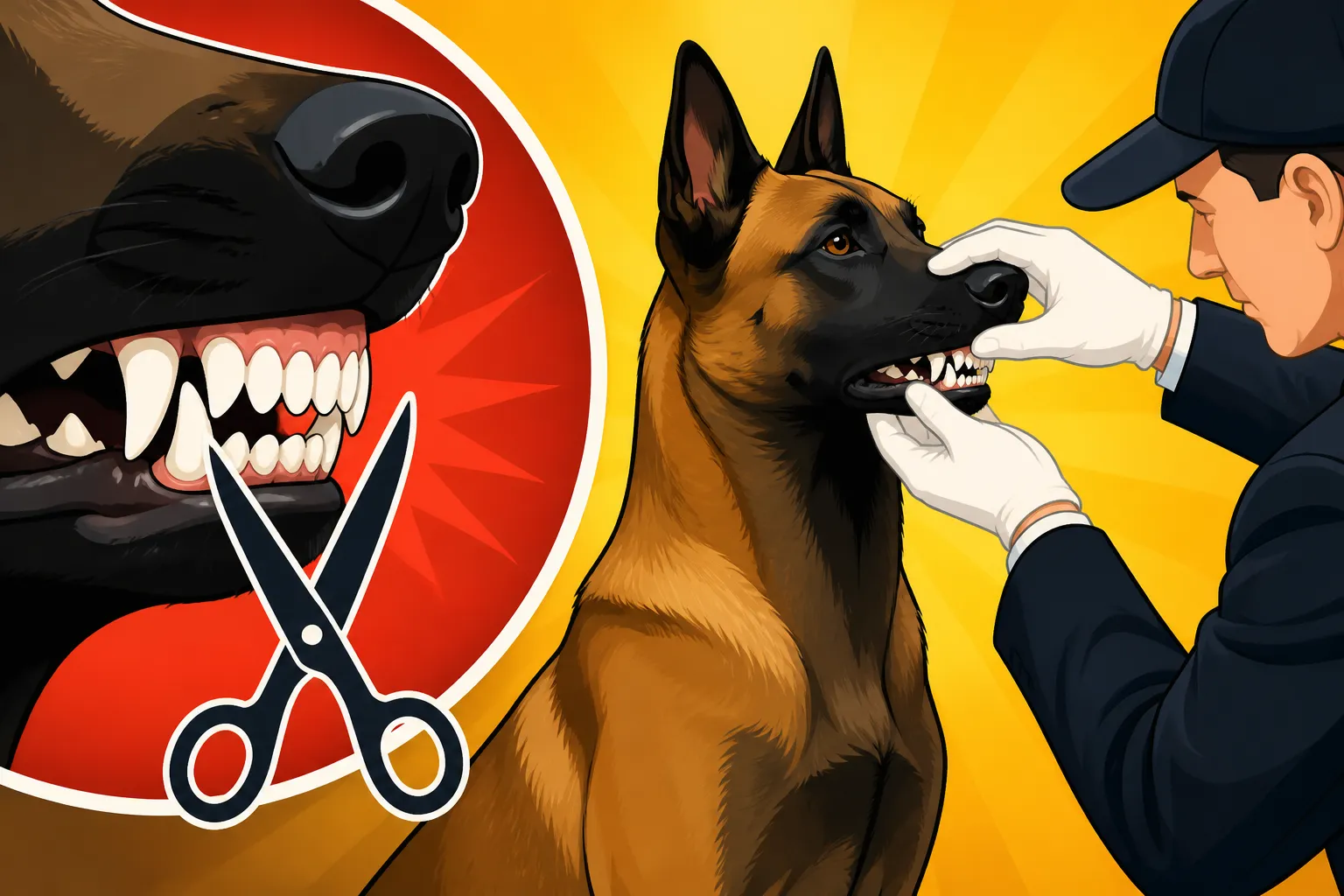
Imagine two perfectly meshing gears. That's essentially what a scissors bite looks like in a dog's mouth. Specifically, the official Belgian Malinois breed standard calls for a scissors bite where the outer surface of the lower incisors (the small front teeth) just touches the inner surface of the upper incisors when the mouth is closed. It's a subtle but crucial overlap.
Let's break down the components:
- Incisors: These are the small, cutting teeth at the very front of the mouth. A Malinois typically has six upper and six lower incisors. In a proper scissors bite, these teeth should align cleanly.
- Canines: Flanking the incisors are the formidable canine teeth, sometimes called fangs. These should interlock perfectly, with the upper canines falling just in front of the lower canines, providing a strong, vice-like grip. These are the teeth that do the heavy lifting in bite work or when holding onto a toy during a vigorous game of tug. You'll often hear about Chipped Canines on a Malinois From Sleeve Work as these teeth are under immense pressure during protection sports.
- Premolars and Molars: These are the grinding and crushing teeth further back in the mouth. While less visible, their alignment is also important for efficient chewing and overall dental health. They should mesh together without significant gaps or rotations.
When a judge examines a Malinois's mouth, they are looking for this precise contact. Any deviation can be considered a fault, ranging from minor to severe, depending on the degree of misalignment.
The Functional Purpose of a Proper Scissors Bite for the Malinois
A correctly formed scissors bite offers several significant advantages for a Belgian Malinois, directly contributing to its functionality and well-being:
- Optimal Gripping Power: This bite allows the dog to exert maximum force when grabbing and holding onto objects. Whether it's a decoy's sleeve in IGP or Mondioring, or simply their favorite Tugs and Bite Pillows a Malinois Destroys, the strong, interlocking incisors and canines create a secure hold that is difficult to break. This is crucial for their working roles, where a firm grip is essential for control and task completion.
- Efficient Chewing and Digestion: While working dogs often swallow quickly, a proper bite ensures that food can be torn and chewed effectively. This initial mechanical breakdown of food is vital for proper digestion and nutrient absorption. Dogs with incorrect bites might struggle with certain types of food or be prone to digestive issues.
- Dental Health and Longevity: When teeth align correctly, they wear evenly. Misaligned teeth can lead to abnormal wear patterns, excessive tartar buildup in difficult-to-clean areas, trapped food particles, and increased risk of dental disease, including gum inflammation and tooth decay. A healthy bite contributes to a healthy mouth throughout the dog's life, minimizing the need for extensive dental interventions down the line. Owners should prioritize Daily Tooth Brushing for a Malinois That Bites to maintain oral hygiene, regardless of bite perfection.
- Protection and Self-Defense: In their roles as police or military working dogs, or even personal protection dogs, the Malinois relies on its bite for deterrence and defense. A strong, functional bite provides the necessary tool for these critical tasks. It’s also important to consider whether a Belgian Malinois's bite should be checked yearly by a vet to ensure ongoing dental health.
Common Bite Faults and Their Implications for a Malinois
Understanding the ideal scissors bite makes it easier to identify deviations, or "faults." These deviations are important not just for show-ring evaluations, but because they can have tangible impacts on a Malinois's health, comfort, and ability to perform. Breeders work hard to minimize these faults, understanding their potential consequences.
Undershot and Overshot Bites: What They Mean and Why They're Faults
The most commonly discussed bite faults in dogs are undershot and overshot bites, and they represent the opposite ends of the spectrum from a perfect scissors bite.
- Undershot Bite (Prognathism): In an undershot bite, the lower jaw extends beyond the upper jaw. This means the lower incisors protrude in front of the upper incisors, rather than meeting precisely behind them. Think of a bulldog's typical jaw – while desirable for certain breeds, it's a significant fault in a Malinois.
- Implications: An undershot bite can make it difficult for the Malinois to pick up certain objects, hold a tight grip, or even eat comfortably. The misaligned teeth can cause abnormal wear, with the lower incisors potentially rubbing against the roof of the mouth or the upper incisors, leading to pain, gum inflammation, and premature tooth loss. Food can also get trapped more easily, increasing the risk of periodontal disease. In a working dog, this severely compromises their ability to perform bite work or even retrieve effectively.
- Overshot Bite (Brachygnathism): An overshot bite is the opposite; the upper jaw extends too far forward, leaving a gap between the upper and lower incisors. The lower incisors do not reach the inner surface of the upper incisors. This is often referred to as a "parrot mouth."
- Implications: Similar to an undershot bite, an overshot bite can lead to significant functional problems. The most common issue is that the lower canine teeth can impact the roof of the mouth, potentially causing painful ulcers or even perforating the palate. This can be incredibly uncomfortable for the dog, affecting their eating, playing, and overall quality of life. Abnormal wear on the incisors is also common, and the dog's ability to grasp and hold items, especially smaller ones, can be severely diminished. For a Malinois, this reduces their efficiency and can even cause pain during high-drive activities.
Both undershot and overshot bites are considered serious faults in the Belgian Malinois breed standard because they compromise the functional integrity of the jaw and teeth. They are typically genetic in nature, which is why reputable breeders prioritize dogs with correct bites in their breeding programs.
Other Dental Irregularities and Their Impact on Health and Performance
Beyond the major categories of undershot and overshot, several other dental irregularities can affect a Malinois:
- Level Bite (Even Bite): This occurs when the incisors meet perfectly edge-to-edge, without the slight overlap of a scissors bite. While not as severe as an overshot or undershot bite, a level bite is still considered a fault.
- Implications: The primary concern with a level bite is accelerated wear on the incisors. When teeth meet edge-to-edge, they grind against each other more directly, leading to premature flattening and erosion of the chewing surfaces. Over time, this can lead to sensitivity, pain, and even pulp exposure, increasing the risk of infection. For a high-drive Malinois that uses its mouth frequently, this wear can become problematic sooner.
- Wry Mouth: This is a more complex and often visible fault where one side of the jaw grows longer than the other, causing a twisting or asymmetry in the mouth.
- Implications: A wry mouth severely affects the dog's ability to chew, as the teeth cannot align properly. This can lead to persistent oral trauma, dental disease, and difficulty eating, which can impact overall nutrition and health. It's a significant structural defect that can cause chronic pain and requires veterinary intervention, potentially including extractions.
- Missing or Crowded Teeth: Some Malinois may have congenitally missing teeth (oligodontia) or, conversely, have extra teeth, leading to crowding. Sometimes, Puppy Teeth a Malinois Fails to Shed can cause adult teeth to erupt incorrectly.
- Implications: Missing teeth can reduce chewing efficiency and weaken the overall bite structure. Crowded teeth are a breeding ground for periodontal disease because food and plaque accumulate easily in tight spaces that are difficult to clean. This can lead to gum inflammation, infection, and early tooth loss. Correcting crowding often requires dental extractions. These issues can become even more problematic if a Malinois is prone to gnawing on What a Malinois Destroys in One Unsupervised Hour.
- Retained Deciduous (Puppy) Teeth: As mentioned, sometimes puppy teeth don't fall out, and the adult teeth erupt alongside them.
- Implications: This causes crowding, leading to malocclusion (improper bite alignment) and making the affected area highly susceptible to plaque and tartar buildup. Retained puppy teeth should be extracted by a veterinarian to allow the adult teeth to grow in properly and prevent future dental problems.
A functional mouth is essential for a dog built for intense work and an active lifestyle. These dental irregularities, even seemingly minor ones, can accumulate over time and affect the dog's overall well-being. Regular veterinary check-ups are crucial for early detection and management.
Assessing Your Malinois's Bite: A Practical Guide for Owners
As a Belgian Malinois owner, you are your dog's primary advocate and caregiver. While you're not expected to be a veterinarian or a conformation judge, understanding how to generally assess your dog's bite and recognizing potential issues is a vital part of responsible ownership. Early detection of dental irregularities can save your dog from discomfort and more serious health problems down the line. It's all part of ensuring they live a happy, healthy life, whether they're working hard or just being a fantastic companion. For general health, it's wise to consider The Checkup Schedule a Sport Malinois Should Keep.
When to Check Your Puppy's Bite and What to Look For
The ideal time to start familiarizing yourself with your Malinois's bite is when they are still a puppy. Their adult teeth typically begin to emerge around 3-4 months of age and are usually all in by 6-7 months. This period of tooth eruption is crucial for monitoring proper alignment.
Here's how to do it:
- Start Early and Gently: Even before adult teeth arrive, get your puppy used to having its mouth examined. Gently lift their lips and touch their gums and teeth. Make it a positive experience with praise and treats. This will make future examinations much easier.
- Observe the Incisors: Once the adult incisors are in (around 4-5 months), gently close your puppy's mouth and lift the flews (lips) at the front. Look for that characteristic "scissors" overlap: the lower incisors should neatly tuck behind and just touch the back of the upper incisors. This is where The Scissors Bite a Malinois Judge Checks For really comes into play.
- Check the Canines: The large canine teeth should interlock, with the upper canines falling just in front of the lower canines, providing a strong, precise fit.
- Look for Gaps and Rotations: Are there any noticeable gaps between teeth that shouldn't be there? Are any teeth rotated or severely out of alignment? Is there any sign of Puppy Teeth a Malinois Fails to Shed causing crowding?
- Feel the Jaw Alignment: Gently feel along the jawline. Does it feel symmetrical? Any noticeable twisting could indicate a wry mouth.
- Trust Your Breeder: A reputable Belgian Malinois breeder will have already checked the puppies' bites multiple times before they go to their new homes. They should be transparent about any minor dental anomalies they observe and discuss them with you. Don't hesitate to ask them what they look for and what their experience has been with dental conformation in their lines.
If you notice any significant deviations, such as a clear undershot or overshot jaw, or if puppy teeth are still present when adult teeth are erupting, it's time to consult your veterinarian. Early intervention can often correct issues or prevent them from worsening.
The Role of Your Veterinarian and Breeder in Dental Health
Your veterinarian is your primary partner in ensuring your Malinois's overall health, including their dental well-being. Regular check-ups are paramount, especially during the puppy phase and as your Malinois ages.
Your Veterinarian Will:
- Perform Oral Examinations: At every wellness visit, your vet will conduct a thorough oral exam, checking the bite, looking for retained puppy teeth, assessing gum health, and identifying any signs of dental disease, such as tartar buildup, fractured teeth, or painful areas. They'll also be aware of common issues for a Belgian Malinois, as a breed.
- Recommend Interventions: If a significant bite fault is detected, your vet can discuss options. This might involve extracting retained puppy teeth, performing orthodontics in specific cases (though less common for minor cosmetic faults), or devising a long-term plan for managing potential issues arising from an abnormal bite (e.g., increased frequency of dental cleanings).
- Advise on Home Care: Your vet can guide you on the best practices for home dental care, such as brushing techniques, appropriate dental chews (like those you might find on Chewy), and products to help maintain oral hygiene between professional cleanings.
- Monitor for Age-Related Issues: As your Malinois gets older, their dental health can change. Your vet will monitor for wear, decay, and gum disease, which can become more prevalent with age, especially in a dog that has had a working life.
Your Breeder's Role:
- Responsible Breeding Practices: A good breeder is committed to producing healthy dogs with sound temperaments and correct conformation, including a proper bite. They will select breeding dogs with excellent dental health and conformation and will often be able to provide generations of health records, including dental evaluations.
- Transparency and Support: They should be transparent about the dental health of their lines and provide you with information on what to expect. They are often a valuable resource for advice and support throughout your dog's life, including questions about dental development and care.
- Initial Assessment: As mentioned, breeders typically conduct the first assessments of a puppy's bite, identifying any early signs of issues before placement.
By working closely with both your breeder and your veterinarian, you can ensure that your Belgian Malinois's bite, and indeed their entire oral health, is given the attention it deserves. A correct scissors bite is a hallmark of the breed's functional excellence, and maintaining it contributes significantly to your Malinois's overall quality of life.
| Bite Type | Description | Malinois Standard? | Primary Functional Impact | Primary Health Risk |
|---|---|---|---|---|
| Scissors Bite | Lower incisors touch inner surface of upper incisors; canines interlock. | Yes (Ideal) | Optimal gripping, efficient chewing. | Minimal (with good hygiene). |
| Level (Even) Bite | Incisors meet edge-to-edge. | Fault | Reduced gripping precision over time. | Accelerated incisor wear, potential sensitivity. |
| Overshot Bite | Upper jaw extends beyond lower; gap between incisors. | Fault (Serious) | Difficulty grasping; compromised grip. | Lower canines impacting palate; dental trauma. |
| Undershot Bite | Lower jaw extends beyond upper; lower incisors protrude. | Fault (Serious) | Difficulty grasping; compromised grip; abnormal chewing. | Abnormal incisor wear; gum inflammation; pain. |
| Wry Mouth | One side of jaw grows longer than other, causing asymmetry. | Fault (Severe) | Severe chewing difficulty; chronic pain. | Oral trauma; persistent dental disease; nutritional impact. |
Disclaimer
This article is for general informational purposes only and does not constitute professional advice. Laws, prices and regulations vary by location and change over time. Consult a qualified professional for guidance on your specific situation.