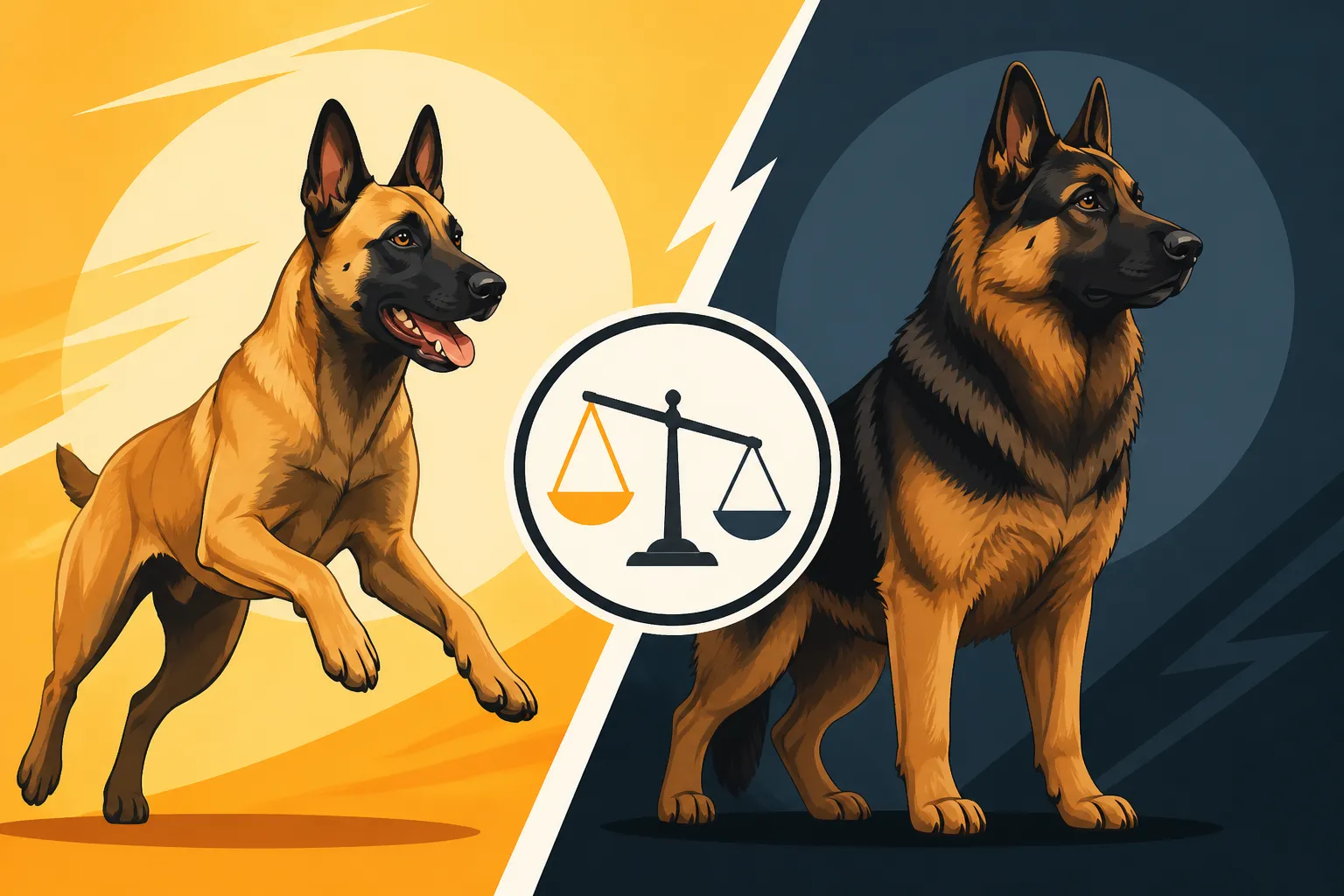
Why Malinois Are Lighter Than Police Shepherds
It’s a common sight: you see a Belgian Malinois, maybe at a trial or in training, and then you see a German Shepherd, especially one working with law enforcement, and you can’t help but notice the difference in their build. The Malinois often appears sleeker, more refined, and yes, generally lighter than their Shepherd counterparts. This isn't just an illusion; there are very real, historical, and functional reasons why these incredible working dogs have evolved with distinct physical attributes. This guide will explore the fascinating factors behind why Malinois tend to carry less mass than many police German Shepherds.
The Historical Blueprint: Origins and Purpose
To understand why Malinois are typically lighter, we have to look back at what each breed was originally developed to do. These aren't just arbitrary differences; they are the result of generations of selective breeding for specific tasks, environments, and handler needs. It’s like comparing a marathon runner to a powerlifter – both are athletes, but their bodies are built for different expressions of athleticism.
Origins as Herding Dogs vs. General Purpose Workers
The Belgian Malinois hails from the Malines region of Belgium and, like the other Belgian Shepherd varieties, was primarily bred as a herding dog. Their job was to manage flocks of sheep and cattle across varied terrain, often in open fields and sometimes dense brush. This work demanded incredible agility, speed, quick directional changes, and a tireless, efficient gait. A dog needed to be light on its feet to cover vast distances without exhausting itself, capable of darting in and out, and quick enough to outmaneuver livestock. A heavier, bulkier dog would simply be less efficient at this kind of continuous, high-energy work. The historical records and breed standards reflect this emphasis on athleticism and speed, focusing on a dog that is built for endurance rather than sheer bulk. You can really see this heritage when you look at The Herding Job the Belgian Malinois Was Built For.
German Shepherds, on the other hand, while also having herding roots, quickly evolved into a more "general purpose" working dog. Developed in Germany, the breed was shaped by Captain Max von Stephanitz to be the ultimate canine utility worker: capable of herding, but also excellent for police, military, and protection work. This broader mandate often included tasks requiring more raw power, intimidation, and the ability to hold ground against a threat. While agility was still valued, there was also a demand for a robust, substantial dog that could withstand physical encounters and exert significant force. Their build leaned towards a powerful, strong structure that could handle diverse, often physically demanding, tasks beyond just nimble herding.
Early Selection for Agility and Endurance
The early breeders of the Belgian Malinois prized dogs that could work long hours in the fields, often with minimal supervision, exhibiting great independence and problem-solving skills, all while maintaining their high energy levels. This meant selecting for a body type that was lean, muscular, and incredibly well-coordinated. Excess weight would be a detriment, adding unnecessary strain on joints and reducing stamina. They needed to be able to jump, climb, and weave through obstacles with ease, tasks that are naturally easier for a lighter, more compact frame. Think of a nimble gymnast compared to a football lineman; both are incredibly athletic, but their builds serve vastly different functions. This early selection for high-energy herding is a foundational reason for the Malinois's typically lighter frame. You can truly appreciate this when you learn about The Sheep Work a Belgian Malinois Was Bred To Do.
German Shepherd breeders, while also valuing endurance for long patrols or guarding duties, often also sought a dog that conveyed a sense of strength and authority. The ability to push through dense undergrowth, to physically deter a person, or to hold a strong bite without being easily moved, all benefit from a more substantial frame. While not excessively heavy, their ideal build incorporated more bone, substance, and a slightly larger overall presence to fulfill these varied roles effectively. This divergence in early selective pressures set the stage for the physical differences we observe today.
Physical Standards and Ideal Build
Breed standards are more than just arbitrary aesthetic guidelines; they are carefully crafted descriptions of the ideal dog for its intended function, refined over decades. These standards explicitly outline the desired size, weight, and conformation that define each breed. When we look at the official descriptions for the Belgian Malinois and the German Shepherd, the distinctions become very clear.
Size and Weight Ranges for Each Breed
The Belgian Malinois standard typically calls for a male to stand between 24-26 inches at the shoulder and a female between 22-24 inches. The weight for males generally falls between 60-80 pounds, and females between 40-60 pounds. These are averages, of course, and individual dogs will vary, but the overall picture is one of a medium-large, athletic dog with a lean, efficient build. When you check The Height Limits a Belgian Malinois Is Judged Against, you'll see the emphasis on these specific measurements. The standard promotes a dog that is strong but not heavy, quick but not slight. For instance, The Weight Range a Belgian Malinois Falls In highlights that even at the higher end, they are still considered athletic rather than bulky.
The German Shepherd Dog standard, particularly for many working lines that supply police forces, generally describes a larger, more heavily boned dog. Males typically stand 24-26 inches at the shoulder, similar in height to the Malinois, but their weight range is significantly higher, often between 65-90 pounds, with some individuals pushing closer to 100 pounds. Females range from 22-24 inches and weigh 50-70 pounds. While there's overlap, the average German Shepherd will simply carry more overall mass, bone, and muscle. This added substance contributes to their powerful presence and robust nature, aligning with their role as a formidable utility dog. For a male Malinois, for example, The Height a Male Belgian Malinois Must Measure will show that their height is comparable, but their weight is consciously kept lower.
Let's look at a quick comparison:
| Characteristic | Belgian Malinois (Males) | German Shepherd (Males, Working Line) |
|---|---|---|
| Height (at shoulder) | 24-26 inches | 24-26 inches |
| Weight Range | 60-80 pounds | 65-90+ pounds |
| Build Emphasis | Lean, agile, athletic | Robust, powerful, substantial |
| Bone Structure | Moderate | Heavier |
| Overall Impression | Quick, springy, efficient | Strong, formidable, enduring |
Structural Differences Optimized for Function
Beyond just height and weight numbers, the underlying bone structure and musculature of these breeds are subtly but importantly different. The Malinois is often described as having a "square" build, meaning their body length is roughly equal to their height at the shoulder. This compact, balanced frame is ideal for quick turns, vertical leaps, and maintaining equilibrium during rapid movements. Their bone structure is moderate, providing strength without unnecessary heft. Musculature tends to be long, lean, and powerful, built for explosive bursts of speed and sustained effort, almost like a sprinter or a middle-distance runner. The Square Outline a Belgian Malinois Should Have is a key indicator of this functional design.
The German Shepherd, while still agile, often has a slightly longer body in proportion to its height, which can contribute to a more grounded, powerful stride. Their bone structure is typically heavier, providing a sturdier foundation. The musculature is dense and well-developed, designed not just for speed, but for sustained power, brute force, and the ability to hold ground. Think of a strong defensive lineman in football – built to absorb impact and deliver power. These subtle differences in skeletal and muscular architecture are directly tied to the jobs each breed performs, particularly in demanding fields like police work.
The Demands of Modern Police Work
When you consider police K9 work, both Malinois and German Shepherds excel, but they are often chosen for slightly different strengths within this demanding field. The physical characteristics that make a Malinois lighter are precisely what make them invaluable in certain high-stakes scenarios.
Speed, Agility, and Quick Direction Changes
In police and military applications, a lighter, more agile dog like the Belgian Malinois offers distinct advantages. These dogs are often deployed in scenarios requiring extreme speed, the ability to navigate complex environments, and the capacity for incredibly quick changes in direction. Imagine a situation where a K9 needs to clear a building quickly, scale obstacles, or pursue a suspect through urban environments with tight corners and varied surfaces. A lighter dog can accelerate faster, jump higher, and turn on a dime with less momentum to overcome. This can be critical in reducing response times and maintaining control in dynamic situations.
Their leaner build also means they can more easily fit into smaller spaces, jump into and out of vehicles with less strain, and often require less energy to maintain their high levels of activity throughout a shift. This efficiency is a huge plus in jobs where sustained, high-intensity work is the norm. It's why many military and special forces units have increasingly turned to the Malinois; their speed and agility make them incredibly effective tools. It truly highlights Why Military Units Buy Malinois Over Shepherds. They are built to be responsive and dynamic, which inherently favors a lighter frame.
Endurance and Sustained Performance
While heavier dogs can certainly have endurance, the Malinois's lighter, more efficient build gives them a distinct edge in sustained high-output activities. They are often described as having an "endless battery" and can work for extended periods without showing signs of fatigue, provided they are properly conditioned and fueled. Their lower body mass means their cardiovascular system doesn't have to work as hard to move their weight, allowing for more efficient oxygen usage. This is vital in tasks like tracking over long distances, multiple deployments in a single shift, or extended training sessions.
A police K9's job isn't just about explosive action; it's also about consistency and longevity. A dog that can maintain its focus and physical capabilities throughout a long shift or a multi-day operation is invaluable. The Malinois's build contributes directly to this endurance, allowing them to remain sharp and effective when other, heavier breeds might start to slow down. Of course, proper nutrition and care are essential to this, but their inherent structure gives them a head start.
Nutritional Needs and Conditioning for Optimal Weight
Regardless of breed, maintaining an optimal weight is crucial for a working dog's health and performance. For Belgian Malinois, their lean nature is not just a genetic predisposition but a state that needs to be actively supported through diet and exercise. You’ll often hear Malinois owners talk about their dogs being "ribby" or "lean," and this is often the ideal, healthy condition for them.
Tailoring Diet to Energy Output
A Malinois, even with its lighter frame, burns an incredible amount of calories due to its intense energy levels and high metabolism. If you've ever owned one, you know they are perpetually in motion! Their diet must be rich in high-quality protein and fats to fuel this output and support lean muscle mass. Many working Malinois are fed performance-grade kibble specifically designed for highly active dogs. It's not uncommon for them to eat more food than a heavier, less active dog simply because their energy expenditure is so much higher. For example, How Many Pounds of Food a Belgian Malinois Eats can be surprising to new owners.
When selecting food, it’s important to find a brand that offers dense nutrition. Even if you're browsing for supplies on Chewy, make sure you're looking at formulas tailored for active or working dogs, not just standard adult formulas. Owners often split their Malinois's daily rations into two or three meals to help with digestion and provide a steady stream of energy, especially around training times. The Daily Ration a Working Belgian Malinois Eats will fluctuate based on activity level, but it will always be substantial. Without adequate caloric intake, a Malinois would quickly lose condition and struggle to maintain its drive and stamina.
Maintaining Peak Athletic Condition
Keeping a Malinois at its ideal lean weight isn't just about diet; it's about a consistent, rigorous conditioning program. Their bodies are built for movement, and without sufficient, structured exercise and mental engagement, they will not only become destructive but can also lose their optimal physical condition. A Malinois isn't meant to be chunky or carry excess fat; their performance relies on being lithe and powerful. The Lean Condition a Belgian Malinois Should Carry is often a point of discussion, as some inexperienced owners might worry their dog is too thin when it's actually perfectly conditioned.
This conditioning goes beyond just throwing a ball in the yard. It involves intense cardio, strength training, and agility work that challenges their body and mind. Regular tracking, protection work, agility, or competitive obedience helps maintain their muscle tone, cardiovascular health, and lean physique. When you consider the amount of energy they have, it's clear why The Mental Work That Finally Tires a Malinois Out is just as important as physical exertion. This comprehensive approach to care, including appropriate nutrition found on platforms like Chewy and dedicated exercise, ensures that a Malinois maintains the lighter, agile build that makes them so effective in their demanding roles.
In essence, the Belgian Malinois is lighter than many police German Shepherds because they were bred for a different, albeit equally demanding, athletic profile. Their history as agile herding dogs, their breed standard emphasizing a lean build, and the specific demands of modern police work that prioritize speed and efficiency, all contribute to their distinct, lighter physique.
Disclaimer
This article is for general informational purposes only and does not constitute professional advice. Laws, prices and regulations vary by location and change over time. Consult a qualified professional for guidance on your specific situation.