Corneal Scratches on a Malinois Working Brush
It's a frustrating, even sickening, feeling when your high-drive Belgian Malinois, a dog bred for intense work and fearless action, comes out of a training session or a patrol looking a little off. You know something’s wrong when their usually bright, keen eyes are squinting, tearing, or even worse, looking cloudy. Corneal scratches, often a result of their enthusiastic charge through brush and tough terrain, are not just painful; they can be a real setback for a working dog and a significant worry for any owner. This guide will walk you through understanding these injuries, how to spot them, and what steps you can take for prevention and treatment.
Understanding Corneal Scratches and Their Causes
The Belgian Malinois is a dog that lives for the job, often working in environments that are anything but pristine. From dense woods during tracking exercises to overgrown fields for detection work, their eyes are constantly exposed to potential hazards. A corneal scratch, while it sounds minor, is a significant injury that demands immediate attention.
What Exactly Is a Corneal Scratch?
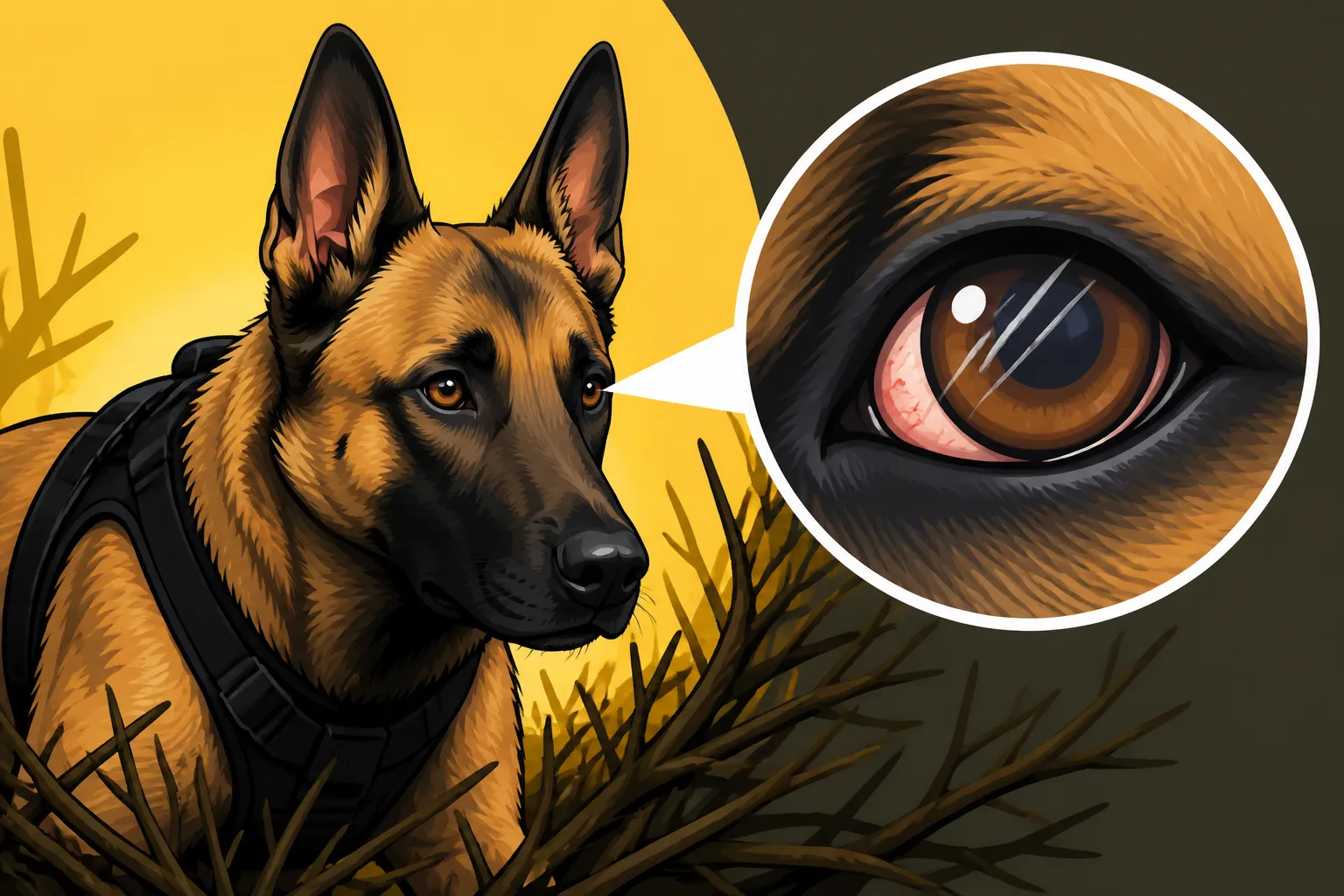
To put it simply, the cornea is the clear, outermost layer at the front of your dog's eye, much like the crystal on a watch. It’s incredibly sensitive, and its transparency is crucial for clear vision. A corneal scratch, or corneal abrasion, occurs when this delicate surface is physically damaged. Think of a tiny splinter or a sharp twig dragging across that surface. Because the cornea is packed with nerve endings, even a small scratch can cause intense pain. Your Malinois, being the stoic creature it is, might try to tough it out, but the discomfort is real and profound.
This isn't just about surface pain; the cornea is vital for focusing light onto the retina. Any disruption to its smooth, clear surface can impair vision, even if temporarily. If left untreated, a simple scratch can quickly escalate into a more serious condition, like an ulcer, or become infected, potentially leading to permanent vision impairment or even loss of the eye. This is why understanding the immediate signs and getting prompt veterinary care is so incredibly important – it's not just about comfort, but about preserving their ability to work and live a full life.
Common Culprits in Brush Work
Our Malinois are often sent into challenging environments, which is exactly what they love to do. But these environments are also rife with hazards for their eyes. When your Malinois is tearing through dense brush, thickets, or tall grasses, they’re essentially putting their face, and especially their eyes, on the front line.
One of the most frequent culprits is sharp vegetation. Imagine your dog diving headfirst into a patch of blackberry bushes, thorns, or stiff, dry branches. These can easily rake across the eye. Even seemingly innocuous tall grasses, especially those with rough edges or seed heads, can cause tiny abrasions, particularly when the dog is moving at high speed, effectively "sawing" at the corneal surface.
Then there’s the issue of dust and debris. A Malinois’s incredible speed and drive mean they stir up a lot of particulate matter. Fine dust, sand, tiny bits of bark, or even insect wings can get trapped in the eye or propelled into the cornea, causing irritation or scratches. This problem can be exacerbated in windy conditions or very dry environments. Furthermore, working near other dogs or people can also lead to stray debris or accidental contact that results in an eye injury. It's a constant battle against the elements and the sheer intensity of their work. Keeping an eye out for potential issues and proactively managing their environment can make a huge difference in preventing these painful incidents.
Recognizing the Signs and Immediate Actions
Spotting an eye injury in a Malinois can sometimes be tricky because they are such resilient dogs. They might not vocalize their pain loudly, but their body language will tell you everything you need to know if you're paying close attention.
Spotting the Red Flags
When your Malinois has a corneal scratch, there are several key signs that something isn’t right. The most obvious is squinting or holding the eye partially or fully closed. This is a direct response to the pain and light sensitivity. They’re trying to protect the injured eye. You might also notice excessive tearing, where one eye seems to be weeping more than the other, or the tears appear thicker or discolored.
Another common sign is pawing at the affected eye or rubbing their face against furniture or the ground. This indicates irritation and discomfort. Their eyes might appear red, bloodshot, or swollen, particularly around the eyelids. In more severe cases, or if irritation has been present for a while, you might notice a cloudy or bluish haze over the surface of the cornea. This cloudiness is a serious indicator and means you need to get to the vet immediately, as it can suggest swelling, infection, or even a deeper injury. Remember that your Malinois is incredibly driven; if they’re showing any of these signs, it's a clear signal that they’re in significant discomfort, and it's time to act.
Here’s a quick reference table for common signs and what they might indicate:
| Sign of Injury | What It Looks Like | Potential Meaning | Action Required |
|---|---|---|---|
| Squinting/Closed Eye | Dog holds one eye partially or completely shut. | Pain, light sensitivity, foreign object. | Immediate vet visit. |
| Excessive Tearing | Clear, watery, or thick discharge from one eye. | Irritation, foreign body, injury. | Assess, rinse, contact vet if persistent. |
| Pawing/Rubbing Face | Dog attempts to rub or scratch the affected eye. | Itchiness, irritation, pain. | Prevent self-trauma, vet visit. |
| Redness/Inflammation | Bloodshot eye, swollen eyelids, visible irritation. | Infection, inflammation, severe injury. | Urgent vet visit. |
| Cloudiness/Bluish Haze | Opaque film or discoloration over the cornea. | Serious corneal damage (ulcer, swelling, infection). | Emergency vet care immediately. |
| Reluctance to Work/Lethargy | Dog seems less engaged, tired, or withdrawn. | General discomfort, pain, systemic issue (less direct). | Observe other signs, contact vet. |
First Aid and When to Seek Vet Care
If you suspect your Malinois has scratched their cornea, your immediate response is critical. The first step, if you can safely do so, is to gently try to rinse the eye with a sterile saline solution (like the kind used for contact lenses, not medicated eye drops for humans). This might help dislodge any superficial debris. You want to make sure the stream is gentle and doesn't cause further irritation. Remember, you’re aiming to irrigate, not scrub. If you don't have sterile saline, clean, cool water will do in a pinch, but sterile saline is always preferred. You can find more tips on Rinsing Dust From a Working Malinois's Eyes in another one of our articles.
After rinsing, prevent your dog from further self-trauma. This means discouraging them from rubbing or pawing at their eye, as this can worsen the scratch or introduce infection. An Elizabethan collar (E-collar, or "cone of shame") might be necessary if they won’t leave it alone, but this is a vet decision in most cases.
Crucially, if you observe any of the severe signs mentioned above—especially persistent squinting, cloudiness, or significant pain—you need to seek veterinary care immediately. Corneal scratches are not something to "wait and see" with. A prompt diagnosis with fluorescein stain, which highlights corneal damage, and appropriate treatment can prevent minor injuries from becoming major, vision-threatening problems. Don't delay; even if it's after hours, an emergency vet visit is absolutely warranted for a suspected eye injury. The health of your working dog's eyes is paramount, and early intervention is key.
Preventing Eye Injuries in Working Malinois
When you own a Belgian Malinois, prevention is always better than cure, especially when it comes to their precious eyesight. Their high drive means they won’t hold back, so it’s up to us to manage the risks as much as possible.
Protective Gear and Environmental Management
One of the most direct ways to protect your Malinois's eyes is through protective gear. Dog goggles, often called "Doggles" (a popular brand, though others exist), are specifically designed to shield their eyes from debris, brush, and even harmful UV rays. While some Malinois might initially object to wearing them, consistent, positive conditioning can help them accept the gear. Start with short durations in a low-stress environment, pairing the goggles with high-value treats and praise. Gradually increase wear time, making it part of their routine before heading out for brush work.
It’s important to choose goggles that fit well, are comfortable, and offer good ventilation to prevent fogging. Brands like Rex Specs or OptiVizor are often favored by working dog handlers for their durability and secure fit. Considering Goggles for a Belgian Malinois With Pannus can offer insights into suitable models that provide robust eye protection, as many of the same features are beneficial for preventing physical injury.
Beyond gear, environmental management plays a huge role. Before sending your Malinois into dense cover, take a moment to assess the terrain. Can you clear a path of particularly thorny or sharp branches? Are there areas with heavy dust or irritants that could be avoided or minimized? If working in areas with known hazards, consider adjusting your training approach to reduce direct exposure. This might mean working on the periphery of dense brush rather than having them crash through the thickest parts, or choosing a different area altogether. Regularly inspect your training grounds and remove any obvious sharp objects. It's about being proactive and thoughtful about the challenges your dog will face.
Training and Awareness
While we can’t entirely eliminate risks, we can certainly reduce them through smart training and increased handler awareness. Your Malinois is incredibly intelligent, and you can leverage that to teach them to navigate challenging environments more safely.
One approach is to train a "slow" or "careful" command when approaching dense cover. Instead of a full-speed charge, teach them to slow down and pick their way through, using their nose and body awareness to avoid obstacles. This can be particularly useful in areas with a high concentration of sharp objects. Reward them heavily for thoughtful navigation rather than just speed. This kind of nuanced training helps develop their understanding of the task beyond just maximum effort.
Handler awareness is also paramount. You are your Malinois’s eyes and ears in many situations. When working in brush, constantly scan ahead. Look for potential hazards—overhanging branches at eye level, dense thorny bushes, or areas where the ground cover might hide sharp objects. Communicate with your dog using verbal cues or hand signals to guide them around the worst patches. After any session in rough terrain, always take the time to perform a thorough Checking a Belgian Malinois Over After a Session, paying special attention to their eyes, ears, and paws. This post-work inspection can help you catch minor irritations before they escalate into serious injuries. Being attuned to their behavior during the work itself can also cue you into discomfort; if your dog hesitates or flinches, investigate immediately.
Treatment and Recovery for a Scratched Cornea
Finding out your Malinois has a scratched cornea is definitely unsettling, but the good news is that with prompt and proper care, most corneal abrasions heal completely. The key is strict adherence to your veterinarian's instructions.
Veterinary Diagnostics and Treatment Options
When you bring your Malinois in for a suspected eye injury, the vet will start with a thorough examination. The gold standard for diagnosing a corneal scratch is a fluorescein stain test. A special orange dye is applied to the eye, and then a blue light is shined on it. Any areas where the dye adheres to the underlying corneal tissue (indicating a break in the outer layer) will glow bright green, making even tiny abrasions visible. This quickly confirms the presence and extent of the scratch.
Once diagnosed, treatment typically involves several components:
- Antibiotic Eye Drops or Ointment: This is crucial to prevent secondary bacterial infections, which are common given the open wound on the eye's surface. Your vet will prescribe a specific antibiotic, and it’s vital to administer it exactly as directed, even if the eye appears to be improving. Consistency is key in preventing complications. Sometimes, you might need to give Daily Eye Drops for a Malinois With Pannus, and the routine will be very similar for a scratch.
- Pain Medication: Corneal scratches are painful. Your vet will likely prescribe oral pain relief (NSAIDs) or topical atropine drops, which help dilate the pupil and relieve painful spasms. Managing pain is not just about comfort; it helps prevent your dog from rubbing their eye and worsening the injury.
- E-collar (Elizabethan Collar): To prevent your Malinois from pawing at, rubbing, or further irritating the injured eye, an E-collar is almost always necessary. While no dog loves it, it’s a non-negotiable part of the healing process. Make sure it fits properly and that your dog cannot get around it to reach their eye.
- Anti-inflammatory Medications: In some cases, if there’s significant inflammation, your vet might prescribe anti-inflammatory drops, though steroids are generally avoided on open corneal injuries due to the risk of hindering healing.
It's important to understand that treatment costs can vary significantly based on the severity of the injury and any complications. A simple scratch might just need drops and an E-collar, while a deeper ulcer or infection could require more intensive care, potentially including specialized medications or even surgery. This is where having pet insurance, such as Healthy Paws, can be a real lifeline. They can help cover a significant portion of unexpected vet bills, alleviating some of the financial stress during an already worrying time. Remember, the goal is always to promote healing and restore your Malinois’s vision as quickly and safely as possible.
Managing Recovery at Home
The recovery period for a corneal scratch is just as important as the initial veterinary treatment. Your diligence at home will directly impact how quickly and completely your Malinois heals.
Firstly, administering medication consistently is paramount. Set reminders on your phone if you need to, but ensure eye drops and oral medications are given exactly on schedule. If you struggle with giving eye drops, ask your vet for a demonstration. A second person can often help by holding your Malinois still while you apply the drops. Patience and calm assurance go a long way.
Secondly, the E-collar stays on. Period. Even if your Malinois seems uncomfortable or tries to remove it, it’s there for a reason: to prevent them from doing further damage. They might bump into things initially, but they adapt remarkably quickly. You may need to adjust how they eat or drink, perhaps using elevated bowls or wider dishes that the cone can fit around.
Thirdly, limit activity and minimize exposure to irritants. High-drive dogs like Malinois often want to keep going, but rest is crucial for healing. Avoid strenuous exercise, rough play, or any activities that might expose the eye to dust, wind, or brush. Short, controlled leash walks are usually acceptable, but no off-leash romps in the woods until the vet gives the all-clear. Keep their living environment clean and dust-free.
Finally, follow-up appointments are not optional. Your vet will want to re-examine the eye, often using another fluorescein stain, to monitor healing progress. They'll tell you when it’s safe to reduce or stop medications and when your Malinois can resume normal activities. If at any point during recovery you notice the eye worsening—increased redness, discharge, pain, or cloudiness—contact your vet immediately. Don't wait for the next scheduled appointment; it could be a sign of a complication that needs urgent attention. Being prepared for these unexpected costs with a plan like Healthy Paws can make sure you’re always ready to provide the best care without hesitation, especially if your Malinois requires Emergency Care After a Malinois Training Injury. Your commitment to their recovery is what will get them back to their full, sharp-eyed self.
Disclaimer
The information provided in this article is for general informational purposes only and is not a substitute for professional veterinary advice, diagnosis, or treatment. Always seek the advice of your veterinarian or other qualified health provider with any questions you may have regarding a medical condition or treatment for your Belgian Malinois.