Tear Production Failing in a Malinois
It’s incredibly distressing to see your energetic Belgian Malinois suddenly squinting, blinking excessively, or rubbing their eyes, especially when you know they’re usually focused and robust. When tear production starts to fail in these high-drive dogs, it's not just a minor irritation; it can be a serious, painful condition that impacts their comfort, vision, and even their ability to work. This comprehensive guide will walk you through everything you need to know about failing tear production in Malinois, from understanding the basics of eye health to recognizing symptoms, diagnosing the problem, and implementing effective treatment and long-term care.
Understanding Tear Production in Your Malinois's Eyes
Those bright, intelligent eyes of your Belgian Malinois are constantly working, assessing their environment, tracking, and communicating. For them to function optimally, they rely on a delicate balance of moisture and protection provided by tears. When that system goes awry, it can quickly lead to discomfort and more severe issues.
The Vital Role of Tears Beyond Just Moisture
Many people think of tears as just water, but for dogs, and especially for a busy Malinois, tears are a complex, multi-layered shield. They do so much more than simply keep the eyes wet. Think of tears as a sophisticated, constantly regenerating protective coating, essential for maintaining the health and clarity of the cornea – the clear outer layer of the eye.
Firstly, tears provide essential lubrication, allowing the eyelids to glide smoothly over the eyeball without friction. Without adequate lubrication, every blink would be an abrasive event. Secondly, tears are crucial for vision. They create a smooth refractive surface over the cornea, helping to focus light correctly onto the retina. An uneven, dry surface can distort vision, making it difficult for your Malinois to track objects or navigate confidently. Beyond that, tears contain a cocktail of vital ingredients: antibodies and enzymes that fight off bacteria and viruses, keeping infections at bay. They also wash away dust, debris, and irritants, which is particularly important for Malinois who spend a lot of time outdoors, whether training in dusty fields or working in diverse environments. Without this cleansing action, eyes become more vulnerable to foreign bodies and subsequent damage.
How Tears Are Made and Distributed Across the Eye
The production and distribution of tears in your Malinois's eyes are a surprisingly intricate process. The primary tears, the watery component, are produced by the main lacrimal gland, located above the outer corner of each eye. These glands are like tiny, sophisticated factories, constantly secreting the aqueous part of the tear film. However, that’s not the whole story. There are also smaller, accessory lacrimal glands and, crucially, the meibomian glands located in the eyelids. These meibomian glands produce the oily layer of the tear film, which is critical for preventing the watery tears from evaporating too quickly, much like oil on a pond surface. Additionally, goblet cells in the conjunctiva (the pink tissue lining the eyelids) produce mucus, which helps the tear film adhere evenly to the eye's surface.
Once produced, tears aren't just sitting there; they’re actively spread across the entire surface of the eyeball with every blink. Your Malinois blinks regularly, and this action is vital for distributing the tear film evenly, ensuring continuous lubrication, cleansing, and protection. After bathing the eye, excess tears drain into tiny ducts located in the inner corner of the eye, called puncta, which then lead into the nasolacrimal duct and eventually into the nose and throat. It’s a constant, dynamic cycle. If any part of this system breaks down—whether it's reduced production from the glands, an imbalance in the tear film components, or issues with blinking—your Malinois's eyes become susceptible to dryness and all its uncomfortable consequences.
Recognizing the Signs of Failing Tear Production
Spotting the subtle signs of failing tear production in a Belgian Malinois can be a real challenge. These are dogs known for their stoicism and high pain tolerance, often pushing through discomfort to focus on their job or handler. What might be an obvious sign in a more sedate breed could be easily missed in a Malinois until the problem is quite advanced.
Early Indicators and Subtle Changes to Watch For
Initially, the signs of dry eye, or Keratoconjunctivitis Sicca (KCS), can be incredibly subtle. You might notice your Malinois blinking a little more frequently than usual, or perhaps they're squinting slightly, especially in bright light or windy conditions. Their eyes might appear duller than their usual bright, alert look. One of the earliest and most telling signs is a change in the eye discharge. Instead of clear, watery tears, you might start seeing a thick, ropy, mucous-like discharge accumulating in the corners of their eyes. This isn't just cosmetic; it's a sign that the watery component of the tears is lacking, and the remaining mucus and oil are becoming concentrated. This discharge can be grayish, yellowish, or even greenish, and it often sticks to the eyelashes and surrounding fur.
Another common early indicator is generalized redness or inflammation of the conjunctiva, the pink membranes lining the eyelids. This redness might be mild at first, making the whites of their eyes look a bit bloodshot. They might also start pawing at their face or rubbing their eyes more than usual against furniture or your leg, trying to alleviate the irritation. Given how resilient Malinois are, these seemingly minor changes are worth paying close attention to. If your Malinois normally works in dusty environments or spends a lot of time outside, like many working dogs, these symptoms can be easily dismissed as temporary irritation from environmental factors. However, consistent monitoring is key. If you notice a Grayish Film Creeping Across a Malinois Eye, it's definitely time to consult your vet.
Progression and Secondary Issues from Untreated Dryness
If left unaddressed, failing tear production doesn't just stay a minor nuisance; it quickly progresses into a much more serious and painful condition. The constant dryness and lack of protective tear film leave the cornea highly vulnerable. Imagine rubbing sand in your eye every day – that's a bit like what a Malinois with severe KCS experiences. The initial redness and discharge will worsen, becoming chronic. The eye will be consistently inflamed, painful, and prone to secondary bacterial infections because the natural antibacterial properties of tears are absent.
The most concerning long-term effects involve the cornea itself. Without proper lubrication, the cornea can become ulcerated, leading to incredibly painful sores on the eye surface. These ulcers are not only excruciating but can also lead to permanent scarring, which looks like a white or opaque patch on the normally clear cornea. This scarring can significantly impair vision, sometimes even leading to blindness if severe enough. In advanced cases, the cornea can also develop pigmentation, turning dark brown or black, further reducing vision. In some Malinois, you might also see blood vessels growing into the cornea in an attempt to heal the constant damage, another sign of severe, chronic irritation. This progressive damage can seriously impact a working Malinois's effectiveness and overall quality of life, making their daily tasks difficult and uncomfortable. Early intervention is paramount to prevent these irreversible changes.
Common Causes Behind Tear Production Failure in Malinois
When your Malinois's eyes aren't producing enough tears, it's natural to wonder why. While there are several potential culprits, one stands out as the most common reason for dry eye in dogs, including our tough Belgian Malinois.
Immune-Mediated Dry Eye Keratoconjunctivitis Sicca KCS
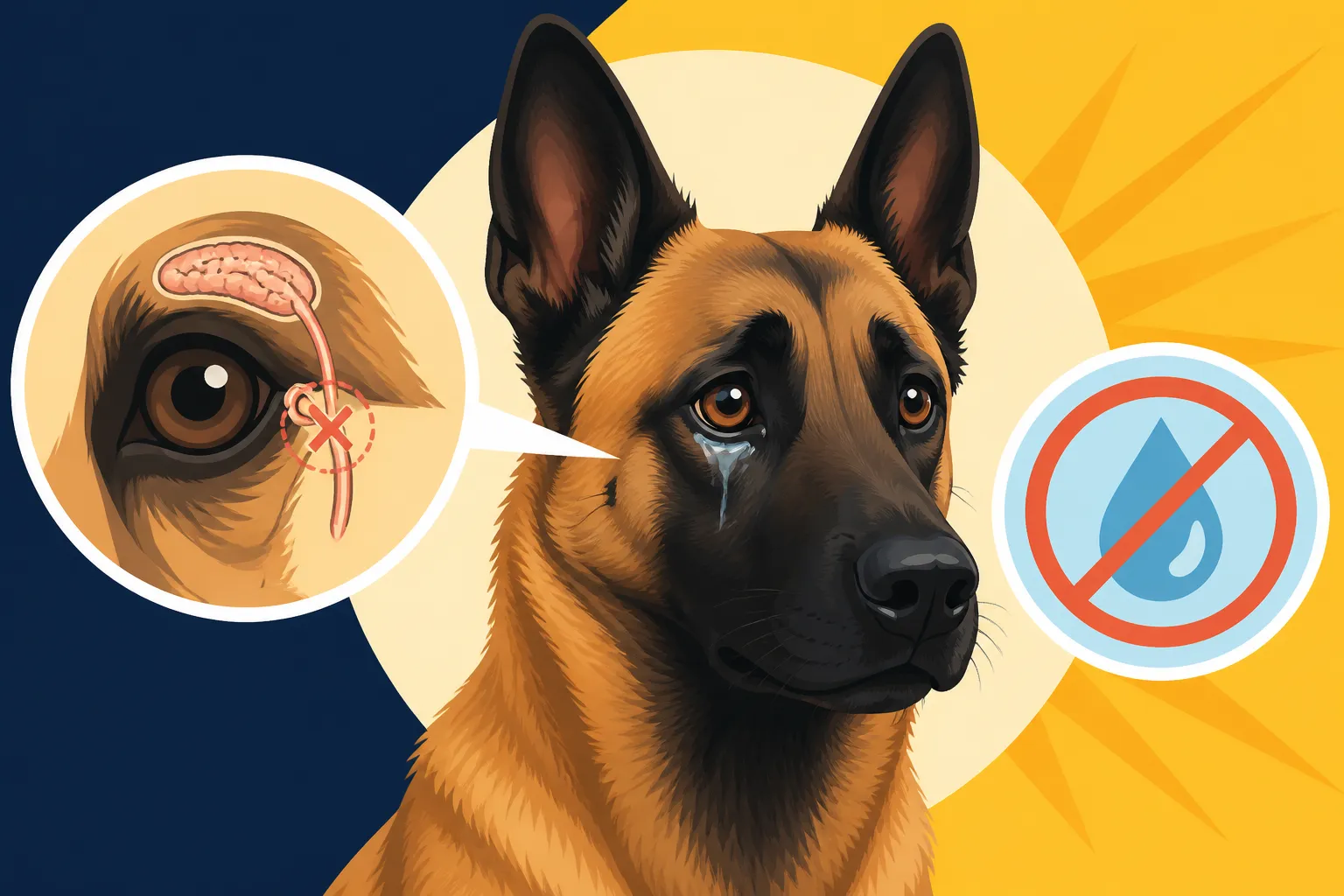
By far, the most common cause of failing tear production in Belgian Malinois, and indeed in many dog breeds, is an immune-mediated condition known as Keratoconjunctivitis Sicca, or KCS. This sounds like a mouthful, but essentially, it means that your dog's own immune system mistakenly attacks and destroys the tear-producing glands – specifically, the lacrimal glands. It’s an autoimmune disease, where the body's defenses turn on themselves, viewing healthy tissue as a threat. The result is a significant reduction in the watery component of the tears.
While KCS is commonly seen in breeds like Cocker Spaniels, West Highland White Terriers, and English Bulldogs, Malinois are not immune. A dog's genetic predisposition, combined with environmental triggers, can play a role. Once the tear glands are damaged, their ability to produce tears is diminished, often permanently. This is why KCS is usually a lifelong condition requiring ongoing management. It's a frustrating diagnosis because it’s something the dog’s own body is doing, but thankfully, we have effective treatments to manage the symptoms and protect their vision. Understanding this root cause helps to grasp why consistent medication, rather than a quick fix, is usually the answer. If you're looking into your Malinois's overall eye health, it's wise to review information on The Eye Diseases Behind a Malinois Eye Certificate for a broader perspective on common concerns.
Other Potential Contributors to Low Tear Production
While KCS is the lead suspect, it’s not the only reason a Malinois might experience dry eyes. A thorough veterinary examination will rule out these other less common, but still important, causes.
One possibility involves neurological issues. If there's damage to the facial nerve that controls the blinking reflex and stimulates tear production, it can lead to dry eye. This might occur due to trauma, an ear infection that spreads, or certain neurological disorders. In such cases, the eye might also appear to blink less frequently or incompletely.
Certain medications can also have dry eye as a side effect. For instance, some sulfa-based antibiotics (like trimethoprim-sulfamethoxazole) are known to temporarily or, in some cases, permanently suppress tear production in susceptible dogs. If your Malinois is on any long-term medication, it's always worth discussing potential side effects with your vet.
Infections can sometimes contribute, though usually in a secondary way. A severe, chronic bout of conjunctivitis, or a systemic illness like canine distemper, can damage the tear glands. However, KCS is rarely caused by infection; rather, a dry eye makes the eye more susceptible to infections.
Though rare in Malinois, congenital defects can also be a factor, where a puppy is born with underdeveloped or non-functional tear glands. This is usually noticed very early in life. Finally, trauma to the eye area or direct injury to the lacrimal glands can, in rare instances, impair their function. However, the sheer prevalence of immune-mediated KCS means it's almost always the first thing a vet will consider when faced with a Malinois showing signs of dry eye.
Diagnosing and Managing a Malinois with Dry Eye
Once you've noticed the signs and suspect your Malinois might have failing tear production, the next crucial step is getting a proper diagnosis. This isn't something you can guess at; it requires a specific test that your veterinarian can easily perform.
The Schirmer Tear Test: The Gold Standard for Diagnosis
The absolute gold standard for diagnosing KCS is the Schirmer Tear Test (STT). It's a simple, quick, and non-invasive procedure that provides an objective measurement of your Malinois's basal (resting) tear production. Your vet will take a small, specially designed strip of filter paper, which has a measurement scale printed on it, and gently tuck the folded end inside your dog's lower eyelid, usually for exactly one minute. No anesthetic is needed for this, though some sensitive dogs might prefer a topical numbing drop first.
As tears are produced, they'll wet the paper strip. After one minute, the strip is removed, and your vet measures how far the tears have wicked up the paper strip. The results are straightforward:
- Normal tear production in a dog is typically 15 millimeters (mm) or more in one minute.
- Borderline KCS might show results between 10-14 mm.
- Definite KCS is usually diagnosed when the tear production is less than 10 mm, and often it can be much lower, sometimes even 0-5 mm, indicating severe dryness.
This test is performed on both eyes because KCS can affect one eye more severely than the other, or even just one eye initially. The STT is incredibly valuable because it gives a concrete, measurable result, confirming whether tear production is indeed the problem and how severe it is. This direct measurement is far more reliable than just observing the eye's appearance, which can be deceiving.
Effective Treatment Approaches for Lifelong Management
Once KCS is diagnosed, the good news is that it’s a manageable condition, though it almost always requires lifelong treatment. The goal of treatment is twofold: to stimulate the tear glands to produce more tears and to protect the eye from the damaging effects of dryness.
Stimulating Tear Production: The Cornerstone of Therapy
The primary treatment for KCS involves medications that suppress the immune attack on the tear glands and stimulate them to produce more tears. The most common and effective drugs are cyclosporine (often sold as Optimmune) or tacrolimus. These are topical immunosuppressants, applied directly to the eye as an ointment or drops. They work by modulating the immune response, essentially telling the body to stop attacking the tear glands, while also encouraging the glands to regain some function.
These medications usually need to be applied once or twice daily, sometimes for several weeks before significant improvement is seen. Consistency is key; skipping doses can set back progress. Applying eye medication to a high-drive Malinois can be a challenge, but with patience, positive reinforcement, and a good technique, it becomes part of the daily routine. For some dogs, this treatment can bring tear production back into the normal or near-normal range, while for others, it significantly improves comfort and reduces the risk of secondary complications. Your vet will recheck your Malinois's tear production with another Schirmer Tear Test after a few weeks to assess the medication's effectiveness.
Supportive Care: Artificial Tears and Lubricants
While cyclosporine or tacrolimus work on the underlying cause, artificial tears and lubricating eye gels or ointments play a crucial supportive role, especially during the initial treatment phase or in cases where tear production doesn't fully recover. These products don't stimulate tear production, but they provide immediate relief by adding moisture and creating a protective barrier on the eye's surface.
Artificial tears are typically watery drops that offer quick, temporary relief and help wash away debris. Gels and ointments are thicker and last longer on the eye, making them excellent choices, particularly at night or for dogs with severe dryness. You might need to apply these multiple times a day, sometimes every few hours, depending on your Malinois's needs. They are indispensable for keeping the cornea moist and comfortable, preventing further damage while the primary medications take effect. Many Malinois owners also find that daily Rinsing Dust From a Working Malinois's Eyes can provide additional comfort, especially for dogs working in challenging environments.
Addressing Secondary Infections and Pain Management
Because dry eyes are so vulnerable, secondary bacterial infections are a common complication. If your Malinois develops an infection, your vet will prescribe topical antibiotic eye drops or ointments to clear it up. It’s important to treat these promptly to prevent further damage to the eye.
If the eye is particularly inflamed or painful, your vet might also prescribe a short course of topical anti-inflammatory drops, sometimes containing a steroid (though steroids must be used cautiously and never with corneal ulcers). Oral pain relievers might also be considered for severe discomfort. The goal here is to break the cycle of inflammation and pain, allowing the eye to heal.
Long-Term Care and Prognosis for Your Malinois
Living with a Malinois diagnosed with KCS means committing to a routine of lifelong care. There's no cure for KCS, but with consistent management, most dogs can live comfortable lives with excellent vision. Regular follow-up appointments with your veterinarian are essential to monitor tear production and eye health. These might include repeat Schirmer Tear Tests, examination of the cornea, and assessment for any secondary issues.
Flare-ups can happen, especially if medication is missed or during times of stress or environmental changes. Being vigilant for any return of symptoms – redness, discharge, squinting – is vital so you can address them promptly. The long-term prognosis is generally good, provided owners are diligent with medication and follow-up care. Neglecting KCS, however, carries a poor prognosis, often leading to permanent vision loss. The costs for lifelong medication can add up quickly, making pet insurance, like a plan from Healthy Paws, a consideration for many owners to help manage these ongoing expenses.
Here's a quick overview of typical interventions:
| Intervention Type | Purpose | Common Medications/Products | Frequency | Considerations |
|---|---|---|---|---|
| Tear Stimulants | Increase natural tear production; immune modulation | Cyclosporine (Optimmune), Tacrolimus | 1-2 times daily (lifelong) | Requires consistent application; may take weeks to see full effect |
| Artificial Tears/Lubricants | Provide immediate moisture and comfort; protective barrier | Hypromellose, Carbomer gels, Mineral oil ointments | Several times daily as needed; especially at night | Symptomatic relief, not a cure; different viscosities available |
| Antibiotics | Treat secondary bacterial infections | Tobramycin, Gentamicin, Erythromycin | 2-4 times daily (short-term course) | Only prescribed if infection is present; complete the full course |
| Anti-inflammatories | Reduce pain and inflammation | Topical corticosteroids (e.g., Prednisolone acetate) | Variable (short-term, careful use) | Use with caution, especially if corneal ulcer is suspected; never self-prescribe |
It's also worth noting that just like humans, dogs can be sensitive to sunlight, and if your Malinois has Pannus and the Sunlight That Drives It in Malinois, managing tear production is another layer of their overall eye health. Consistency is truly the name of the game when it comes to eye care for your Malinois. Learning how to effectively Apply Eye Medication to a Malinois That Objects will become an indispensable skill for their continued health and comfort.
Disclaimer
Please remember that the information provided in this guide is for educational purposes only and should not be considered a substitute for professional veterinary advice. Always consult with a qualified veterinarian for any health concerns or before making any decisions related to your Belgian Malinois's care.