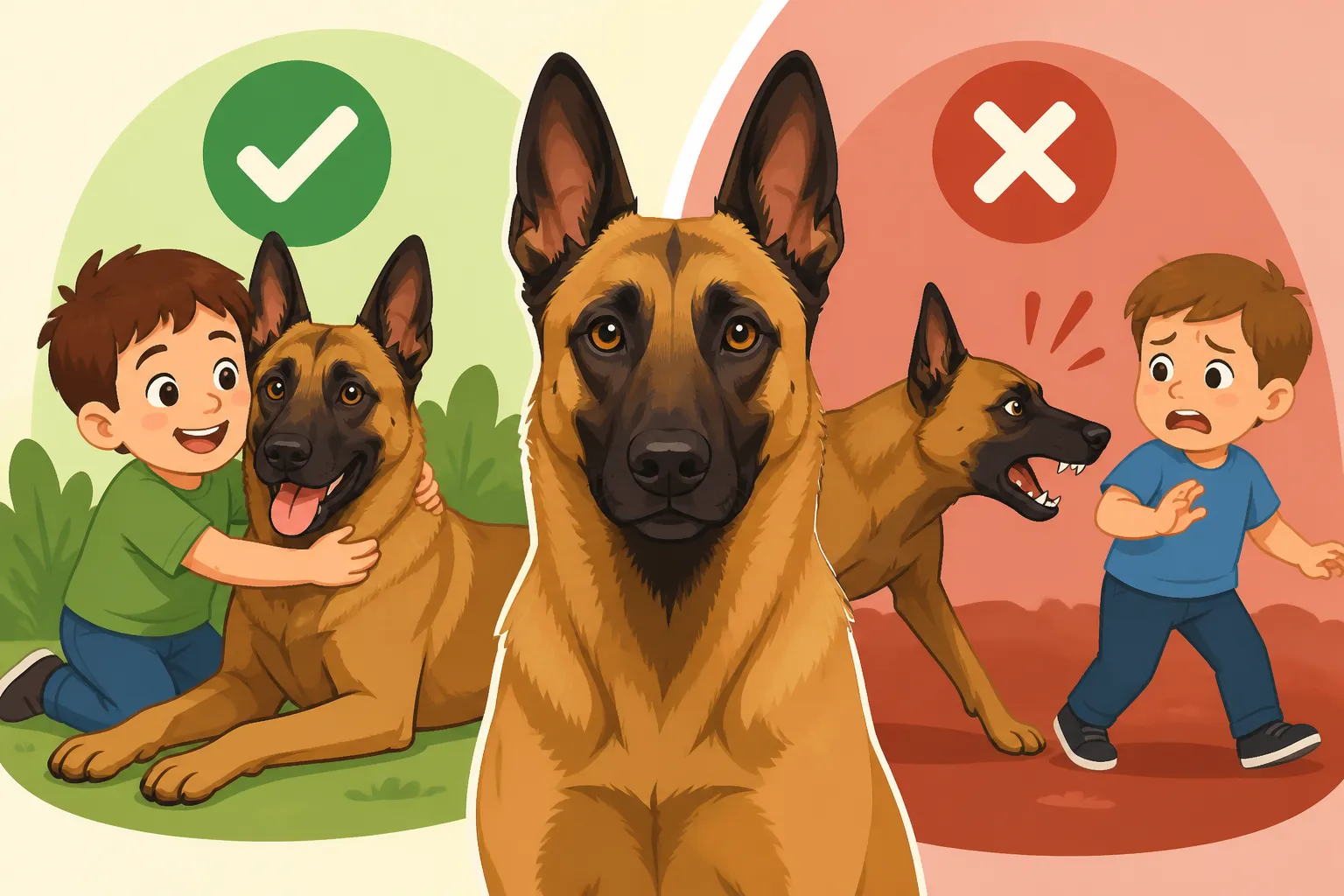
Whether a Belgian Malinois Tolerates Small Children
Many families are captivated by the intelligence, athleticism, and loyalty of the Belgian Malinois, but when small children are part of the equation, a critical question often arises: can this powerful, high-drive breed truly thrive in a home with toddlers and young kids? The breed's intensity and natural instincts can present unique challenges that need careful consideration and proactive management, and this guide aims to provide a realistic look at navigating this dynamic for the safety and happiness of everyone involved.
Understanding the Malinois Temperament Around Children
The Belgian Malinois is an incredible dog, bred for demanding work that requires sharp instincts, high energy, and often a protective nature. These traits, while invaluable in a working role, need to be understood and managed carefully when living alongside small, unpredictable humans. It’s not about judging the breed, but about understanding its inherent characteristics.
High Drive and Intense Play Style
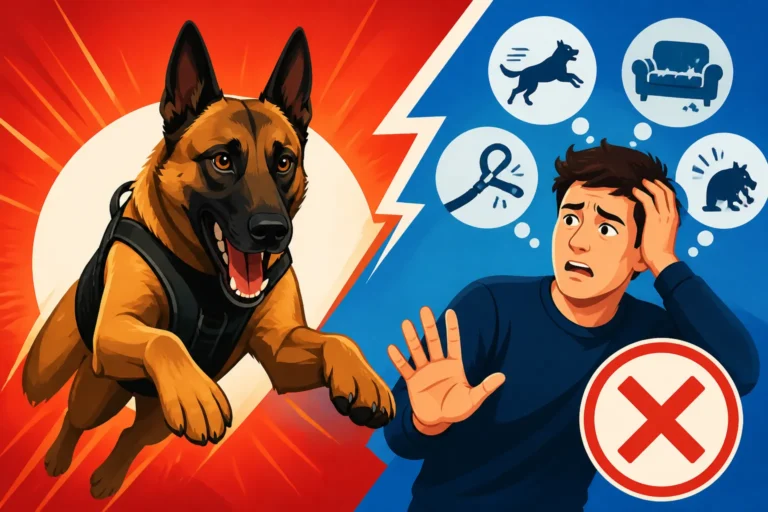
One of the most noticeable traits of a Malinois is its boundless energy and intense play style. These aren't the kind of dogs content with a gentle stroll and a cuddle on the sofa. They love to chase, mouth, and engage in vigorous physical activity. For an adult, this might mean a fun game of tug or fetch, but for a small child, it can be terrifying or even dangerous, albeit unintentionally. The sheer speed and power of a Malinois, even in play, can easily knock over a toddler.
Puppies, especially, go through what many owners call "the shark phase," where everything is a target for their sharp little teeth. A Malinois puppy, with its incredible drive, will naturally try to mouth and nip at moving objects, including small hands and feet. This isn't usually aggressive, but it's a natural puppy behavior amplified by the breed's intensity. If not properly redirected, a young Malinois can quickly overwhelm a child, turning playtime into a chaotic and potentially harmful situation. Even an older, well-trained Malinois might struggle to temper its exuberance around a child who runs, squeals, or flails their arms.
Protective Instincts and Resource Guarding
Belgian Malinois are inherently protective. They form strong bonds with their family members and can be quite vigilant about their territory. While this trait makes them excellent guardians, it requires careful handling around children. An innocent bump or loud interaction between siblings might be misinterpreted by a Malinois as a threat, potentially leading to a defensive reaction. Their guarding instincts can also extend to resources, such as food bowls, toys, or even favored resting spots.
Imagine a scenario where your Malinois is enjoying a favorite chew toy, and a curious toddler wanders over and tries to grab it. The dog, instinctively guarding its possession, might growl, snarl, or snap as a warning. This isn't a sign of a "bad" dog, but a natural, albeit problematic, behavior that needs to be prevented through careful management and training. It’s vital to recognize that a dog's protective instincts, combined with a child's lack of boundaries, create a high-risk environment.
Sensitivity and Startle Response
Despite their robust nature, many Belgian Malinois can be quite sensitive to sudden movements, loud noises, and unpredictable actions, all of which are hallmarks of small children. A child's sudden scream, a dropped toy, or an unexpected grab can easily startle a Malinois, leading to a reactive response. Some Malinois might react by cowering or fleeing, but others might snap defensively if they feel trapped or threatened.
Consider a busy household where a child suddenly runs around a corner and crashes into a resting Malinois, or unexpectedly pulls an ear or tail in a moment of childish curiosity. The dog’s immediate, instinctive reaction might not be gentle. It's not maliciousness, but a self-preservation response to a perceived threat or discomfort. This sensitivity means that interactions between a Malinois and children require constant, vigilant supervision to prevent any situations that could trigger a negative reaction.
Factors Influencing a Malinois's Behavior with Kids
While breed characteristics provide a general framework, a Malinois's behavior around children isn't predetermined. Many crucial factors contribute to how well an individual dog will integrate into a family with kids, ranging from its genetic background to the environment it's raised in.
Genetics and Early Socialization
A dog's temperament is significantly shaped by its genetics. A Malinois from stable, well-tempered lines, where both parents have proven sound temperaments and health clearances, is more likely to have a balanced disposition. Responsible breeders will prioritize temperament alongside working drive, ensuring their puppies have the best possible start. It’s worth asking about the temperament of the parents and any prior litters if you're considering a puppy from a breeder.
Equally important is early socialization. A puppy that has been exposed positively and safely to a variety of sights, sounds, people (including respectful children), and experiences during its critical developmental window (roughly 3-16 weeks) will be far more resilient and adaptable. Conversely, a Malinois that lacked early exposure to children, or had negative experiences, will be much harder to integrate later. If you are considering a puppy, ask the breeder directly about their Whether Children Can Be Around a Malinois Puppy socialization practices. They should be able to describe how they introduce puppies to various stimuli in a controlled, positive manner, especially if their puppies are destined for active family homes.
Training, Exercise, and Mental Stimulation
An absolute cornerstone for successful Malinois ownership, particularly in a home with children, is rigorous and consistent training, ample exercise, and significant mental stimulation. This isn't a breed that you can simply "walk" into submission. They demand a job, a purpose, and physical outlets for their intense energy. An under-exercised or mentally bored Malinois can quickly become destructive, anxious, and hyper-reactive, making it a very challenging companion for anyone, let alone small children.
The phrase "Two Hours and a Job a Belgian Malinois Demands Daily" isn't an exaggeration; it's a fundamental requirement. This isn't just about running in a yard; it’s about structured activities like advanced obedience, bite work, agility, or scent detection. A Malinois that isn't getting its needs met will find its own (often undesirable) ways to burn energy and engage its brain, which can manifest as relentless herding behavior, destructive chewing, or fixating on small, fast-moving targets – like children. A truly tired and mentally fulfilled Malinois is a far calmer, more tolerable, and safer presence in a home.
Child's Age, Temperament, and Understanding of Dogs
The equation isn't just about the dog; the children's role is equally critical. Small children, particularly toddlers and preschoolers, are inherently unpredictable, lack fine motor control, and don't understand canine body language. They might unintentionally pull ears, poke eyes, fall on a dog, or scream unexpectedly – all actions that can provoke a defensive reaction from even a well-socialized dog. Expecting a Malinois to tolerate everything a small child does is unrealistic and unfair to the dog.
As children get older, typically around ages five or six, they can begin to understand and follow rules about dog interaction, such as no teasing, no bothering a sleeping dog, and always asking permission to pet. The responsibility lies squarely with the adults to teach children appropriate "dog manners" and to constantly supervise all interactions. Without this critical piece, the risk of an incident, no matter how well-trained the Malinois, remains high. It's a two-way street, but children simply don't have the capacity for judgment that adults do.
Proactive Training and Socialization Strategies
Successfully integrating a Belgian Malinois into a family with small children is not a passive endeavor; it requires intentional, consistent, and proactive training and socialization from day one. This foundation is what builds a reliable dog and a safe environment for everyone.
Foundation Obedience and Impulse Control
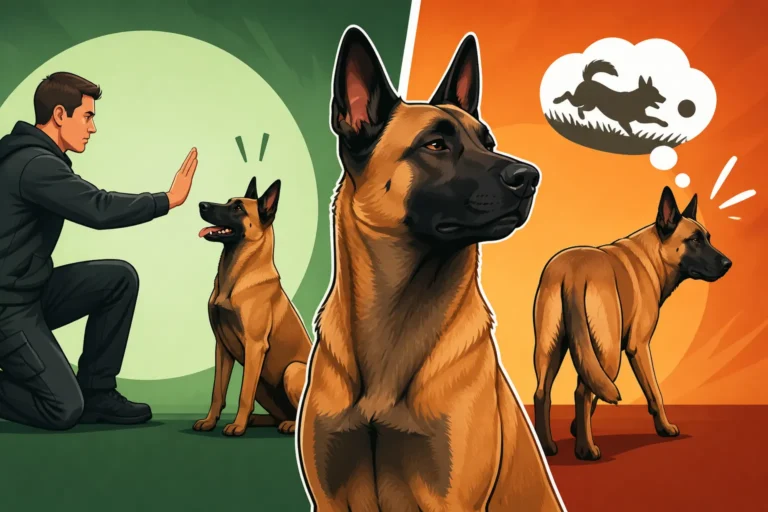
Rock-solid obedience is absolutely non-negotiable for a Malinois, especially when children are present. Commands like "Sit," "Stay," "Down," and a bomb-proof "Recall" are critical. However, equally important, if not more so, is impulse control. A Malinois needs to learn to resist the urge to chase, mouth, or jump, even when highly stimulated. Commands like "Leave It" and "Wait" become lifesaving tools in a busy household.
Teaching a strong "Place" command, where the dog goes to a designated spot (like a mat or bed) and remains there until released, is invaluable. This allows you to manage the dog's presence when children are active, creating a safe distance. Imagine children playing rambunctiously in the living room; a reliable Building a Malinois's Place Command means your Malinois can be calmly settled on its mat, observing from a distance, rather than being in the thick of the excitement. Programs like those offered by BAXTER & Bella can be incredibly helpful for new puppy owners, providing structured online guidance for building these foundational obedience and impulse control skills, setting up owners for success in managing high-drive breeds around family.
Controlled Exposure and Positive Reinforcement
Introducing your Malinois to children must be a carefully managed process, always prioritizing positive experiences and safety. Start with very controlled, brief exposures. Have the dog on a leash and muzzle conditioned, if necessary, with an adult handler firmly in control. The children should be taught to be calm and quiet. Reward the Malinois for calm behavior in the presence of children with high-value treats and praise.
Never force interactions. Allow the dog to approach the child on its own terms, or not at all. Focus on short, positive sessions where the Malinois associates children with good things. For a young puppy that still needs to learn bite inhibition, redirecting their mouthing onto appropriate toys is essential. If you have A Malinois Puppy That Bites Everything Including You, immediate redirection to a tug toy or a chew, followed by praise, is critical. This teaches the puppy what is acceptable to bite. When they start to target clothing or hands, specifically, a quick redirection to a toy or a short time-out can communicate that Handling a Malinois Puppy That Latches Onto Clothing is not okay, while avoiding harsh punishments that can instill fear.
Teaching "Dog Manners" to Children
While much of the training focuses on the dog, educating children on how to behave around dogs is paramount. Children need to understand that a dog is not a toy. Teach them to be gentle, to respect the dog's space, and never to bother a dog while it's sleeping, eating, or chewing. Explain that dogs communicate through body language, and that certain signals (like turning away, lip-licking, or growling) mean the dog needs space.
One excellent rule for children is "Be a tree" – if a dog gets too excited or approaches them in an unwanted way, they should stand still, hands to their sides, and look at their feet. This removes the "fun" of the chase or rough play for the dog and makes the child less likely to fall or get hurt. Emphasize that loud noises and sudden movements can scare dogs. This education should be ongoing, reinforcing these rules consistently as children grow and their understanding develops.
Creating a Safe Home Environment for Both
Even with impeccable training and socialization, the inherent drives of a Belgian Malinois and the unpredictable nature of small children necessitate a highly managed and physically safe home environment. This means utilizing barriers, creating dedicated spaces, and maintaining constant vigilance.
Physical Barriers and Management Tools
Physical barriers are your best friends in a multi-species household. Baby gates, sturdy crates, and even exercise pens can be invaluable tools for creating safe zones and ensuring separation when direct supervision isn't possible. A gate across a doorway can prevent a curious toddler from wandering into the dog's space, or keep a high-energy Malinois from rushing children during meal times or chaotic play.
Crate training your Malinois is not just about house-training; it provides a secure, private den for your dog where it can relax undisturbed. This is especially important in a busy household with children. When the dog is in its crate, children must be taught that it is off-limits. Finding reliable, robust barriers is key, and resources like Amazon offer a wide array of options, from pressure-mounted gates to permanent, extra-tall varieties that even an agile Malinois won't easily clear.
Designated Dog Spaces and "Time Out" Zones
Every Malinois needs its own sanctuary – a place where it can retreat and be guaranteed peace and quiet, safe from grabby hands or boisterous play. This could be its crate, a dog bed in a quiet room that’s gated off, or even a secure outdoor kennel run. Children must be explicitly taught to respect this space. When the dog is in its designated area, it is to be left alone, no exceptions.
This concept is crucial for preventing stress-related incidents. A dog that feels constantly harassed or unable to escape interaction may eventually snap. By providing a safe haven, you empower your Malinois to manage its own stress levels and reinforce the understanding that it has a place of security. For those with ample outdoor space, Building a Run a Malinois Cannot Escape can offer a robust, secure, and comfortable outdoor den where the dog can have its alone time without being exposed to the continuous unpredictable movements of young children.
Strict Supervision and Never Leaving Unattended
This is the golden rule, the non-negotiable principle: never leave a Belgian Malinois and a small child unsupervised, even for a moment. Accidents can happen in a flash, and even the most well-behaved dog can react unpredictably if startled or provoked, even unintentionally. If you need to step out of the room, even just to grab something from the kitchen, either the dog or the child (or both) must be secured.
Think of it as setting up your home for success rather than failure. This isn't about distrusting your dog; it's about acknowledging the inherent risks when powerful animals and vulnerable humans share space. An adult must always be actively engaged in supervising the interaction, ready to intervene instantly, calmly, and effectively. If you're going to take a phone call, shower, or focus on another task, ensure your Malinois is in its crate or behind a sturdy gate, and your child is in a secure play area or with another responsible adult.
Recognizing Warning Signs and Managing Interactions
Even in the most carefully managed environments, dogs communicate their feelings, and understanding these signals is paramount for preventing escalation. Learning to read your Malinois’s body language and knowing when and how to intervene are critical skills for any owner, especially those with children.
Decoding Canine Body Language
Dogs don't speak human languages, but they are masters of non-verbal communication. Learning to recognize the subtle (and sometimes not-so-subtle) signs of stress, discomfort, or irritation in your Malinois can be a lifesaver. Look for signals such as lip licking, yawning (when not tired), turning the head away, freezing, "whale eye" (where the whites of the eyes are visible), a stiff body posture, a tucked tail, or flattened ears. These are all signs that your dog is uncomfortable and needs space.
Before a dog growls or snaps, it almost always gives a series of these more subtle warnings. A growl is a last-ditch effort to communicate discomfort and ask for distance. Punishing a growl can be dangerous, as it teaches the dog that its warnings are unwelcome, potentially leading it to skip the warnings and go straight to a bite. Instead, view a growl as valuable information that your dog is stressed and needs immediate intervention.
Immediate Intervention and Redirection
If you observe any warning signs, no matter how subtle, immediate and calm intervention is essential. Do not wait. Separate the dog and child immediately. This might mean gently leading the dog away on a leash, sending it to its "Place," or calmly picking up the child. The goal is to diffuse the situation before it escalates, not to punish the dog.
Once separated, redirect the Malinois to a more appropriate activity or a safe space. Give it a puzzle toy or a long-lasting chew in its crate. This helps to de-escalate its stress and provides an acceptable outlet for its energy. If the child was the cause of the stress, address the child's behavior, but away from the dog. This swift, calm response teaches both dog and child that you are in control and capable of keeping everyone safe, preventing potential incidents and reinforcing trust.
Safe Play and Appropriate Interaction
Not all play is suitable for a Malinois with small children present. High-energy, prey-driven games like chasing, wrestling, or chaotic fetch sessions might be too stimulating and increase the risk of an accidental injury. Instead, focus on structured, controlled activities that maintain distance or have a clear purpose.
For instance, children can participate in controlled fetch by throwing a ball for the Malinois (under close adult supervision), but the child should remain still while the dog retrieves. Scent work or simple obedience commands where the child gives a treat for a "sit" (again, with careful supervision) can also be positive interactions. Using a flirt pole, where the Malinois chases a lure attached to a long stick, can be an excellent way to safely engage the dog’s prey drive while keeping the child at a distance. Flirt Poles and a Belgian Malinois's Drive offer an incredible outlet for their natural instincts without direct physical contact with the child, making it a safer option for burning off that intense energy.
When to Seek Professional Help
Despite all best efforts, there are times when the challenges of a Malinois with small children become too great for owners to manage alone. Recognizing when to seek professional guidance, or even considering a different path, is a sign of responsible ownership.
Behavioral Consultations for Specific Issues
If your Malinois is exhibiting consistent problem behaviors around children—such as growling, snapping, resource guarding, or an inability to settle despite meeting its physical and mental needs—it's crucial to seek the help of a certified professional dog behaviorist. Not just any trainer will do; look for someone with expertise in high-drive breeds and aggression management, ideally a certified applied animal behaviorist (CAAB) or a veterinary behaviorist (DACVB).
These professionals can assess the root cause of the behavior, evaluate the family dynamic, and develop a tailored behavior modification plan. They can help implement strategies like counter-conditioning, desensitization, and advanced management techniques. Ignoring these issues or hoping they will "get better" is a dangerous gamble that puts children at risk. Early intervention from a qualified expert can sometimes turn a challenging situation around, but it requires significant commitment from the family. It is also wise to prepare for such consultations by considering whether Muzzle Conditioning Before a Malinois Ever Needs One has been part of your routine. A dog comfortable with a muzzle can be safely assessed and managed during consultations and in high-risk situations.
Considering the Family's Well-being and Dog's Future
Sometimes, despite every effort and professional intervention, a Belgian Malinois and small children are simply not a safe or harmonious match. The constant vigilance, stress, and anxiety can take a significant toll on the entire family. In such heartbreaking situations, the most responsible decision may be to rehome the Malinois to a home environment that is better suited to its needs and where it can thrive without posing a risk to children.
This is never an easy decision, but the safety and well-being of the children must always come first. A Malinois deserves a home where its unique needs are met, and it can live a fulfilled life without constant stress. A family with small children needs peace of mind, not constant worry. Being realistic about Whether a Belgian Malinois Suits a Family Home requires immense honesty and self-awareness. It's a testament to responsible ownership to acknowledge when a situation isn't working and to make the difficult choice to find a more appropriate environment for the dog, ensuring its welfare and the family's safety.
| Malinois Behavioral Trait | Common Child Behavior | Potential Conflict Point | Mitigation Strategy |
|---|---|---|---|
| High Drive/Prey Drive | Running, squealing, quick movements | Chasing, nipping, accidental knocking | Leash control, "Place" command, structured play |
| Protective Instincts | Approaching dog's bed/toys, loud play | Resource guarding, misinterpretation of threats | Designated safe zones, "Leave It," no interaction during eating/chewing |
| Sensitivity to Surprise | Sudden grabs, unexpected noises | Startle response, defensive snapping | Constant supervision, teaching children gentle interaction |
| Need for Mental & Physical Work | Demanding attention, random actions | Under-stimulated dog seeking an outlet | Rigorous training, daily jobs, puzzle toys |
| Mouthiness (especially puppies) | Small hands/feet, clothes | Mouthing, nipping, latching on | Redirection to appropriate chew toys, early bite inhibition training |
Disclaimer
This article is for general informational purposes only and does not constitute professional advice. Laws, prices and regulations vary by location and change over time. Consult a qualified professional for guidance on your specific situation.