Long Line Work With a Malinois in Open Ground
One of the biggest dreams for any Belgian Malinois owner is seeing their powerful, intelligent dog gracefully work off-leash in a wide-open field, truly connected and responsive. However, the reality for many is a constant battle with a dog whose prey drive kicks in at the slightest squirrel flick, or who simply seems to forget English when there isn't a fence around. This guide is dedicated to helping you bridge that gap, showing you how to confidently use a long line in open ground to build the rock-solid reliability you crave, turning those frantic moments into focused training opportunities.
Why Long Line Work Is Absolutely Essential for Your Malinois
Let's be honest, dreaming of off-leash freedom with a Malinois isn't just a fantasy; it's a testament to the bond and control we strive for. But getting there safely and effectively, especially with a breed renowned for its intensity and drive, requires a strategic approach. This isn't about simply letting your dog drag a long line around; it's about using it as a crucial training tool.
Building a Foundation for Future Off-Leash Freedom
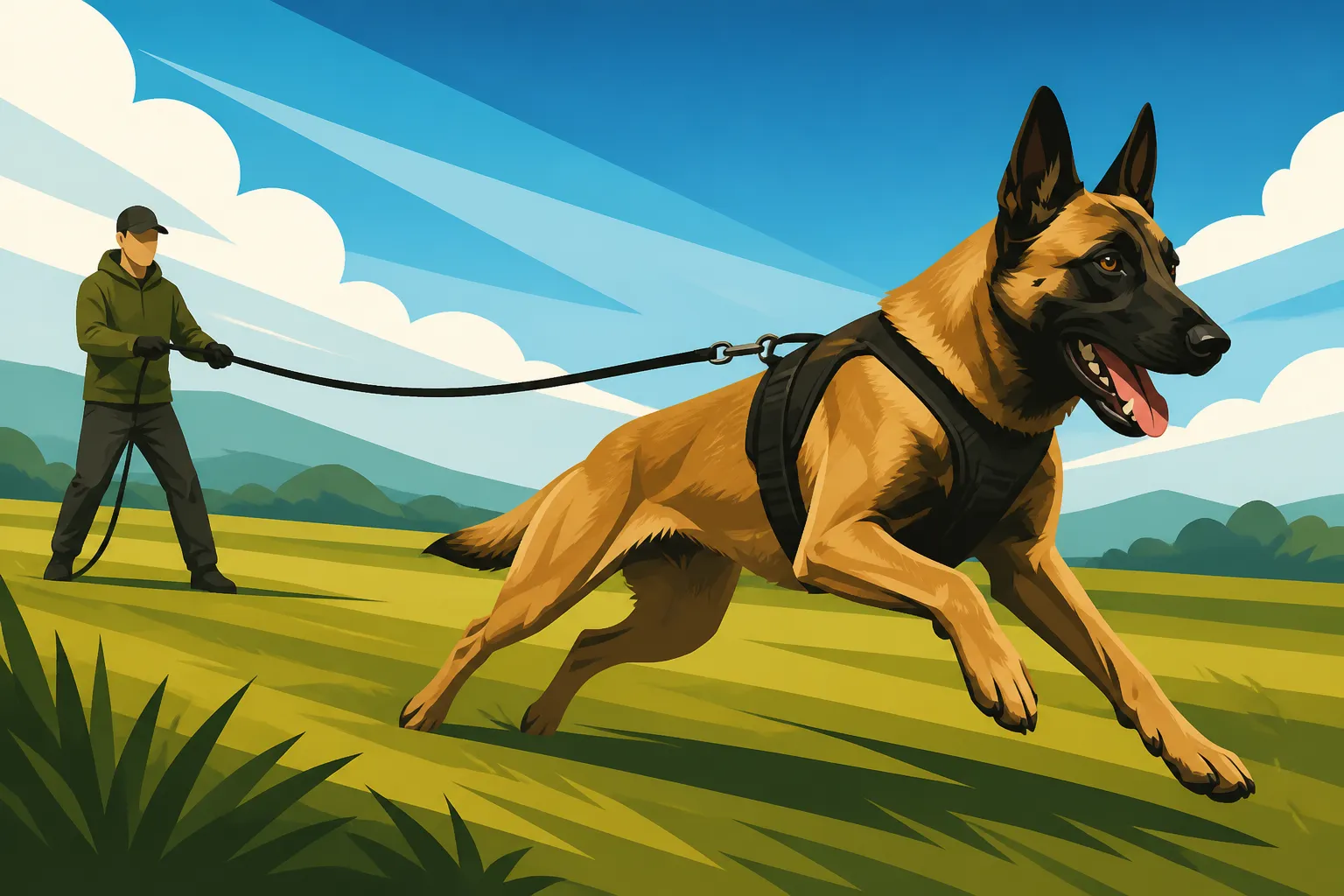
Think of the long line as your longest leash, an extension of your arm that allows you to teach and enforce commands at a distance you simply can't achieve with a standard six-foot lead. This is particularly vital for a Malinois, whose working instincts can kick in fast and hard. If you can't reliably call your dog back from a distraction on a 15-foot line, how can you expect them to respond when they're 100 feet away with a deer in their sights? The long line provides that essential safety net, letting you proof your Recall on a Belgian Malinois in Full Drive in environments that mimic true off-leash scenarios. You're teaching them that your commands extend beyond the immediate physical tether, instilling the muscle memory and understanding that "come" or "leave it" means exactly that, no matter the distance or distraction.
This foundational work also helps your Malinois understand boundaries. They learn that even when they feel free, there are still rules and expectations. This graduated approach is far less stressful for both handler and dog than simply throwing caution to the wind and hoping for the best. It allows for mistakes to happen in a controlled manner, giving you the opportunity to reinforce desired behaviors without the panic of a full-blown runaway.
Safety First: Preventing Runaways and Accidents
The thought of your Malinois bolting after a rabbit and running into traffic, or disappearing over the horizon, is enough to give any owner nightmares. Malinois are incredibly fast, agile, and often possess an unstoppable drive. Once they lock onto something, their focus can be absolute, making them deaf to even the most urgent calls. This is where the long line shines as your primary safety device. It prevents your dog from practicing the undesirable behavior of running away. Every time they ignore your recall and successfully chase something, they're being rewarded for that choice, making it harder to break the habit later.
With a long line, you maintain physical control, even when your dog is at a distance. If they start to bolt, you can stop their momentum, allowing you to regain their attention and re-engage. This is invaluable in areas where you might encounter unexpected wildlife, other dogs, or even people who aren't comfortable with an off-leash Malinois. It's about being a responsible owner, protecting both your dog and the public, while still allowing your Malinois to experience the joy of exploring open spaces. This crucial safety measure is a non-negotiable step before you even consider whether a Malinois is ever safe off leash.
Strengthening Your Bond and Communication
Training with a long line isn't just about control; it's a powerful way to build a deeper connection and clearer communication with your Malinois. When you're working at a distance, both you and your dog have to rely more heavily on verbal cues, body language, and consistent expectations. Your Malinois learns to check in with you, to understand that even when they're exploring, you are still the center of their world and the source of guidance and reinforcement.
This focused interaction in stimulating environments builds trust. Your dog learns that you are reliable, that you will guide them safely, and that listening to you leads to good things – whether it's a high-value treat, a favorite toy, or permission to continue exploring. This process of continually checking in and responding to cues, even with the subtle tension of the line, reinforces your leadership and strengthens the partnership between you and your Malinois. It's a continuous dialogue, allowing you to observe their instincts in action and gently redirect them back to you, reinforcing that you are more exciting than the fleeting distraction.
Choosing the Right Gear and Setting the Scene
Before you head out to that expansive field, having the right equipment and a suitable environment is paramount for effective and safe long line training. You wouldn't tackle a marathon without the right shoes, and you shouldn't tackle long line work without the appropriate setup for your powerful Malinois.
Selecting the Perfect Long Line: Length, Material, and Durability
The long line itself is your most important tool, and selecting the right one makes all the difference. For a Belgian Malinois, durability is key. They're strong dogs, and a flimsy line can snap or fray quickly, turning your training session into a lost dog scenario.
Here's a breakdown of considerations:
| Feature | Recommendation for Malinois | Why it Matters |
|---|---|---|
| Length | Start with 15-20 feet, gradually increasing to 30-50 feet. | Allows for distance training; too long initially is unmanageable. |
| Material | Biothane, nylon webbing, or durable rope. Avoid cotton. | Biothane is waterproof, easy to clean, doesn't snag. Nylon is strong. Cotton gets heavy, tangles, and burns. |
| Width/Thickness | Minimum 1/2 inch to 3/4 inch wide. | Provides a secure grip, less likely to snap under pressure from a strong dog. |
| Hardware | Solid brass or heavy-duty steel snap hook. | Essential for security; cheap clips can bend or break. |
| Handle | Loop handle is common, but can get caught. Some prefer no handle. | If using a handle, ensure it's comfortable to grip. No-handle prevents snagging on obstacles. |
You'll find a good selection of high-quality long lines on platforms like Amazon, offering various lengths and materials. For a Malinois, I personally lean towards Biothane lines because they don't absorb water, mud, or odors, which is a huge plus when training in varied outdoor conditions. They're also less prone to tangling than traditional rope lines. Remember, this is an investment in your dog's safety and your training success, so don't skimp on quality.
Harness vs. Collar: What's Best for Control and Comfort
For long line work, a well-fitting harness is almost always preferred over a collar, especially a flat collar. A Malinois hitting the end of a long line with speed can put immense pressure on their neck, potentially causing injury to the trachea or spine.
- Harness (Front-clip or Y-harness): A harness distributes pressure across the chest and shoulders, reducing strain on the neck. Front-clip harnesses can offer additional steering control, gently turning your dog towards you if they pull. A well-designed Y-harness provides comfort and full range of motion. This is the safest option for long line work, preventing potential injuries from sudden stops or pulls. Ensure it fits snugly but doesn't restrict movement or rub.
- Flat Collar: Generally not recommended for long line work due to the risk of neck injury if the dog suddenly hits the end of the line at speed.
- Prong Collar/Choke Chain: Absolutely not appropriate for long line work. The sudden, forceful jolt if your dog hits the end of a long line while wearing one of these can cause severe and immediate injury. Save these tools for controlled, close-proximity leash work, if you choose to use them at all.
Your primary goal is to ensure your Malinois is comfortable and safe, allowing them to focus on learning rather than discomfort or potential pain.
Finding the Ideal Open Ground for Training
The "open ground" part of long line work is key, but not all open grounds are created equal. You need a space that offers safety and minimal uncontrolled variables, especially when you're just starting out.
Look for:
- Securely Fenced Areas: This might sound counterintuitive for "open ground," but if you're working on truly reliable recall, starting in a large, securely fenced field is ideal. It offers a safety net for any unexpected slips while you're still getting the hang of handling the line.
- Low-Distraction Environment: Initially, choose a place with minimal foot traffic, other dogs, or wildlife. A quiet park early in the morning, a private field, or a large, unoccupied sports field can be perfect. As your dog progresses, you can gradually introduce more distractions, but starting quiet sets you up for success.
- Even Terrain: Avoid areas with dense brush, rocky ground, or uneven terrain where the line can easily snag or you or your dog could trip. Open, grassy fields are generally the best.
- Space to Move: You need enough room for your Malinois to run out the full length of the line without immediately hitting a boundary. This allows them to feel a sense of freedom while still being connected to you.
Remember, the goal is to set your Malinois up for success. Choosing the right environment prevents unnecessary frustration and makes learning more enjoyable for everyone involved. How Many Hours a Belgian Malinois Should Work Daily is important, but where they do that work is equally vital for productive training.
Step-by-Step Guide to Effective Long Line Training
Alright, gear's sorted, location's picked, now let's get down to the actual training. Long line work with a Belgian Malinois requires patience, consistency, and a keen understanding of your dog's drives. It's a progressive journey, not a sprint.
Starting Small: Mastering the Basics in a Controlled Space
Before you unleash the full 50-foot line in a massive field, it's wise to start with a shorter line, say 15-20 feet, in a less overwhelming environment. This could even be your securely fenced backyard. The idea is to build initial confidence and understanding for both of you.
- Introduce the Line Positively: Attach the long line to your Malinois's harness and let them drag it around. Supervise closely so they don't get tangled or chew on it. Make it a positive experience by scattering treats or engaging in a brief play session.
- Practice Short Recalls: With your dog on the shorter line, let them wander a few feet away. Then, enthusiastically call their name and give your recall command ("Come!", "Here!"). If they hesitate, gently reel them in with steady, consistent pressure on the line, rather than a harsh jerk. As they come to you, praise lavishly and reward with a high-value treat or a quick game of tug. The moment they arrive is a party!
- Release and Repeat: Once they've come to you, release them to wander again. Don't immediately recall them. Give them a moment to explore, then repeat the process. The key is to make coming to you the most rewarding thing they can do.
- Practice "Check-ins": Encourage your Malinois to look back at you voluntarily. Reward these check-ins with praise or a dropped treat. This builds a habit of mindful awareness of your presence, which is crucial for Building Engagement With a Belgian Malinois.
Focus on keeping these initial sessions short, positive, and successful. End on a good note, always.
Introducing Distractions and Expanding the Environment
Once your Malinois is consistently responding to your recall on a shorter line in a low-distraction setting, it's time to up the ante. This is where the longer lines (30-50 feet) and open fields come into play.
- Gradual Increase in Length: Switch to your longer line. Start in the same familiar, low-distraction open ground. Allow your dog to explore further, giving them the sensation of greater freedom.
- Controlled Distractions: Begin to introduce very mild distractions. This might be a toy you toss a short distance away, or a neutral person walking quietly in the distance. The long line is your safety net to manage these distractions.
- Engage and Disengage: Let your Malinois investigate a distraction for a moment, then call them back. The ability to disengage from something interesting and re-engage with you is a hallmark of a well-trained working dog. Use your body language, happy voice, and irresistible rewards. Maybe you have a favorite tug toy only for these moments, or a pocket full of special treats from Amazon.
- Vary Locations: Move your training to different open ground locations. Each new environment presents new sights, sounds, and smells, which serve as natural distractions. Practice in various parks, fields, and open spaces, gradually increasing the level of environmental stimulation. This helps generalize the behavior so your Malinois understands "come" means "come" everywhere, not just in your backyard.
Remember, the goal isn't to prevent your Malinois from ever seeing a distraction, but to teach them to choose you over that distraction.
What to Do When Your Malinois Hits the End of the Line
This is often the moment of truth, and it's where the integrity of your gear and your technique truly matter. When your Malinois, caught up in the thrill of the chase, suddenly hits the end of the line, it can be quite jarring for both of you.
- Brace Yourself (Literally): Always be aware of how much line is out and ready for impact. If you're holding the line, brace your body. If it's dragging, be ready to step on it. Never wrap the line around your hand or wrist, as this can cause serious injury.
- Apply Gentle, Steady Pressure: As your Malinois hits the end, the line will tighten. Do not yank it. Instead, maintain a steady, firm pressure. This pressure acts as a physical consequence, teaching them that running to the end of the line isn't a free pass.
- Immediate Recall and Redirection: The moment they are stopped by the line, immediately give your recall command. Most Malinois, when their forward momentum is halted, will be momentarily confused and more receptive. Use this window! Encourage them back to you with an excited voice and open arms.
- Reward for Returning: When they turn and start coming back, praise them enthusiastically. When they reach you, give them the biggest reward possible – whether it's their favorite squeaky toy, a handful of high-value treats, or a lively play session. The goal is to associate the return after hitting the line with a positive outcome, not the negative experience of being stopped.
- Analyze and Adjust: Why did they hit the end of the line? Was the distraction too high? Were you not engaging enough? Did you wait too long to call them? Use these moments as learning opportunities to refine your timing and management for the next session.
Hitting the end of the line isn't a failure; it's a teaching moment. How you handle it determines whether your Malinois learns to respect the line and your commands, or just learns to fight against it.
Gradually Reducing Reliance on the Long Line
The ultimate goal is for your Malinois to be reliable off-leash. The long line is a bridge, not a permanent fixture. Once your dog is consistently responding to recalls and other commands on a 30-50 foot line in varied environments, you can start subtly reducing your reliance on it.
- The "Drag Line" Phase: Attach the long line, but let it drag freely on the ground. This gives your dog the sensation of being off-leash while still providing you with a means to intervene if needed. If they ignore a recall, you can quickly step on the line to stop them.
- Short Bursts of "Freedom": In a very safe, low-distraction area, periodically drop the line entirely for short periods. Immediately call your dog back after a minute or two. The goal is for them to experience temporary off-leash freedom, but always with a quick, successful recall. Gradually increase the duration as their reliability grows.
- E-Collar Integration (Optional, for advanced users): For some Malinois owners, an E-collar becomes the next step in establishing off-leash reliability, essentially serving as a remote long line. If you choose this path, it's crucial to condition your dog to the E-collar very carefully and humanely, always pairing corrections with known commands, and ideally, under the guidance of a professional trainer. Many resources, like BAXTER & Bella, offer guidance on advanced training techniques including E-collar conditioning, if you decide this tool is right for you. Never use an E-collar as a punishment device; it's a communication tool. E-Collar Timing on a Belgian Malinois is critical for success.
- Trust, But Verify: Even with the most reliable Malinois, complete off-leash freedom should only be granted in appropriate, safe environments. Continually test and reinforce your training. Your Malinois is a highly intelligent, driven animal, and their instincts will always be there.
The journey from long line to off-leash isn't about removing the line; it's about building a connection strong enough that the line becomes redundant.
Common Challenges and Troubleshooting Tips
Training a Belgian Malinois, especially on a long line, comes with its own set of unique hurdles. Their drive and intelligence can sometimes work against you if you're not prepared.
The Malinois That Ignores You in High Drive
This is perhaps the most common frustration. Your Malinois is tracking a scent, chasing a leaf, or locked onto a bird, and your voice might as well be the wind. It's disheartening, but it's also a clear signal that you need to adjust your strategy.
- Re-evaluate Your Rewards: Is what you're offering truly higher value than the distraction? For a Malinois, this often means very high-value food (think cooked chicken, cheese, hot dogs) or an irresistible toy for a brief, intense game of tug. Training Treats a Belgian Malinois Burns Through are not all created equal; some are definitely more motivating than others.
- Increase Engagement, Decrease Distance: Go back to basics. Work on closer recalls, making yourself the most exciting thing in the environment. Run away from your dog and call them! Use an excited voice, clap your hands, make silly noises. Practice Building Engagement With a Belgian Malinois in low-distraction areas until their focus on you is unwavering, even at 15-20 feet.
- Manage the Environment: If your Malinois is constantly blowing you off for deer, you're training in an area with too many deer. Find a less stimulating environment. Gradually introduce distractions in a controlled manner, at a distance where your dog can succeed at ignoring them (or at least being called away).
- Use the Line to Interrupt, Not Just Stop: Don't wait for your Malinois to hit the end of the line. If you see them about to bolt or becoming overly fixated, give a gentle, steady pull on the line before they're at full speed. Interrupt their focus, then immediately give your recall command and reward. This proactive approach teaches them to respond to subtle pressure, not just a hard stop.
- Focus on Mental Work Too: Physical exercise alone won't always cut it. Incorporate mental stimulation into your daily routine to help tire out their busy brains. The Mental Work That Finally Tires a Malinois Out can make a huge difference in their overall focus and responsiveness.
Dealing with Tangled Lines and Equipment Fails
A long line, by its very nature, can get tangled, snagged, and generally be a pain. And equipment, no matter how good, can fail.
- Proper Handling Technique: When letting line out, don't just drop it in a pile. Try to keep it somewhat organized in loose coils or feed it out smoothly. When reeling in, coil it back neatly. This takes practice.
- Line Material Matters: As mentioned earlier, Biothane lines are excellent for reducing tangles because they don't have the "memory" of rope or webbing. They're also less likely to snag on brush.
- Scan the Environment: Before letting your Malinois run, quickly scan the area for potential snag hazards: thick bushes, sharp rocks, fences, or even picnic tables. Try to guide your dog away from these areas.
- Regular Equipment Checks: Before every session, inspect your long line and harness. Check the stitching on the harness, the integrity of the line material, and especially the snap hook. Look for any signs of wear, rust, or damage. A weak snap can break, and a frayed line can snap, putting your dog at risk.
- Practice Quick Detachment (Safety First): In an emergency (e.g., line snagged on something dangerous, dog goes over a cliff edge), you might need to quickly detach the line. Practice opening the snap hook under pressure (safely, of course, not with your dog in danger). Always carry a knife or a sharp tool in case you need to cut the line in a dire emergency, though this should be an absolute last resort.
When the Long Line Becomes a Crutch
It's easy to fall into the habit of simply managing your Malinois with the long line, rather than using it as a training tool to build true reliability. If you find yourself constantly correcting your dog with the line and not seeing improvement in their response to verbal cues, you might be using it as a crutch.
- Revisit the Goal: The long line is meant to bridge the gap to off-leash freedom. Are you actively working towards that, or just surviving the walk?
- Focus on Reinforcement, Not Just Correction: Is every interaction with the long line a negative one (stopping them)? Or are you using it to set them up for success, recalling them before they hit the end, and rewarding heavily? Shift your focus to proactive praise and rewards for good choices.
- Vary Your Training: Don't just do recalls. Practice "downs" at a distance, "stays," and "touches" from afar. Use the line to enforce these commands, but fade the physical cue quickly to rely on your voice.
- "Leave It" Practice: A strong "leave it" is invaluable. Practice this with distractions at varying distances, using the line to prevent your Malinois from engaging with the item if they choose to ignore you. You can find excellent instructional programs, such as those offered by BAXTER & Bella, that break down these fundamental commands. A Belgian Malinois That Pulls Toward Every Distraction often benefits immensely from a strong "leave it" command.
- Gradually Reduce the Line's Presence: As discussed, transition to a drag line, then drop the line for short, successful periods. If you're hesitant to drop the line, it means you still have work to do on your communication and your dog's reliability.
Knowing When to Seek Professional Guidance
Long line training, especially with a high-drive breed like the Malinois, isn't always straightforward. If you're consistently running into roadblocks, feeling overwhelmed, or unsure how to progress, it's absolutely okay – and often highly beneficial – to seek professional help.
Consider a professional trainer if:
- Your Malinois consistently ignores your recalls, even on the long line.
- You're struggling with severe reactivity (towards other dogs, people, or wildlife) that the long line isn't helping you manage effectively.
- You're concerned about your handling technique or proper use of the line.
- You want to transition to advanced tools like an E-collar and need guidance on humane and effective application.
- You simply feel stuck and need an objective eye to evaluate your progress and offer tailored solutions.
A good trainer, particularly one experienced with working breeds, can observe your dynamic with your Malinois, identify specific areas for improvement, and provide personalized strategies. They can help you refine your timing, handling, and reward systems, ensuring you're getting the most out of your long line work and building the foundation for a truly reliable companion. Don't be afraid to ask for help; it's a sign of a responsible and dedicated owner. Whether a Malinois Is Ever Safe Off Leash is a question best answered with solid training and, if needed, professional support.
Disclaimer
This article is for general informational purposes only and does not constitute professional advice. Laws, prices and regulations vary by location and change over time. Consult a qualified professional for guidance on your specific situation.