Whether a Malinois Attaches to a Single Person
It’s a common worry for anyone bringing a Belgian Malinois into their home: will this incredibly intense, focused dog only bond with one person? Many prospective owners, and even those who've had other breeds, grapple with the idea that their Malinois might become a "one-person dog," leaving other family members feeling excluded or even, at worst, seen as secondary. This guide will dive deep into the Malinois's unique bonding style, explain why this perception exists, and offer practical strategies to ensure your Malinois forms strong, respectful relationships with everyone in your household.
Understanding the Malinois's Bonding Nature
The Belgian Malinois is a breed forged in the crucible of work. Their entire history, from herding sheep on Belgian farms to excelling in police and military roles today, is built upon a profound partnership with a human handler. This isn't just about obedience; it's about an unwavering focus, a keen desire to understand and anticipate their handler's every cue, and a drive to work with that person to achieve a goal. This inherent trait often gets misinterpreted as an exclusive devotion.
The Instinctive Drive for a "Handler"
Imagine a shepherd out in the fields, relying on their Malinois to gather a flock or a police officer on patrol, needing their K9 partner to detect narcotics or apprehend a suspect. In these scenarios, clear, consistent communication and an unbreakable bond with one individual are not just desirable, they are absolutely essential for success and safety. The Malinois was selectively bred for this intense handler focus. They thrive on direction, on having a "job" that is intricately linked to their human partner. This isn't just about love; it's about purpose and survival in their original working context.
This deep-seated drive means that a Malinois naturally looks for leadership and guidance. They want to be part of a team, and in many cases, they will instinctively gravitate towards the person who provides the most consistent structure, training, and perceived leadership. This individual often becomes their "primary handler" – the one they defer to most readily, the one whose cues they respond to with lightning speed. It's not necessarily a snub to other family members; it's the fulfillment of a powerful instinct to partner effectively. Owners often underestimate The Handler Experience a Belgian Malinois Needs to properly channel this instinct.
Not Necessarily a "One-Person Dog" in Practice
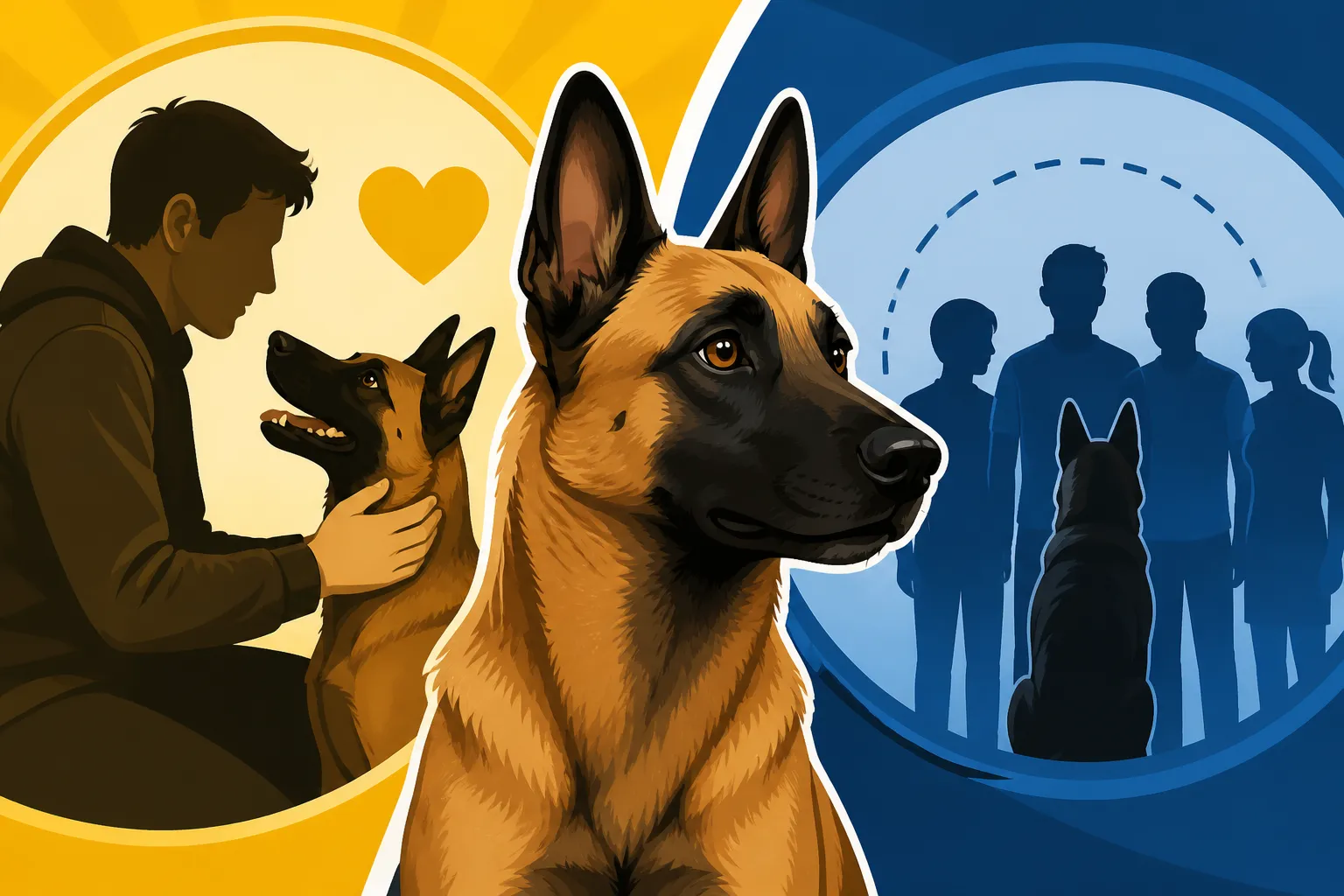
Despite this strong handler drive, it's crucial to understand that a Malinois is not inherently a "one-person dog" in the sense that they will be aggressive or dismissive of everyone else. While they form exceptionally strong bonds, the exclusivity of that bond is heavily influenced by how they are raised and managed. A well-socialized and properly trained Malinois can and should form affectionate and respectful relationships with all members of its human family.
The idea of a "one-person dog" often stems from historical accounts or anecdotes about extremely high-drive working dogs whose lives revolve solely around their direct handler in intense, often dangerous, situations. In a family home, the dynamics are different. Your Malinois needs to understand that everyone in the family unit is part of their "pack" and that respect and appropriate behavior are expected towards all. The intense bond with one person can be a powerful asset, but it needs careful navigation to ensure it doesn't become a barrier to healthy relationships with others. It's a balance of fostering that intense connection while broadening their social understanding.
Factors Influencing Malinois Attachment Patterns
So, if it’s not always about an exclusive bond, what makes some Malinois seem to attach so strongly to just one person, while others are more outwardly affectionate with everyone? Several key factors come into play, influencing how broadly or narrowly a Malinois distributes its affections and trust within the household.
Early Socialization and Exposure
The foundation of any dog's personality and social aptitude is laid during its puppyhood. For a Malinois, this period is absolutely critical. A puppy who is only ever handled by one person, or whose interactions are limited to a very small circle, is far more likely to develop a strong, almost singular attachment. They simply haven't learned that positive interactions can come from a variety of sources.
Imagine a Malinois puppy from a breeder who handled them daily, exposing them to different sounds, textures, and a small group of people. This puppy arrives in your home with a decent foundation. Now, if everyone in the family takes turns feeding, playing, and offering gentle handling, that puppy learns quickly that all these humans are sources of good things. Conversely, if only one person feeds, trains, and walks the puppy, and others mostly observe or interact sporadically, the puppy naturally prioritizes the primary caregiver. This isn't malicious; it's simply a learned association. The Shark Phase Every Malinois Puppy Goes Through is an especially important time for this broad exposure, even amidst the sharp little teeth! Without Socializing a Belgian Malinois Puppy Safely, attachment patterns can become very narrow and potentially problematic.
Consistency in Training and Care
Dogs, especially intelligent and driven breeds like the Malinois, thrive on consistency and clear communication. If one family member is the sole provider of structure, discipline, and engaging activities, the Malinois will logically view that person as the primary leader and resource. Conversely, if multiple family members participate in these crucial aspects of care, the dog learns to respect and respond to all of them.
Consider a scenario where one person consistently handles all the training sessions, from basic obedience to more advanced commands, always using the same cues and rewarding methods. The Malinois will develop a strong working relationship with that individual. If other family members try to give commands but do so inconsistently, or if the dog gets away with different behaviors with different people, it creates confusion. The dog will likely default to the person who provides the clearest leadership and the most reliable outcomes. It's about who the dog perceives as the most effective and consistent guide in its life. Shared responsibility for things like feeding, grooming, and even basic manners practice solidifies bonds across the board.
The Dog's Temperament and Genetic Predisposition
While training and environment play a massive role, we can't completely discount individual temperament and genetics. Just like people, dogs have unique personalities. Some Malinois might naturally be more outgoing and socially flexible, readily forming bonds with many people. Others might be more reserved or have a genetic predisposition towards a more intense, singular focus, even within a well-socialized environment.
A Malinois from a lineage specifically bred for highly demanding protection work, where a laser focus on one handler is paramount, might naturally have a stronger inclination towards that singular bond, even in a pet home. This isn't to say they can't be well-adjusted family members, but it might require more conscious effort from the family to ensure everyone has a meaningful role in the dog's life. Sometimes, these deep-seated traits mean the dog might always have a favorite person, but that doesn't mean they can't love and respect everyone else equally. It just means their most intense drive response might be reserved for that one individual.
Strategies for Fostering Family-Wide Bonds
If you're committed to having a Belgian Malinois that loves and respects every member of your household, it’s entirely achievable with intentional effort. It means being proactive, consistent, and ensuring that your dog sees value and positive interaction coming from everyone, not just one person.
Shared Training Responsibilities
This is perhaps the most crucial element in ensuring a Malinois bonds with multiple people. Every family member, even children (under close supervision and with age-appropriate tasks), should participate in training the dog. This doesn't mean everyone has to be a master trainer, but simple obedience cues are a great start.
Here's how to implement it effectively:
- Divide and Conquer: Assign specific commands to different family members. For example, one person consistently works on "sit" and "stay," another on "down" and "come," and a third on leash manners.
- Short, Frequent Sessions: Malinois thrive on engagement, but short, focused bursts are better than long, drawn-out sessions that lead to boredom. Five to ten minutes, a few times a day, with each family member can make a huge difference.
- Variety of Rewards: Use different motivators – kibble, high-value treats, toys, praise. This helps the dog associate positive outcomes with various people and different methods of reinforcement. Many online training platforms, such as BAXTER & Bella, offer structured programs that can guide families through this process together, making it easier to maintain consistency.
- Practice Everyday Manners: Beyond formal commands, ensure everyone practices good manners. No jumping on guests, no counter surfing, waiting patiently for attention. When everyone enforces these rules, the dog learns to respect everyone's boundaries. Building Engagement With a Belgian Malinois with multiple people is key to success.
Diversifying Play and Interaction
Play is a powerful bonding tool, especially for a high-drive breed like the Malinois. Don't let one person monopolize playtime. Encourage all family members to engage in different types of play with the dog.
- Rotation of Toys: Keep a variety of toys and rotate who gets to initiate play. One person might be the designated "tug-of-war" partner, another the "fetch" champion, and someone else the "hide-and-seek" instigator. This variety helps the dog associate different forms of fun with different people. Look for durable tugs and balls on Amazon that can stand up to a Malinois's intensity.
- Exploration Buddies: Take turns with walks, hikes, or car rides. A Malinois needs plenty of mental and physical stimulation, and sharing these adventures ensures they see everyone as a source of excitement and exploration.
- Calm Cuddle Time: Even for a Malinois, quiet affection is important. Encourage gentle petting, grooming sessions, or simply sitting near different family members during downtime. This helps build a different kind of bond, demonstrating that everyone can be a source of comfort and security.
Consistent Rules and Boundaries from Everyone
This point cannot be stressed enough. A Malinois is an intelligent problem-solver, and if they discover that certain behaviors are acceptable with one person but not another, they will exploit that inconsistency. This leads to confusion for the dog and frustration for the humans.
Establish clear house rules and ensure every single family member adheres to them, without exception.
- "No Counter Surfing" Means No Counter Surfing: If one person allows the dog to beg at the table, while another punishes it, the dog won't understand what's expected.
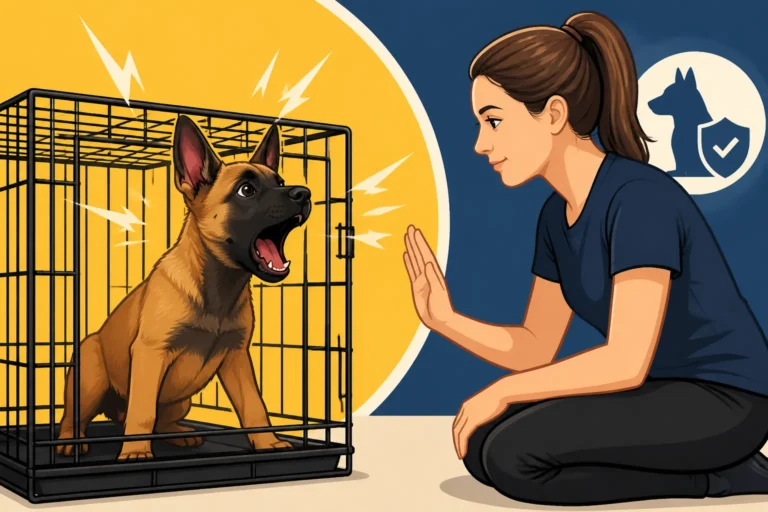
- Designated "Place" or Crate Time: If the dog is expected to go to its "place" when guests arrive, everyone must enforce it. If one person lets them greet visitors at the door, the rule becomes meaningless.
- Shared Leadership: All adults in the household should be seen as leaders. This means everyone gives commands, everyone enforces boundaries, and everyone provides praise and rewards. The Structure a Belgian Malinois Needs Every Day from every person is vital.
Creating a unified front ensures that your Malinois learns to respect and listen to everyone, rather than just the "alpha" or "primary trainer."
Addressing Strong Single-Person Attachments (If They Develop)
Despite your best efforts, sometimes a Malinois still forms a disproportionately strong attachment to one individual. This can happen for various reasons, from inherent temperament to subtle inconsistencies you might not even realize are occurring. When this happens, it's not a lost cause, but it does require focused intervention.
Gradual Desensitization and Counter-Conditioning
The goal here is to help your Malinois become more comfortable and positive about interacting with other family members, even when their preferred person isn't around. This is a slow and steady process that relies heavily on positive reinforcement.
- Start Small: The primary handler should briefly leave the room while another family member offers a high-value treat or engages in a quick, fun game. The primary handler returns before the dog gets stressed. Gradually increase the duration of the primary handler's absence.
- Shared High-Value Experiences: Only the "secondary" family members should be involved in providing the dog's absolute favorite things – the special chew toy, the highest-value treats, or the most exciting game of fetch. The primary handler should actively not be involved in these specific high-value interactions for a period.
- "Hand-Off" Training: Have the primary handler start a training session, then literally "hand off" the leash and some treats to another family member who immediately gives a simple, known command and rewards. This helps transfer the positive association.
- Practice Absence: The person the Malinois is most attached to should practice leaving the house for short periods, allowing others to manage the dog. This helps the dog build confidence that life continues, and good things still happen, even when their favorite person isn't present. For a particularly anxious Malinois, this might involve Whether a Belgian Malinois Needs Muzzle Training for the Vet to ensure safe handling by other people or professionals.
- Ignore Demand Behaviors: If the dog whines, paws, or barks solely for the primary person's attention, teach everyone to ignore these demands. The dog only gets attention when it's calm and polite, especially from the secondary family members. This also applies to issues like What a Malinois Destroys in One Unsupervised Hour if separation anxiety is part of the problem.
Professional Guidance When Needed
If you find that the single-person attachment is causing significant problems – such as aggression towards other family members when they approach the primary handler, severe anxiety when the primary handler leaves, or an inability for others to manage the dog – it's time to call in a professional. Trying to fix deep-seated behavioral issues without expert guidance can inadvertently make things worse.
- Certified Professional Dog Trainers (CPDT-KA): These individuals can assess your dog's behavior, help identify the root causes of the intense attachment, and develop a customized training plan that the entire family can follow. They can provide hands-on coaching and ensure everyone is using consistent techniques.
- Veterinary Behaviorists (DACVB): For more severe cases involving fear, anxiety, or aggression, a board-certified veterinary behaviorist might be necessary. They can evaluate potential medical components contributing to the behavior and, if appropriate, discuss medication alongside behavioral modification strategies. They can help you understand What a Behaviorist Charges to Assess a Malinois and what to expect from the process.
Remember, addressing a strong single-person attachment is about broadening your Malinois's world and helping them realize that positive experiences and security can come from multiple sources. It’s a process of trust-building and consistent reinforcement from every member of the family. It is absolutely possible for a Malinois to form strong, loving bonds with an entire family, not just one person, ensuring a happy and well-adjusted life for everyone involved. Whether a Belgian Malinois Bonds With a New Handler is a similar journey of trust-building, albeit often from a more significant emotional distance.
| Characteristic | Primary Handler-Only Attachment | Family-Wide Attachment |
|---|---|---|
| Response to "Others" | Often reserved, ignores commands, may guard favorite person or resources. | Respectful, listens to commands, seeks attention and play from all. |
| Separation Anxiety | High risk when primary handler leaves, may generalize anxiety to all absences. | Less likely to experience severe separation anxiety, adapts better to different caregivers. |
| Training Effectiveness | Responds quickly to primary handler, slow or defiant with others. | Responds consistently to all family members, regardless of who gives the command. |
| Socialization | May be wary or reactive towards strangers if not extensively socialized to many people. | Generally more confident and accepting of new people and situations. |
| Household Harmony | Potential for conflict or imbalance, other family members feel secondary or ignored. | Balanced relationships, dog integrates well into all family activities, everyone feels valued. |
| Impact on Dog's Life | Can be stressed by handler's absence, limited social outlets, potential for behavioral issues. | More resilient, adaptable, broader social support network, overall happier and more secure. |
Conclusion
The notion that a Belgian Malinois is inherently a "one-person dog" is a common one, stemming from their incredible focus and drive to partner with a human. However, it's a generalization that doesn't account for the breed's adaptability and the profound impact of intentional training and socialization. While your Malinois might always have a special connection with one primary caregiver, it is absolutely within your power to foster a loving, respectful, and obedient relationship with every member of your family. It requires dedication, consistency in training and rules, and ensuring that positive interactions and leadership come from everyone. By doing so, you'll not only create a more harmonious home environment but also raise a more well-rounded, confident, and socially flexible Malinois who thrives on the companionship of their entire human pack.
Disclaimer
This article is for general informational purposes only and does not constitute professional advice. Laws, prices and regulations vary by location and change over time. Consult a qualified professional for guidance on your specific situation.