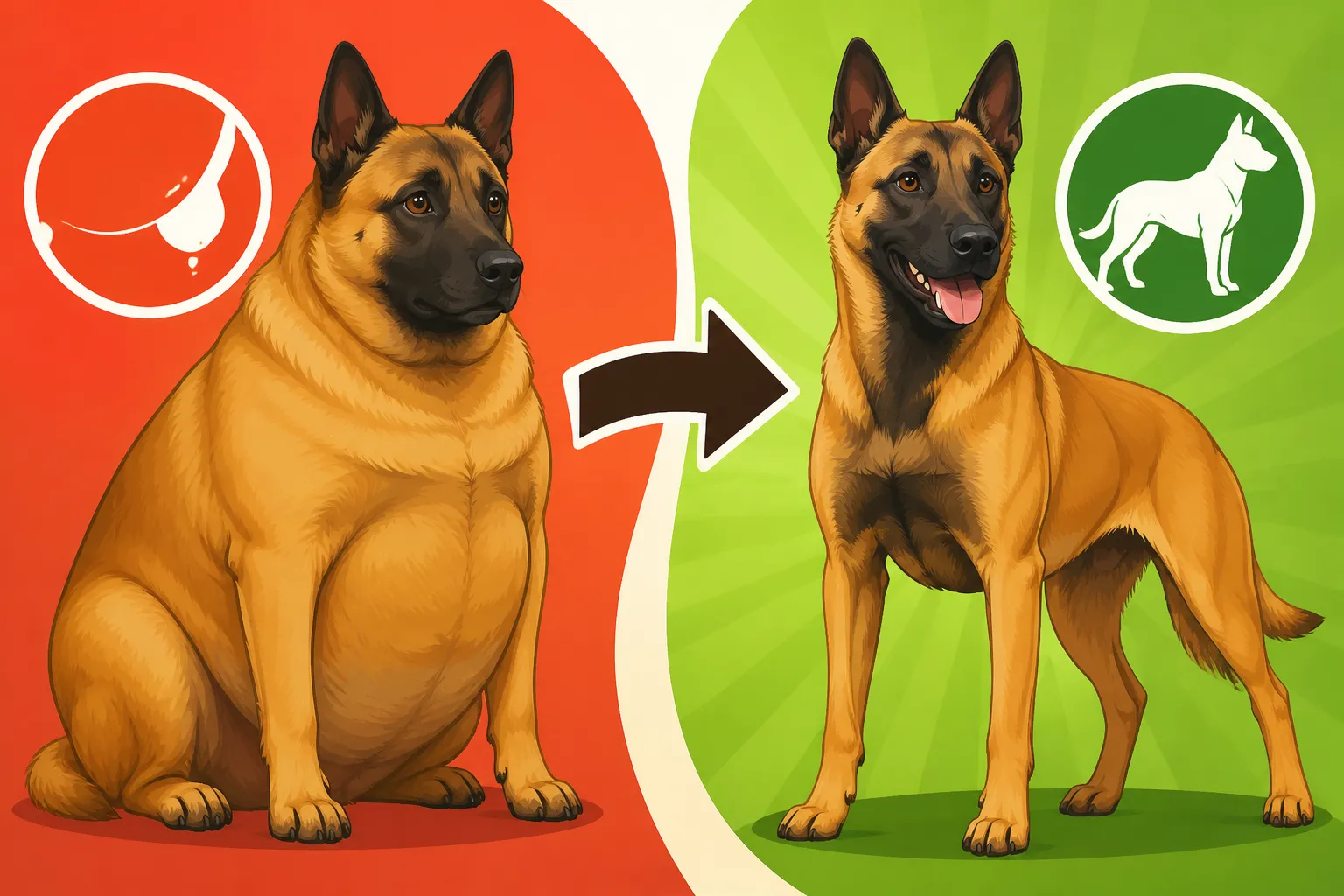
Slimming a Pet Belgian Malinois That Has Gone Soft
It can be incredibly disheartening to look at your vibrant, high-energy Belgian Malinois and realize they've started to, well, get a little soft around the middle. Many of us get a Malinois because we're drawn to their incredible athleticism and boundless drive, imagining long runs and intense training sessions. But then life happens, routines change, or perhaps we underestimated just how much structured work these dogs truly need. If your pet Malinois has gained some unwanted weight, don't despair – you're not alone, and this guide is here to walk you through understanding why it happens and creating a realistic, effective plan to get them back to their lean, muscular best.
Understanding Why Your Malinois Gained Weight
It's easy to fall into the trap of thinking a long walk or a vigorous session of backyard fetch is enough for a Belgian Malinois. For many breeds, it absolutely would be! But Malinois are not "many breeds." Their genetic blueprint is wired for relentless activity and intense focus, and when those needs aren't met precisely, their bodies can start to adapt in ways we don't want, like gaining weight.
The Misconception of "Enough Exercise" for a Malinois
We've all been there: you take your Malinois for a 45-minute walk, maybe even a jog, and you feel great about the exercise they've gotten. Then you get home, and they're still bouncing off the walls, eyeing the counter, or bringing you a toy with that insistent look. That's because what constitutes "exercise" for a Malinois is vastly different from what it means for, say, a Basset Hound. Their working heritage as herding and protection dogs means they require not just physical exertion but also significant mental engagement. A casual stroll, while pleasant, often doesn't even register as true work for them. They're built for sustained effort, for thinking on the move, and for having a "job." When that job is simply "exist and occasionally chase a ball," their bodies hold onto energy rather than burning it efficiently. You might find that Why Walks Alone Do Nothing for a Belgian Malinois really resonates here. Without that intense physical and mental drain, the calories they consume, even if seemingly moderate, quickly become excess.
Overfeeding and Inappropriate Diet Choices
Another common culprit is simply overfeeding, often unknowingly. A Malinois on an intense working schedule – think police K9s, competitive sport dogs, or active search and rescue animals – needs a high-octane, calorie-dense diet to fuel their demanding lifestyle. However, if your Malinois is a beloved family pet whose "job" involves patrolling the backyard and a few daily walks, feeding them the same high-performance food in generous portions is a recipe for weight gain. It’s like giving a desk worker the caloric intake of a marathon runner.
Beyond the type of food, there's the issue of treats and table scraps. Those small tokens of affection or dropped bits from dinner add up fast. A handful of training treats throughout the day, a bully stick, a bite of cheese – individually, they seem harmless, but collectively, they can represent hundreds of extra calories. Free-feeding, where food is left out all day, also makes it impossible to accurately track intake and encourages grazing rather than controlled meals. Understanding The Daily Ration a Working Belgian Malinois Eats and then adjusting it downwards for a less intensely working pet Malinois is a crucial first step.
Metabolic Changes and Lifestyle Shifts
Sometimes, weight gain isn't just about food and exercise but also about more subtle internal and external factors. Spaying or neutering, for example, can significantly impact a dog's metabolism. Hormone changes often lead to a lower metabolic rate, meaning they need fewer calories to maintain their weight. If their diet isn't adjusted post-surgery, weight gain can be a quick and frustrating consequence.
Age also plays a role, even in a breed as energetic as the Malinois. While they may retain their youthful exuberance well into their senior years, even a slight slowdown in their overall activity level or a subtle shift in their internal processes can mean their caloric needs decrease. If your own routine changes – perhaps you're working longer hours, or you've had an injury that limits your ability to engage them as much – your dog's activity level will naturally decrease. Without a corresponding reduction in food, those pounds can creep on. These lifestyle shifts, often unintentional, create a caloric imbalance that favors fat storage.
Assessing Your Malinois's Current Condition
Before you can tackle the problem, you need to understand the extent of it. Guessing isn't going to cut it, especially with a Malinois where excess weight can have a real impact on their joints and overall performance, even if it’s just navigating your living room with more ease.
Learning to Body Score Your Malinois
Stepping on a scale gives you a number, but it doesn't tell you the whole story about your Malinois's body composition. Muscle weighs more than fat, and a heavily muscled Malinois might weigh more than a "softer" one of the same height. This is where body condition scoring comes in – it's a visual and tactile assessment that helps you determine if your dog is too thin, ideal, or overweight.
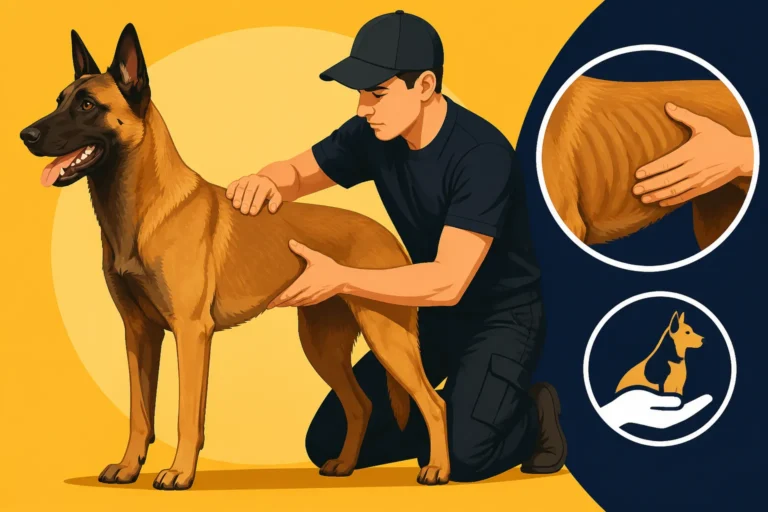
To body score your Malinois, you'll need to use your hands and eyes. Start by feeling their ribs: you should be able to easily feel them under a thin layer of fat, but they shouldn't be visibly protruding. If you have to press hard to feel them, your Malinois is likely carrying too much weight. Next, look at them from above: they should have a distinct waist, narrowing behind the rib cage. If they look more like a straight line or bulge out, that's a sign of excess fat. Finally, look at them from the side: their abdomen should tuck up, not hang low. A Malinois should be lean and athletic. Judging a Malinois's Condition by Hand can provide even more detailed guidance on this important skill. This hands-on approach helps you identify where the "softness" truly lies.
The Importance of a Baseline Weight
While body condition scoring is invaluable, having an accurate weight is still essential for tracking progress. Imagine trying to navigate without a compass – you might be moving, but are you going in the right direction? A baseline weight gives you that compass point. For a large, active breed like a Malinois, a regular bathroom scale at home might not be the most accurate or even feasible. Many veterinary clinics are happy to let you pop in for a quick weigh-in, especially if your dog is comfortable there. Some pet supply stores, like those you might find products on Chewy through, also have scales available for public use.
Once you have that initial number, make it a habit to weigh your Malinois consistently – perhaps once a week or every two weeks, always at the same time of day (e.g., before breakfast). This consistency helps you see trends and make informed adjustments to their diet and exercise. Without a precise starting point and regular tracking, it’s all too easy to underestimate progress or, conversely, not realize you're still off track. Don't worry if the number doesn't drop immediately; small, consistent changes over time are what we're aiming for. Monitoring Weighing a Belgian Malinois Through a Training Year can show you how weight fluctuates even in active dogs.
Consulting Your Veterinarian
Before embarking on any significant diet or exercise program, a trip to your veterinarian is non-negotiable. It's not just about getting their blessing; it's about ruling out any underlying medical issues that could be contributing to weight gain. Conditions like hypothyroidism (an underactive thyroid) can cause unexpected weight gain, even with proper diet and exercise. Your vet can perform blood tests to check for such conditions and ensure your Malinois is otherwise healthy enough for an increased activity regimen.
Your vet can also help you determine an ideal target weight for your specific Malinois, taking into account their age, sex, and build. They can offer guidance on calculating precise caloric needs and suggest appropriate weight-loss diets. Think of your vet as your primary partner in this journey – they have the medical expertise to ensure you're approaching weight loss in a safe and healthy way, customized to your dog's individual needs.
Revisiting Diet: What and How You're Feeding
Diet is often the quickest and most impactful area to adjust when your Malinois has gone soft. It’s not just about feeding less, but about feeding smarter and making every calorie count for their health and energy levels.
Calculating Caloric Needs and Portion Control
This is where many well-intentioned owners stumble. We often feed based on the bag's recommendations, which are usually geared towards highly active dogs or are simply general guidelines. For a pet Malinois that isn't doing intense working trials or daily multi-hour patrols, those recommendations are often too high. The first step is to calculate your Malinois's Basal Metabolic Rate (BMR) and then adjust for their current activity level to find their daily caloric requirement for weight loss. Your vet can help with this calculation, or there are online calculators that can give you a good starting point based on your dog's target weight.
Once you have that number, you must measure every single meal. A precise kitchen scale is your best friend here. Don't eyeball it; don't use a random scoop. Half a cup more or less can mean hundreds of calories over a week. Gradual reduction is key – a sudden drastic cut can lead to nutrient deficiencies, extreme hunger, and a stressed-out Malinois. Start by reducing their current intake by about 10-20% and reassess after a couple of weeks. When it comes to feeding, whether it's around actual working sessions or just their daily schedule, Feeding a Belgian Malinois Around Training Sessions highlights the importance of consistency and appropriate timing. Some owners find that subscription services like Ollie, which deliver pre-portioned, fresh food tailored to your dog's specific needs, can be incredibly helpful for precise caloric control. Similarly, sites like Chewy offer a vast selection of vet-recommended weight management foods, often with detailed caloric information that makes calculation easier.
Choosing the Right Food for Weight Loss
The type of food matters immensely. High-performance, calorie-dense formulas are fantastic for working Malinois, but not for those who have gone soft. Look for foods specifically formulated for weight management or "light" diets. These typically have lower fat content, reduced calories, and increased fiber to help your dog feel fuller without packing on the pounds. But don't just grab the first "light" bag you see.
You still want a high-quality protein source to maintain that lean muscle mass your Malinois is known for. The goal is to lose fat, not muscle! Read ingredient labels carefully. Look for real meat as the first ingredient, and avoid excessive fillers or artificial additives. You might also want to reconsider Whether a Sport Malinois Needs a Performance Formula if your Malinois isn't actively competing or working in a highly demanding field. A performance formula is simply too much fuel for a pet-level activity routine. Discuss options with your vet or a canine nutritionist to find a brand that offers the right balance of nutrients for healthy weight loss.
Rethinking Treats and Supplements
This is often the hardest part for owners, because giving treats is a way we show love! But those extra calories are significant. For a Malinois on a weight loss plan, high-value, low-calorie treats become essential. Instead of commercial biscuits, try using small pieces of steamed green beans, baby carrots, bell pepper, or apple (without seeds). Many Malinois will work just as hard for these healthy alternatives, especially if you deliver them with enthusiasm.
Crucially, any treats you give must be factored into their daily caloric allowance. If you're giving 50 calories worth of treats, you need to reduce their meal portion by 50 calories. It requires discipline, but it’s vital for success. As for supplements, always discuss them with your vet. While some joint supplements can be beneficial for an active breed like the Malinois, especially as they age or if they've been carrying extra weight, some may contain hidden calories. Ensure that any supplements you use are necessary and don't inadvertently contribute to their caloric intake. Sometimes, eliminating or reducing unnecessary supplements can also make a small difference.
Boosting Activity: Structured Exercise for Weight Loss
As we've discussed, "exercise" for a Malinois isn't just about moving; it's about purpose-driven, mentally engaging activity. To get your Malinois lean again, you need to elevate their physical output significantly and smartly.
Moving Beyond Casual Walks
If your Malinois is getting "soft," it likely means their current activity level isn't sufficient for their breed type. Simply extending your usual neighborhood walk by another 15 minutes probably won't cut it. You need to introduce activities that truly tax both their body and their mind. Instead of a leisurely stroll, consider brisk jogging or even running (if your dog is cleared by the vet and properly conditioned). If you're a cyclist, a well-trained Malinois can be an excellent biking companion, provided you build up to it slowly and ensure their joint health.
Long-line work in an open field, where they can sprint, change direction rapidly, and engage their prey drive in a controlled manner, is fantastic. Swimming is another low-impact, high-intensity exercise that works multiple muscle groups without stressing joints, especially good if your Malinois has been carrying extra weight. Remember Why Walks Alone Do Nothing for a Belgian Malinois? This is where you put that knowledge into action, by actively seeking out and implementing activities that are truly stimulating and demanding for their physiology.
Incorporating Mental and Physical Work Together
This is the secret sauce for a Malinois. Pure physical exertion is good, but combining it with mental challenges is what truly tires them out and helps burn calories more efficiently. Every Malinois needs a "job," even if they're a pet. Instead of just throwing a ball, make fetch a structured activity: ask for a "sit" and "stay" before the throw, an "out" or "drop" upon return, and incorporate directional commands. This turns a simple game into a training session. The Job a Pet Belgian Malinois Can Be Given might involve structured tug play with rules, learning new tricks, or even introductory agility or obedience.
Nose work or scent games, where your Malinois uses their incredible olfactory senses to find hidden treats (low-calorie ones, of course!) or specific scents, can be incredibly draining. Think about how tired you feel after an intense mental task – it's similar for them. These activities not only burn calories but also satisfy their innate drive to work and solve problems, reducing the likelihood of boredom-induced behaviors or excessive eating. For more ideas on how to truly engage their brain and body, The Mental Work That Finally Tires a Malinois Out offers excellent insights.
Safe and Progressive Exercise Routines
Just like with humans, jumping straight into an intense exercise regimen after a period of being soft can lead to injury. You need a progressive plan. Always start with a warm-up – a few minutes of brisk walking or light jogging – before increasing intensity. Similarly, end each session with a cool-down period of walking and gentle stretching. This helps prevent muscle strains and soreness.
Pay close attention to your Malinois's cues. Are they panting excessively? Lagging behind? Stopping frequently? These could be signs of overexertion. Be particularly mindful in warmer weather, as Malinois can overheat quickly. Always provide plenty of fresh water. Gradually increase the duration and intensity of sessions over several weeks or even months. For example, if you're starting a jogging routine, begin with short intervals of jogging mixed with walking, and slowly extend the jogging segments. This phased approach, much like the advice in Structured Work Against Random Running for a Malinois, ensures that their body, including joints and cardiovascular system, adapts safely and effectively to the increased demands. Consistency, not sudden bursts of activity, is what will yield lasting results.
Addressing Behavioral and Environmental Factors
Sometimes, the scale doesn't budge because there are underlying behavioral or environmental issues that lead to overeating or reduced activity, even if you feel like you're doing everything right. A Malinois is a creature of habit, and their environment plays a huge role in their overall well-being and weight.
Managing Boredom and Stress Eating
An under-stimulated Malinois is a Malinois looking for something to do, and often, that "something" involves food. Boredom can easily lead to excessive begging, scavenging, or even stress-induced eating. If your Malinois is left alone for long periods without adequate mental and physical outlets, they might turn to comfort eating. Think about it: if you're bored, what's often the easiest thing to do? Grab a snack.
Combat boredom with environmental enrichment. Puzzle feeders, which make your dog "work" for their kibble, are fantastic. You can find a wide variety of durable, engaging puzzle toys on Amazon or Chewy that dispense food slowly, turning mealtime into a mental game. Rotate toys regularly to keep things fresh. A consistent routine that includes dedicated training, exercise, and quiet time can also reduce anxiety, which can sometimes manifest as eating. If separation anxiety is suspected, addressing that directly with a trainer or vet behaviorist might be necessary, as it can contribute to a cycle of stress and overeating.
The Role of Consistent Routines
Malinois thrive on routine and predictability. They are intelligent, thinking dogs, and a chaotic or inconsistent schedule can contribute to stress and uncertainty, which, in turn, can affect their eating habits and activity levels. Establishing fixed feeding times, perhaps two meals a day, helps regulate their metabolism and allows you to accurately monitor their intake. It also helps prevent them from feeling constantly hungry or resorting to scavenging.
Similarly, a predictable exercise schedule – for example, a high-intensity session in the morning and a mentally stimulating session in the evening – helps them anticipate what's coming and settle better between activities. Consistency in when they go outside, when they train, and when they relax builds confidence and helps them understand their role in the household. This structure minimizes opportunistic eating and ensures they're burning calories regularly. A consistent routine also helps manage their drive, preventing them from being in a perpetual state of "go" without direction.
Limiting Access to Extra Calories
It might sound obvious, but securing all potential sources of extra calories is crucial. Malinois are incredibly clever and persistent, especially when food is involved. This means no more counter-surfing opportunities, securing trash cans with locking lids, and ensuring that pantries and food storage areas are truly dog-proof. Many a Malinois owner has come home to an empty bread bag or a torn-apart container of cookies.
Educating every member of the household, especially children, is equally important. Everyone needs to be on board with the weight loss plan, which means absolutely no unauthorized treats, table scraps, or slipped bites of human food. Even tiny amounts add up. Consider placing a visible chart on the fridge that outlines what treats are allowed and in what quantities. Remember the discussion around Whether to Train a Belgian Malinois Hungry? While we're not advocating actual hunger, we are emphasizing that meal times should be deliberate and controlled, removing the "grazing" opportunities that lead to excessive caloric intake. Being vigilant about their environment helps you control their caloric budget more effectively.
Monitoring Progress and Maintaining a Healthy Weight
Weight loss is rarely a linear journey. There will be weeks where the scale doesn't budge, or even goes up slightly. It takes patience, consistency, and a willingness to adjust your approach based on what your Malinois is telling you.
Tracking and Adjusting the Plan
Once you've implemented changes to diet and exercise, consistent monitoring becomes your best friend. Continue those regular weight checks – weekly or bi-weekly at the same time. Also, keep up with your body condition scoring. The number on the scale might not always reflect changes in muscle mass versus fat, so feeling their ribs and checking their waist is crucial.
If, after two to three weeks, you're not seeing any progress, it's time to make small adjustments. Are you being honest about all the treats? Is their exercise truly consistent and intense enough? You might need to slightly reduce their caloric intake further or increase the duration/intensity of their workouts. Conversely, if your Malinois is losing weight too rapidly, or starts looking too lean, you might need to slightly increase their food. Whether a Belgian Malinois Can Be Too Lean is a real concern; you don't want to overdo it and risk their health or performance. Remember, slow and steady weight loss (typically 1-2% of body weight per week) is the healthiest and most sustainable approach. Keep detailed notes; sometimes seeing it on paper helps identify patterns or areas for improvement.
Long-Term Maintenance Strategies
Reaching your Malinois's ideal weight isn't the finish line; it's just the end of the first phase. The real challenge is maintaining that healthy weight for the rest of their lives. This means the new diet and exercise habits you've implemented become the "new normal." You can't just revert to old habits once the weight is off.
Continue with regular, structured exercise that challenges both their body and mind. Maintain portion control and stick to healthy treat alternatives. Periodic vet check-ups will help ensure they're staying on track and address any age-related metabolic changes. You might find you can slowly introduce a few more calories once they've reached their ideal weight and are consistently active, but always do so cautiously and monitor the scale and body condition. The vigilance you developed during the weight loss phase needs to become an ingrained habit for life, ensuring your Malinois remains lean, healthy, and happy.
Celebrating Milestones (Non-Food Based)
It's natural to want to reward your dog, but for a Malinois on a weight loss journey, food-based rewards can quickly undermine your efforts. Instead, shift to non-food motivators to celebrate their progress and success. This could be extra praise, a particularly exciting game of tug, a new durable chew toy (plenty of options on Amazon or Chewy that last more than five minutes with a Malinois!), or an extended session of their favorite activity.
Focus on the positive changes you observe: improved mobility, increased energy, a shinier coat, better muscle tone, and a generally more engaged demeanor. These are the true rewards of getting your Malinois back to a healthy weight. By celebrating these non-food milestones, you reinforce the idea that good health and activity are their own rewards, strengthening your bond and making the entire process more positive for both of you.
Disclaimer
This article is for general informational purposes only and does not constitute professional advice. Laws, prices and regulations vary by location and change over time. Consult a qualified professional for guidance on your specific situation.