How Many Cups a Seventy Pound Belgian Malinois Eats
It’s a common scenario: you’re standing in front of your Malinois’s food bag, scoop in hand, staring at the feeding chart, and wondering if what it says actually applies to your seventy-pound dynamo. These dogs aren't just pets; they're canine athletes, and their dietary needs are as unique as their incredible drive. This guide will walk you through how to accurately determine how many cups of food your seventy-pound Belgian Malinois truly needs, accounting for all the variables that a generic chart simply can't capture.
Factors Influencing Food Intake Beyond Raw Weight
When you’re trying to figure out how much to feed your magnificent seventy-pound Belgian Malinois, it’s easy to get fixated on that number on the scale. But let me tell you, weight is just one piece of the puzzle, and often, not even the most important one for a breed like ours. These dogs are finely tuned machines, and their metabolism, activity, and even their age play massive roles in their caloric requirements. Simply looking at a chart that says "70 lbs = X cups" is going to leave your Malinois either still hungry and lean, or, less likely but still possible, packing on unwanted pounds.
Age and Life Stage Considerations
A seventy-pound Malinois isn't always the same seventy-pound Malinois. A young, still-developing dog, even if they hit the seventy-pound mark relatively early, often has different needs than a fully mature adult. Puppies and adolescents are burning through calories not just for activity, but for growth and development. Their bones are lengthening, their muscles are forming, and their brains are constantly working overtime learning new things. Even if they weigh the same as a calmer adult, their internal machinery is running at a higher RPM. You might find a seventy-pound adolescent needs a bit more fuel to sustain that growth spurt and boundless energy, while an older, more seasoned seventy-pound Malinois might need slightly less to maintain condition as their metabolism naturally slows down a touch. This is why paying attention to the specific life stage is crucial, not just the number on the scale.
As our Malinois age, even if they maintain their weight, their energy levels often shift, and their body's ability to process nutrients can change. A senior Malinois, still a respectable seventy pounds, might require a different balance of nutrients to support joint health and lean muscle mass, even if the sheer volume of food decreases slightly. Their metabolism might not be as revved up, and too much food could lead to unwanted weight gain, putting extra strain on aging joints. Conversely, a very active senior might still burn through a lot of calories, so it's all about individual assessment rather than a blanket rule.
Activity Level and Energy Expenditure
This, my friends, is arguably the biggest factor for a Belgian Malinois. These aren't couch potatoes. A seventy-pound Malinois who is actively working in protection sports, detection, or even just high-intensity daily training sessions like agility or advanced obedience, is expending an enormous amount of energy. How Many Hours a Belgian Malinois Should Work Daily is a question that directly impacts their caloric needs. Think about it: a dog doing multiple hours of intense bite work, tracking, or running complex obstacle courses isn't burning the same amount of calories as a seventy-pound Malinois who gets a brisk walk around the block and some yard play.
The difference in caloric needs between a "pet" Malinois with moderate activity and a "working" Malinois in serious training can be astronomical. A dog that is constantly moving, thinking, and engaging its muscles requires a diet rich in calories, fats, and protein to sustain that output and aid in muscle recovery. If you underestimate their energy expenditure, you’ll end up with a dog that's too lean, lacks stamina, and can't perform at its best. They might even start looking for extra calories in undesirable ways, like counter-surfing. So, before you grab that scoop, truly evaluate how much high-intensity work your dog is doing.
Metabolism and Individual Differences
Just like people, every Malinois has a unique metabolism. You might have two littermates, both seventy pounds and with similar activity levels, yet one seems to stay leaner with less food, while the other needs a bit more to maintain condition. This is simply individual variation. Some dogs are just naturally more efficient at utilizing calories, while others burn through them faster. Genetics, gut health, and even environmental factors can play a role here.
Beyond metabolism, there can be subtle differences in their overall health that influence how many cups a seventy-pound Belgian Malinois eats. A Malinois Whose Thyroid Has Given Out for instance, could see a drop in their metabolic rate, leading to weight gain on their usual food intake. Or a dog with a particularly high-stress personality might burn more calories due to constant vigilance, even when not actively working. It's a nuanced dance, and you, as their handler, are the best judge of their individual needs through careful observation. Don't be afraid to adjust based on what you see, rather than rigidly adhering to a chart.
Estimating Daily Rations for a 70-Pound Belgian Malinois
Okay, now that we’ve talked about all the nuances, let’s get down to some concrete numbers and how you can actually estimate the right amount of food for your seventy-pound Malinois. This isn't an exact science, but by understanding the basic guidelines and then fine-tuning, you’ll hit that sweet spot. Remember, the goal is to maintain that fantastic, lean, athletic condition we all strive for in our Mals.
Decoding Kibble Labels and Calorie Counts
The first place to start is always your dog food bag. Most high-quality performance kibbles designed for active breeds will provide a feeding guideline based on weight, but crucially, they also list the caloric content per cup (often in kcal/kg or kcal/cup). This is a far more useful number than just "cups." A standard cup measurement isn't always consistent across different kibble brands because kibble density varies wildly. One cup of a dense, calorie-rich performance food might contain significantly more calories than a cup of a lighter, lower-calorie kibble.
Look for the "Metabolizable Energy (ME)" or "kcal/cup" on the label. A highly active, seventy-pound Malinois might need anywhere from 1500 to 2500 calories per day, sometimes even more if they are truly working hard in extreme conditions. Let's say your chosen performance kibble has 400 kcal per cup. If your Malinois needs 2000 calories a day, that would equate to 5 cups. If they need 2400 calories, that's 6 cups. This gives you a much more precise starting point than just blindly following a weight-based chart that doesn't consider the calorie density of your specific food. Many dedicated Malinois owners find themselves purchasing specialized kibbles designed for working dogs, which can be found on sites like Chewy, offering a wide selection of brands with clear caloric information.
The Range of Cups for a High-Energy Breed
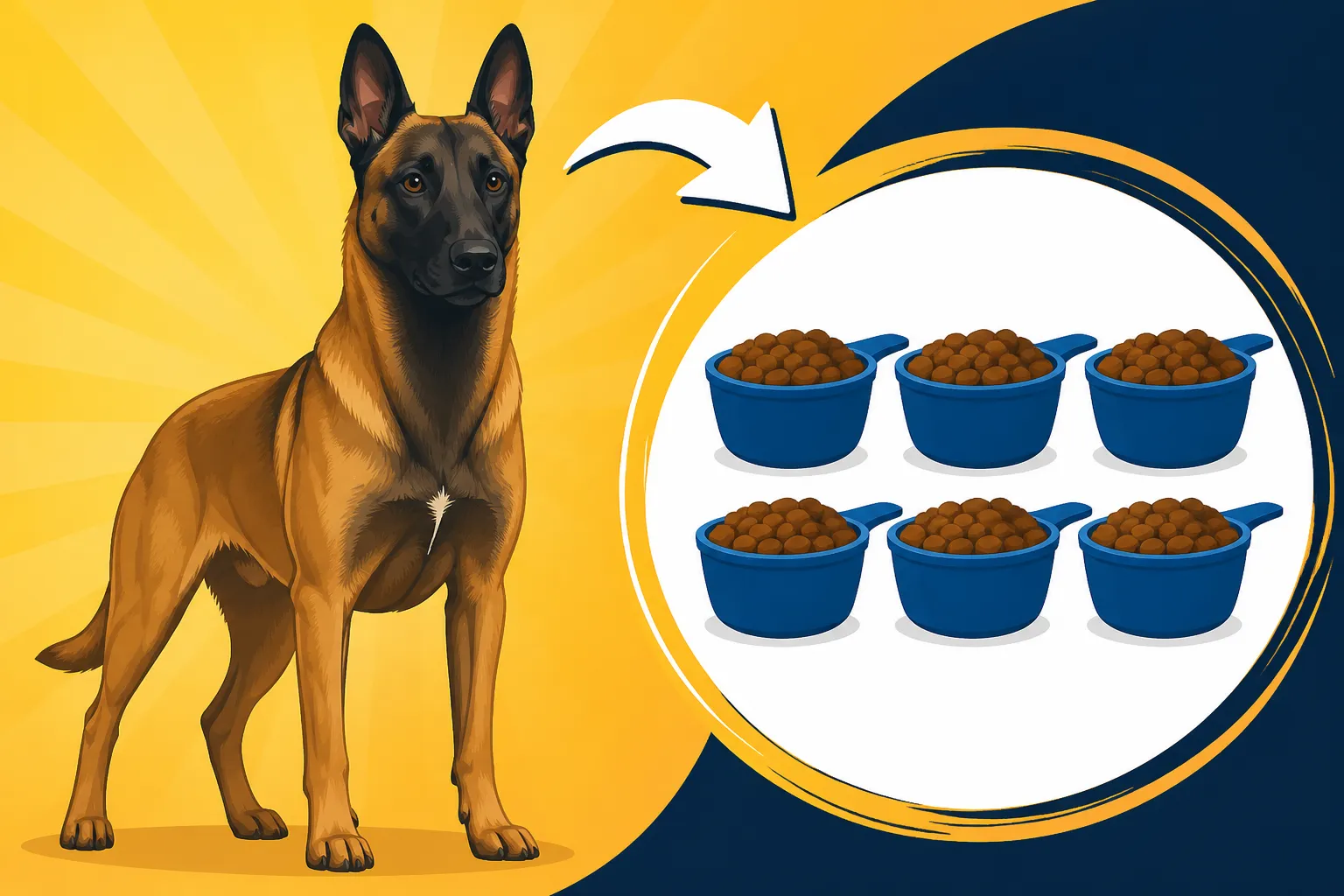
Given all the variables we've discussed, it’s difficult to give a single, definitive answer like "exactly 4.5 cups." However, we can talk in ranges. For a seventy-pound Belgian Malinois, especially one that is moderately to highly active, you're typically looking at a daily intake somewhere between 4 to 7 cups of high-quality performance kibble.
Let’s break that down:
- Moderately Active Malinois (70 lbs): This might be a dog that gets a couple of long, brisk walks or jogs a day, plus some engaging play in the yard, maybe an hour or two of structured obedience or scent work. For these dogs, 4 to 5.5 cups might be appropriate. They’re active, but not doing intense, sustained work.
- Highly Active / Working Malinois (70 lbs): This is the dog in a sport program (IGP, Ring, Agility, Detection), a police K9, or simply an incredibly driven individual with daily rigorous training sessions that last hours. These dogs are burning serious fuel. For them, 5.5 to 7+ cups could be necessary. On particularly intense training days or during trial season, they might even push towards the higher end of this range, or require additional calorie sources like specialized supplements or even a switch to a more calorically dense food.
It’s about finding that sweet spot where they maintain The Lean Condition a Belgian Malinois Should Carry without looking ribby or carrying extra padding. You might find that a high-quality fresh food option, like those offered by Ollie, provides a more precise caloric intake per serving, which can be great for fine-tuning.
The Role of Performance Formulas
For many seventy-pound Malinois, especially those actively engaged in sports or work, generic "adult dog" formulas just don't cut it. Whether a Sport Malinois Needs a Performance Formula is almost a rhetorical question for most handlers. These dogs need more than just maintenance. Performance formulas are specifically designed to meet the elevated caloric and nutritional demands of highly active dogs. They typically feature higher protein levels (often 28-35%+) to support muscle development and repair, and higher fat content (18-25%+) to provide sustained energy.
The higher fat content is particularly important because fat is a more efficient and sustained energy source than carbohydrates for dogs. It prevents them from "bonking" during long, intense sessions and helps with recovery. The protein ensures their muscles can rebuild and grow strong, which is vital for preventing injuries from repetitive stress. When feeding a performance formula, you might find that you need slightly fewer cups to achieve the same caloric intake compared to a less dense, lower-calorie food. This is a good thing, as it means less bulk in their stomach, which can be important around training times. Always compare the caloric content per cup when considering a switch.
Adjusting Food for Activity Levels and Body Condition
Once you have an initial estimate for your seventy-pound Belgian Malinois, the real work begins: observation and adjustment. Your dog isn't a static machine; their needs will fluctuate based on training intensity, weather, stress, and even age. This is where you become the expert, learning to "read" your dog's body and energy levels.
Observing Your Malinois's Body Condition Score
This is perhaps the single most critical tool in your feeding arsenal. Forget the exact number of cups for a moment and focus on how your dog looks and feels. You want your Malinois to be lean, muscular, and athletic, not bony, but definitely not soft or chunky. You should be able to easily feel their ribs without pressing hard, but not see them prominently. Their waist should be evident when viewed from above, and there should be a distinct tuck-up behind their rib cage when viewed from the side.
A quick table can help illustrate:
| Body Condition Score | Appearance and Feel (70 lb Malinois) | Feeding Adjustment |
|---|---|---|
| Too Thin (1-2/5) | Ribs, spine, hip bones very prominent. Minimal fat. | Increase food by 10-20% |
| Ideal (3/5) | Ribs easily felt, not seen. Clear waist and abdominal tuck. | Maintain current food |
| Slightly Heavy (4/5) | Ribs felt with slight pressure. Waist less defined. | Decrease food by 5-10% |
| Overweight (5/5) | Ribs hard to feel. No waist or tuck. Noticeable fat deposits. | Decrease food by 10-20% & increase exercise |
Regularly perform a "hands-on" check. Run your hands over their rib cage, feel for their waist, and assess the muscle tone. Judging a Malinois's Condition by Hand is a skill every Malinois owner needs to master. Don't let yourself get used to seeing a slightly softer dog; even a few extra pounds can put unnecessary strain on their joints, which is especially detrimental for a working breed.
Incremental Adjustments Based on Workload
Your seventy-pound Malinois's daily caloric needs will directly correlate with their daily energy output. If you have a weekend trial coming up, or a particularly intense week of training with a decoy, you'll need to proactively increase their food. Conversely, if your dog is on a rest day, recovering from a minor injury, or simply has a lighter training schedule for a week, their caloric needs will drop. This isn't about massive swings in their diet, but rather small, consistent adjustments.
For example, if your Malinois has an extra-long tracking session and a vigorous bite work session, you might add an extra half-cup or even a full cup of their regular kibble, or a high-calorie supplement. On the flip side, if they're just getting leisure walks and some light mental stimulation, you might pull back by a quarter to a half-cup. These are not huge changes, but they prevent underfeeding on high-output days and overfeeding on low-output days. Think of it as micro-adjustments to The Daily Ration a Working Belgian Malinois Eats. It takes dedication to Weighing a Belgian Malinois Through a Training Year but it pays dividends for their health and performance.
The Impact of Stress and Environment on Appetite
It's not just physical exertion that burns calories; mental stress and environmental factors can also play a significant role in how many cups a seventy-pound Belgian Malinois truly needs. A dog who is highly stressed, whether from a new environment, a challenging training phase, or even separation anxiety, might burn more calories due to a constantly elevated heart rate and cortisol levels. You might notice they're a bit leaner despite eating their usual amount. Soft Stools in a Malinois Under Training Stress can also indicate digestive upset linked to stress, which might impact nutrient absorption.
Conversely, some Malinois might refuse food entirely when stressed, particularly at trials or in novel situations. This isn't ideal, as they need that fuel. Feeding a Belgian Malinois That Will Not Eat Under Stress becomes a critical skill. Sometimes, adding a highly palatable topper like wet food or a bit of cooked meat can tempt them. Environmental factors like extreme cold can also increase caloric needs, as their body works harder to maintain core temperature, even for a short-coated Malinois. Always consider the whole picture when assessing their food intake.
Practical Feeding Strategies and Tools
Once you’ve got a handle on the theoretical aspects of feeding your seventy-pound Malinois, it’s time to talk about the practical side of things. How do you ensure accuracy, what about treats and supplements, and how do you time meals around their intense training schedule? These details can make a big difference in maintaining optimal health and performance.
Measuring Accurately and Consistently
This might sound obvious, but it's often overlooked. Scoops that come with dog food bags are notoriously inaccurate and inconsistent. They might measure volume, but not necessarily weight, and different brands use different densities of kibble. The most accurate way to measure your Malinois's food is by weight, using a kitchen scale. This ensures that whether you're feeding a denser kibble or a lighter one, your dog is getting the exact caloric intake you intend.
If using cups, invest in a standardized measuring cup, not just any old scoop. Even then, pack the kibble consistently each time. Air pockets can significantly alter the actual amount of food. Consistency is key, especially if you're making small adjustments. You want to know that when you're adding or subtracting a quarter-cup, it's truly a quarter-cup, and not just a random guess. A consistent measurement baseline makes it much easier to track changes in their body condition and adjust effectively. You can easily find reliable digital kitchen scales or accurate measuring cups on platforms like Amazon.
Incorporating Supplements and Treats Wisely
For a high-drive, seventy-pound Malinois, training treats are an absolute necessity. They’re a huge part of motivation and positive reinforcement. However, those calories add up! If you're using a lot of treats during training sessions, you need to factor those calories into their daily total. Are you giving a handful of small, low-calorie treats, or larger, more calorically dense ones? This will directly impact Training Treats a Belgian Malinois Burns Through. Some handlers will subtract a small amount from their Malinois's regular meal to account for the treat calories, especially if their dog is prone to gaining weight easily.
Supplements, while beneficial, also need to be considered. Joint supplements, for instance, typically add very few calories, but if you're adding fish oils or certain high-calorie toppers, these must be factored in. For dogs with specific needs, like those requiring additional protein or fat for recovery, The Protein a Working Malinois Actually Needs might be supplemented, but always be aware of the caloric impact. Always consult with your vet before introducing any significant supplements to ensure they are appropriate for your dog's specific needs and don't interact negatively with their diet or any existing conditions.
Managing Meal Timings Around Training
The timing of your seventy-pound Malinois's meals can be just as important as the quantity. You generally don't want to feed a large meal immediately before or after an intense training session. A full stomach can be uncomfortable during high-impact activity and, more critically, it can increase the risk of bloat (Gastric Dilatation-Volvulus), a life-threatening condition. Whether Torsion Happens in Belgian Malinois is a concern, though perhaps less common than in some other large, deep-chested breeds, it's still a risk to manage.
Ideally, feed your Malinois at least 2-3 hours before strenuous exercise and wait at least 1-2 hours after exercise before offering their next meal. Many Malinois owners opt to feed two meals a day – one in the morning and one in the evening – to spread out their caloric intake and minimize the risk of bloat. This also allows for better nutrient absorption. Feeding a Belgian Malinois Around Training Sessions is a careful balancing act, and finding what works best for your individual dog and their training schedule is part of the journey. Some handlers prefer to Whether a Malinois Trains Better on One Meal if they have an early, intense session, but this is less common due to bloat concerns.
Disclaimer
This article is for general informational purposes only and does not constitute professional advice. Laws, prices and regulations vary by location and change over time. Consult a qualified professional for guidance on your specific situation.