How the FCI Classifies the Malinois
It can be incredibly confusing to try and understand the intricate world of dog breed classification, especially when you're dealing with a breed as nuanced and globally recognized as the Belgian Malinois. Many new owners, and even some seasoned enthusiasts, find themselves scratching their heads when different kennel clubs seem to classify the same dogs in slightly different ways. This guide is here to untangle that web, specifically focusing on how the Fédération Cynologique Internationale, or FCI, categorizes and defines the magnificent Belgian Malinois, giving you a clear picture of what makes this breed distinct in the international canine community.
Understanding the Fédération Cynologique Internationale (FCI)
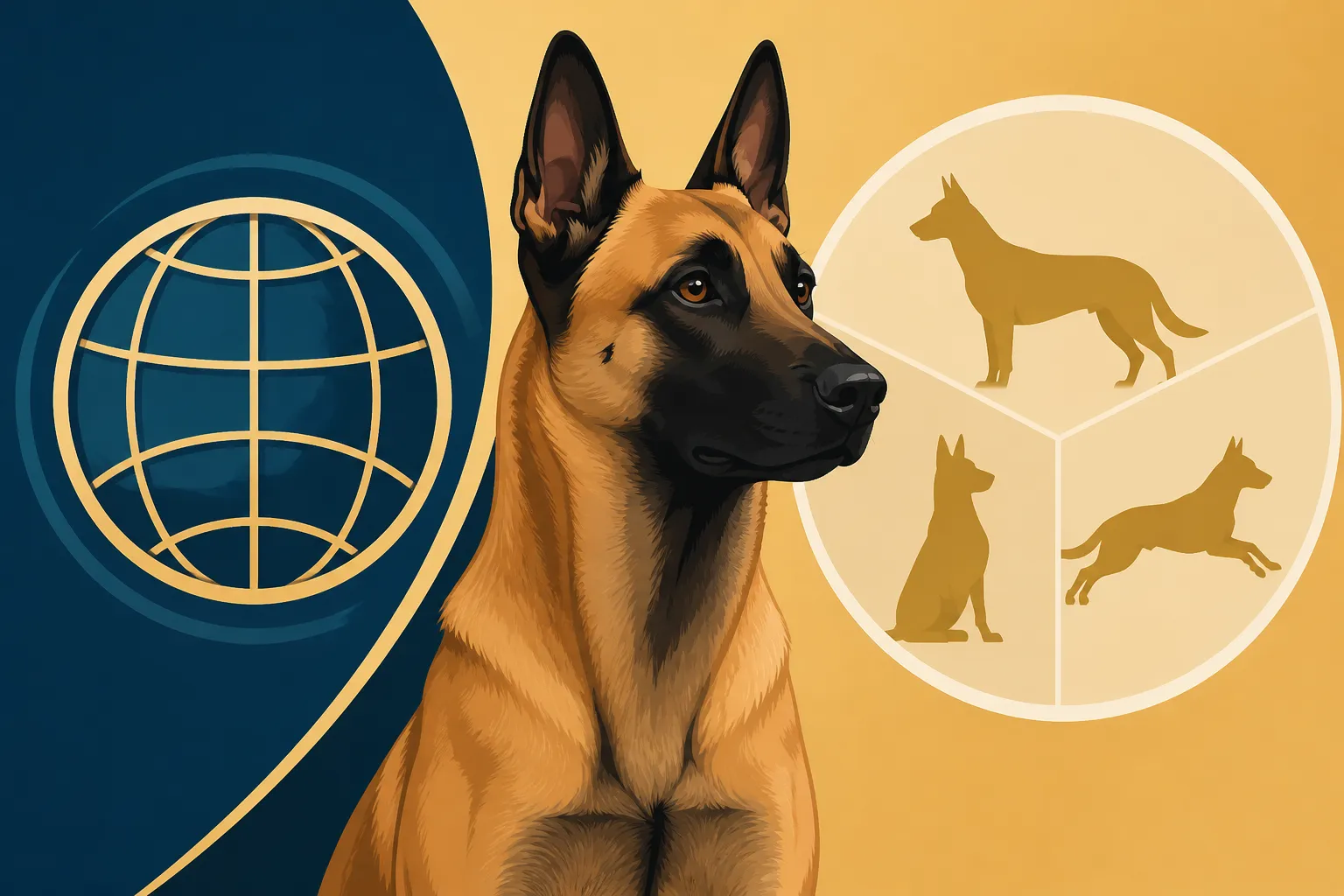
When you delve into the world of purebred dogs, you quickly realize there are many different organizations that register, certify, and maintain breed standards. The Fédération Cynologique Internationale (FCI) stands out as a colossal entity in this landscape, acting as the world's largest international federation of kennel clubs. Its reach and influence are truly global, and understanding how it operates is key to comprehending the classification of breeds like the Malinois.
What is the FCI and Its Global Impact?
The FCI is based in Belgium, which is rather fitting given our topic, and it encompasses 98 member countries and contract partners. This vast network means that a breed standard set by the FCI can have implications for breeders, exhibitors, and owners across nearly a hundred nations. Imagine the scale: from Europe to Asia, Africa to the Americas, a dog's pedigree, its physical conformation, and its recognized traits are often measured against FCI guidelines. This global reach aims to promote purebred dog breeding, health, and welfare, and to standardize breed types across international borders. It’s a huge undertaking, and it brings a level of consistency that's invaluable for serious breeders and judges. Without a standardized approach, you could have a Belgian Malinois recognized differently in, say, France compared to Japan, leading to chaos in the show ring and confusion in breeding programs.
The FCI organizes an extensive network of international shows, working trials, and tests, all designed to evaluate dogs according to these shared standards. This means that a dog winning an FCI-sanctioned show in one country carries significant prestige that is recognized worldwide. For owners and breeders of performance dogs, particularly those in protection sports or obedience, FCI titles are often highly sought after, as they demonstrate a dog's adherence to the breed's working characteristics on a global stage. When you're looking for information on purebred dogs, or even trying to find specific grooming supplies that cater to a breed's recognized coat type, checking resources that align with international standards, perhaps even through major online retailers like Chewy, can be very helpful for getting the right products for your specific breed.
Why International Breed Standards Are Crucial
The existence of international breed standards, particularly those established by the FCI, is not just about making dog shows uniform; it's about preserving the integrity and health of each breed. Without a clear, universally accepted standard, breeds can diverge significantly over time, losing essential characteristics that define them. For working breeds like the Malinois, this isn't just about looks; it's about temperament, drive, and physical capabilities. A standard acts as a blueprint, guiding breeders towards maintaining the core traits that make a Malinois a Malinois.
Consider a situation where every country developed its own unique standard for the Belgian Malinois, without any overarching guidance. One country might prioritize extreme speed, another might favor a heavier build for different types of work, and yet another might allow a wider range of coat colors. Over generations, these populations would become so genetically distinct that they might barely resemble each other, effectively becoming different breeds entirely. The FCI standard prevents this fragmentation by providing a single, detailed reference point. It specifies everything from height and weight to head shape, ear set, coat texture, and temperament. This meticulous detailing ensures that when you see a Belgian Malinois, whether it's in a show ring in Germany or a training field in Argentina, it conforms to a consistent ideal, upholding the breed's heritage and functional purpose.
The Unique History of the Belgian Shepherd Dog Varieties
To truly understand how the Malinois is classified by the FCI, you have to go back to its roots as part of a larger, unified group: the Belgian Shepherd Dog. This history is fascinating because it explains why these distinct-looking dogs are considered varieties of the same breed under FCI rules, while other major kennel clubs often treat them as separate breeds.
A Single Breed, Divided by Coat: The Early Days
In the late 19th century, Belgium's native herding dogs were a diverse group, all sharing a common ancestral pool and a similar working purpose – herding sheep and guarding farms. They were rugged, intelligent, and highly trainable, but their appearances, particularly their coats, varied wildly. There wasn't a strict breeding program in place to differentiate them by specific characteristics; breeders focused primarily on working ability. This meant that within the same litter, you might find puppies with long coats, short coats, or rough coats, and in various colors.
It was Professor Adolphe Reul of the Cureghem Veterinary School who, in the 1890s, played a pivotal role in organizing and standardizing these dogs. He recognized their incredible utility and sought to preserve them. The initial idea was to classify them as a single breed: the Belgian Shepherd Dog. However, for practical purposes, primarily related to showing and ease of identification, it was decided to divide them into varieties based almost exclusively on their coat type and color. This is a crucial distinction: they were varieties of one breed, not separate breeds. This decision was a testament to their shared lineage and common fundamental characteristics beyond superficial appearance. You can read more about The Belgian Farm Dogs the Malinois Came From and The Years the Belgian Malinois Was Standardized to get a deeper understanding of this historical context.
Introducing the Four Belgian Shepherd Varieties
Today, under the FCI classification system, the Belgian Shepherd Dog (Chien de Berger Belge) is recognized as a single breed, but it encompasses four distinct varieties. Each variety shares the same underlying conformation and temperament, differing primarily in their coat. These are:
- Groenendael: This variety is characterized by its long, black coat. Think of a sleek, elegant silhouette with rich, flowing fur that demands regular grooming. Their striking appearance often makes them popular in the show ring, but they retain all the drive and intelligence of their working heritage.
- Tervuren: Similar to the Groenendael in coat length, the Tervuren sports a long coat, but it comes in various shades of fawn, red, or grey, often with a black overlay (carbonage) and a black mask. The interplay of colors gives them a beautiful, rustic look. Sometimes people wonder, What a Malinois Crossed With a Tervuren Produces due to their similar builds.
- Laekenois: This is perhaps the rarest of the four varieties. The Laekenois has a coarse, wiry, or rough coat, typically fawn with traces of black. Their rough texture is quite distinctive and gives them a slightly scruffy, rugged appearance that hints at their original working roots in the Belgian region of Laeken. You might be interested to know more about The Laekenois Beside the Malinois and Why It Is Rare.
- Malinois: This is our focus, known for its short, straight coat, usually fawn to mahogany in color, always with a black mask and often with black tipping on the hairs (carbonage). This coat type is low-maintenance compared to the long-haired varieties, making them a popular choice for active working roles where practicality is paramount.
Each of these varieties, while visually distinct, must adhere to the same underlying physical and psychological characteristics defined for the Belgian Shepherd Dog as a whole. This unity under a single breed standard is a hallmark of FCI's approach. If you're pondering which variety is for you, understanding The Four Belgian Varieties the Malinois Belongs To is a critical first step.
The Defining Role of Coat Type and Color
The absolute cornerstone of the FCI's classification of the Belgian Shepherd Dog, and by extension, the Malinois, is the coat type and color. This is where the distinctions are drawn, and it's a decision that traces directly back to the very first standardization efforts. The early breeders and enthusiasts decided that, despite their shared ancestry and function, these dogs needed a clear visual marker for identification, especially in competitive events.
For the Malinois, the FCI standard strictly defines its coat as short, straight, and well-furnished, with a dense undercoat. The color must be fawn with black overlay (carbonage) and, crucially, a very pronounced black mask and black ears. Deviations from this, such as white markings beyond a small chest patch or toes, or colors outside the fawn range, are considered faults or even disqualifications. This rigorous definition ensures that a Malinois is instantly recognizable by its appearance. This is why you will always see the specific black mask and fawn coloring. Fawn to Mahogany and the Black Malinois Mask describes this in more detail.
This emphasis on coat as the primary differentiator is what makes the FCI system unique. It means that, while genetically very similar, a Groenendael and a Malinois are not simply "long-haired" or "short-haired" versions that can be interbred freely for show purposes under FCI rules. Indeed, The 1959 Split That Made the Malinois Its Own Breed from the other Belgian Shepherds, at least in the eyes of some kennel clubs, highlights this coat-centric approach. Under FCI, while they are all Belgian Shepherds, breeding two different varieties together (e.g., a Malinois and a Groenendael) is generally not permitted if the offspring are intended for FCI registration or showing as purebreds, as it would disrupt the distinct coat characteristics established for each variety. This strict adherence to visual consistency is paramount within the FCI framework.
The Malinois's Place in the FCI Classification System
So, where exactly does the Belgian Malinois fit into this grand international scheme? The FCI doesn't just categorize by breed or variety; it places them within a larger hierarchical structure of groups and sections. This structure tells you a lot about the breed's historical purpose and its general characteristics.
Group 1, Section 1: Herding Dogs – The Malinois's Official Home
The FCI organizes all recognized breeds into ten distinct groups, each reflecting a shared characteristic or historical function. For the Belgian Malinois, along with its three Belgian Shepherd varieties, it proudly resides in FCI Group 1: Sheepdogs and Cattle Dogs (except Swiss Cattle Dogs). This immediately tells you about the core essence of the breed – its deep-rooted heritage as a working herding dog.
Within Group 1, there are further subdivisions called "Sections." The Malinois falls into Section 1: Sheepdogs. This placement reinforces their primary historical role: to work with and manage livestock. This isn't just a label; it influences how judges evaluate the breed in conformation shows, how working abilities are tested, and how the breed's temperament is understood. An FCI judge will expect to see the intelligence, alertness, and agility inherent to a sheepdog in a Malinois, reflecting its historical purpose. This classification also impacts how breeders select for traits, prioritizing the natural drive and biddability that made them exceptional herders. If you're researching a new puppy, understanding the significance of this grouping can help you anticipate the kind of energy and mental stimulation your future Malinois will need. You might even find specific training aids for herding breeds on platforms like Chewy, acknowledging their innate drives.
Decoding the FCI Breed Standard for the Malinois
The FCI standard for the Belgian Malinois, identified as FCI Standard N° 15, is a highly detailed document that serves as the ultimate reference point for the breed. It describes the ideal Malinois in meticulous detail, covering every aspect from nose to tail. This standard is what judges use in the show ring, and what responsible breeders strive to achieve in their litters.
The standard outlines the general appearance, emphasizing a dog that is alert, active, and powerfully built, without being heavy or bulky. It specifies the desired proportions, noting that the Malinois is a square-built dog, meaning its body length should be roughly equal to its height at the shoulder. The Height Limits a Belgian Malinois Is Judged Against are clearly defined, ensuring consistency across the breed.
Furthermore, the standard delves into minute details of the head, including skull shape, muzzle length, stop, and jaw. The eyes are described as medium-sized, almond-shaped, and dark brown, with an intelligent and questioning expression. The ears are high-set, triangular, and carried stiffly erect. Teeth must form a scissors bite. The neck, body, limbs, and tail all have specific descriptions, ensuring that the dog's structure supports its agile and powerful working nature. Everything from the musculature to the angle of the shoulders and hocks is considered, all contributing to a dog that is efficient and enduring in its movements. This precision is vital for maintaining the breed's functionality.
What the FCI Standard Emphasizes for the Malinois
Beyond physical attributes, the FCI standard places significant emphasis on the Malinois's temperament. This is a working breed through and through, and its psychological makeup is as important as its physical form. The standard describes the ideal Malinois as highly intelligent, courageous, watchful, and extremely attached to its owner. It should be confident, with a strong protective instinct, but also biddable and responsive to training. Aggression or undue timidity are considered serious faults.
The standard also highlights the Malinois's innate drive and energy. This isn't a couch potato dog; it's a dynamic animal that thrives on purpose and activity. This focus on working temperament is why many top working dog lines trace back to FCI-registered stock. Breeders operating under FCI guidelines prioritize maintaining this inherent drive, ensuring that successive generations continue to embody the qualities of an elite working dog. This means testing for stable nerves, high prey drive, and strong defense instincts, all within the framework of a balanced and trainable character. The FCI system strongly supports the principle that form follows function, especially for breeds like the Malinois that have such a strong working heritage. When you consider acquiring a Malinois, whether for sport or a highly active family, understanding these core emphases of the standard is crucial for choosing a dog that aligns with your lifestyle and expectations.
Key Distinctions and What They Mean for Malinois Enthusiasts
The FCI's classification system, particularly its handling of the Belgian Shepherd Dog as one breed with four varieties, creates distinct implications for anyone involved with Malinois, from casual owners to serious breeders and competitors.
Coat, Color, and Conformation: The Defining Characteristics
As discussed, the primary differentiator among the Belgian Shepherd varieties under FCI rules is the coat: its length, texture, and color. For the Malinois, this means a short, straight, fawn coat with a black mask. This isn't just a preference; it's a non-negotiable part of its identity within the FCI. If a litter of Malinois puppies somehow produced a long-haired puppy, that puppy would not be recognized as a Malinois by the FCI, nor could it be registered as a Groenendael or Tervuren because its parents were Malinois. It would effectively be a disqualifying fault if shown as a Malinois, or simply unregistered if it didn't fit any standard.
This strict definition avoids confusion and ensures breed purity in a visual sense. While the four varieties are genetically very similar, the FCI maintains their separation for breeding and showing purposes. This contrasts with some other kennel clubs that treat long-haired variations of short-haired breeds differently. So, if you are looking at a Malinois pedigree, you expect to see a consistent line of short-coated, fawn dogs. Any deviation would raise questions about the integrity of the lineage from an FCI perspective. Understanding these nuances is critical when researching puppies or even looking for specific nutritional supplements – for example, you might want to find skin and coat support designed for short-coated breeds, which you can easily browse on Chewy.
| Belgian Shepherd Variety | Coat Type | Coat Color | FCI Classification |
|---|---|---|---|
| Groenendael | Long, straight | Solid black | Group 1, Section 1 |
| Tervuren | Long, straight | Fawn, red, grey (black overlay, black mask) | Group 1, Section 1 |
| Laekenois | Rough, wiry | Fawn (traces of black) | Group 1, Section 1 |
| Malinois | Short, straight | Fawn (black overlay, black mask) | Group 1, Section 1 |
Beyond coat and color, the conformation, or physical structure, is also rigorously detailed. All four varieties are expected to be strong, agile, and well-muscled, built for endurance and speed. Faults in conformation, such as an incorrect bite, a weak topline, or unsound movement, would be penalized regardless of the variety. These are traits that speak to the fundamental working ability of the Belgian Shepherd Dog, and they are upheld across all varieties. This means that The Malinois Against the Tervuren or even the Groenendael will share many structural similarities, even if their coats are vastly different.
Breeding and Registration Under FCI Guidelines
For breeders, adhering to FCI guidelines means a strict approach to breeding pairs and registration. Typically, only dogs of the same variety (e.g., Malinois to Malinois) are bred to produce FCI-registered puppies of that variety. While scientifically they are all the same breed, crossing varieties like a Malinois and a Tervuren would make the offspring ineligible for registration as either purebred Malinois or Tervuren under FCI rules, as it would blur the distinct coat classifications. This means that if you are a breeder looking to produce FCI-registered Malinois, you must carefully select parents that not only adhere to the Malinois physical standard but are also themselves registered Malinois.
This system ensures predictable outcomes in terms of appearance and upholds the specific visual distinctions that the FCI has established. For puppy buyers, this means that an FCI-registered Malinois comes with a guarantee of its specific lineage and adherence to the breed standard. When you are asking a breeder questions, always inquire about their registration practices and whether they follow FCI guidelines if that's important to you. You can delve deeper into what breeders consider when you look at topics like Whether a Malinois Can Be Bred to Another Variety. It impacts not just their show careers but the very identity of the puppies produced. Furthermore, understanding Reading a European Belgian Malinois Pedigree is vital, as these documents are meticulously maintained to reflect FCI standards and lineage.
Comparing FCI's Approach to Other Major Kennel Clubs
It's common for owners and potential buyers to encounter different ways various kennel clubs classify the Belgian Malinois. This can be a point of confusion, but it highlights the diverse philosophies in canine governance.
Different Philosophies: FCI vs. AKC
The most significant difference when comparing the FCI's classification to that of other major kennel clubs, such as the American Kennel Club (AKC), lies in the "one breed, four varieties" concept. The FCI views all four Belgian Shepherds (Groenendael, Tervuren, Laekenois, and Malinois) as varieties of a single breed: the Belgian Shepherd Dog. This means they share the same breed standard, differing only in coat type and color.
In contrast, the AKC, for example, treats the Groenendael (which they simply call the Belgian Shepherd Dog), the Belgian Tervuren, and the Belgian Malinois as entirely separate breeds. The Laekenois is still in the AKC's Miscellaneous Class, awaiting full recognition as its own breed. This means that an AKC-registered Belgian Malinois is considered a distinct breed from an AKC-registered Belgian Tervuren. This difference has significant implications for breeding, showing, and even just discussing the dogs. While genetically similar, they are recognized as distinct entities by the AKC, with their own separate breed standards, separate stud books, and separate competition classes. This split, particularly The 1959 Split That Made the Malinois Its Own Breed, led to distinct registration and showing paths in different countries. For breeders in the US, this means you can't, for instance, cross an AKC Belgian Malinois with an AKC Belgian Tervuren and expect to register the puppies as either purebred. The philosophical difference is profound: unity vs. individuality.
Navigating International Shows and Pedigrees
For individuals involved in competitive dog sports or conformation showing on an international level, understanding these differences is absolutely paramount. An FCI-registered Malinois might compete in a global show, and its pedigree would clearly state its variety within the broader Belgian Shepherd Dog breed. If you were to bring that same dog to an AKC show, it would compete as a "Belgian Malinois," a distinct breed. The registration papers, while both valid, would reflect these different classification philosophies.
This can lead to situations where a dog might be eligible for certain events under FCI rules but not others under, say, AKC rules, or vice versa. Pedigrees from different regions also need careful interpretation. A European pedigree following FCI rules would show a line of Belgian Shepherds, specifying the variety. An American pedigree would show "Belgian Malinois." This is important for those who import dogs or participate in international breeding programs. It requires diligent research and clear communication with breeders to ensure that the dog's registration and lineage align with your specific goals, whether it's showing, working, or breeding. Being familiar with these various systems is part of being a well-informed Malinois owner, and it helps you make educated decisions about your dog's future, from finding high-quality food on Chewy to securing appropriate training gear.
The Practical Impact of FCI Classification for Malinois Owners and Enthusiasts
Beyond the technicalities of breed standards and registration, the FCI's classification of the Malinois has very real, practical implications for owners, trainers, and anyone passionate about this incredible breed.
Ensuring Authenticity and Breed Type
For a prospective Malinois owner, understanding the FCI classification helps you ensure you are getting an authentic dog of the correct breed type. If you're looking for a working-line Malinois, knowing that a dog comes from FCI-registered parents that adhere to its rigorous standards (both physical and temperamental) gives you a level of confidence in its genetic predisposition for drive, health, and intelligence. The FCI's emphasis on maintaining the working characteristics of the Belgian Shepherd Dog means that breeders who follow these guidelines are typically striving to produce dogs that are not just beautiful, but also capable and mentally sound.
This authenticity goes beyond just looks. It speaks to the temperament and inherent abilities you expect from a Malinois. A Malinois is defined by its intense drive, keen intelligence, and robust athleticism. A well-bred, FCI-standard Malinois should embody these traits. By researching breeders who adhere to such international standards, you increase your chances of acquiring a dog that truly represents the breed's best qualities, minimizing the risk of genetic issues or temperament quirks that might arise from indiscriminate breeding. This is crucial for such a demanding breed, where an incorrect temperament can lead to serious challenges.
Finding Reliable Information and Resources
When navigating the wealth of information available about Belgian Malinois, understanding the FCI's role can help you discern reliable sources. Many international breed clubs and working dog organizations base their standards and recommendations on FCI guidelines. This means that articles, books, and training advice coming from FCI-aligned sources are likely to be consistent with a global understanding of the breed.
For example, if you're researching common health issues, training methodologies, or even the optimal diet for a high-drive Malinois, looking to resources that acknowledge or are derived from FCI standards can provide a more globally recognized perspective. Reputable breeders often provide extensive information packets, and understanding their mention of FCI pedigrees or titles can give you confidence. Even when purchasing supplies, whether it's specialized performance food or durable chew toys from a retailer like Chewy, knowing that your dog aligns with widely accepted breed standards can help you choose products that are truly suitable for its needs and activity level. This knowledge empowers you to be a more informed owner and advocate for your Malinois.
Disclaimer
This article is for general informational purposes only and does not constitute professional advice. Laws, prices and regulations vary by location and change over time. Consult a qualified professional for guidance on your specific situation.