Detection Work Instead of Bite Work for a Malinois
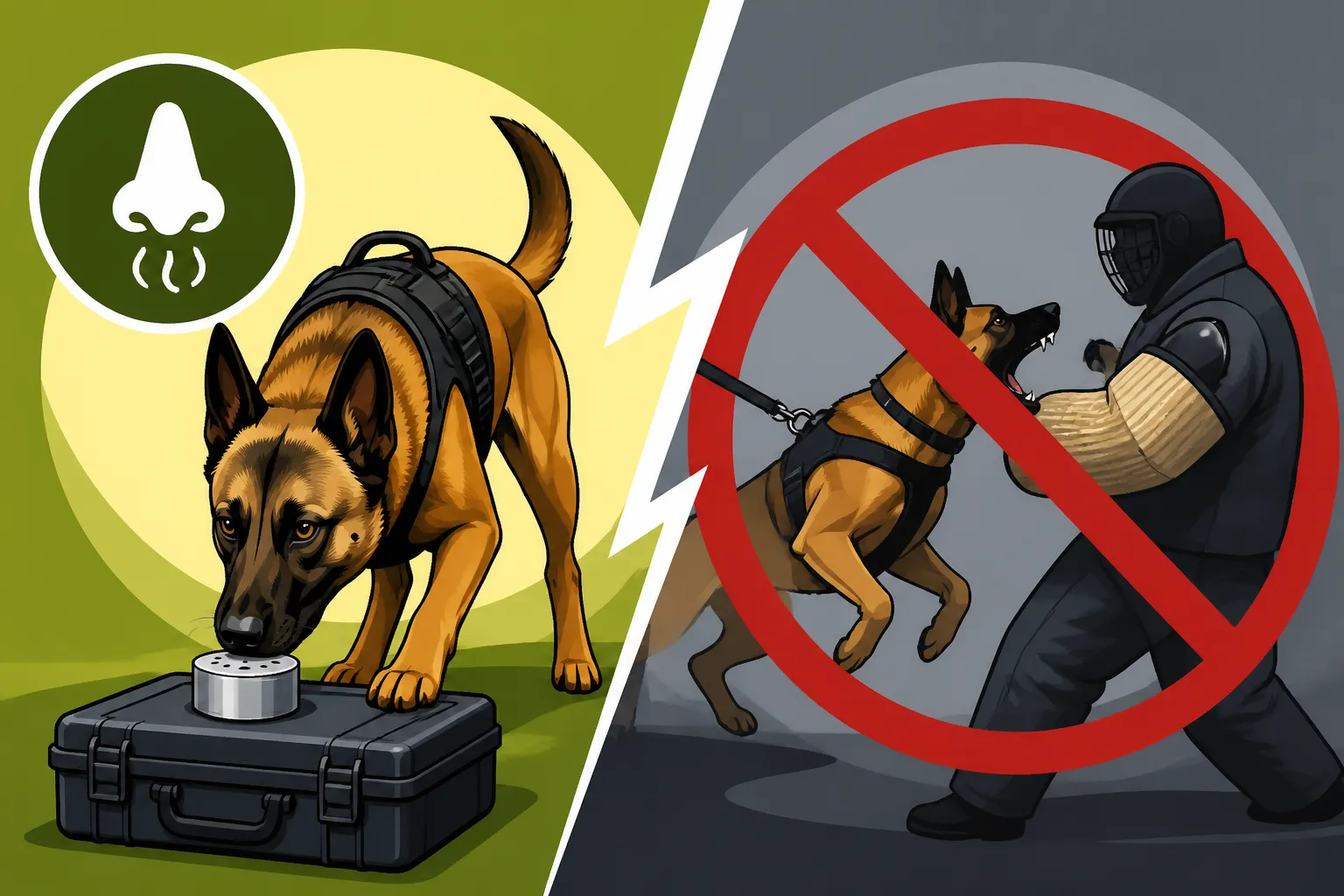
For many Belgian Malinois owners, the sheer drive and intensity of these incredible dogs can feel like a relentless tide. You might find yourself wondering how to genuinely fulfill their boundless energy and sharp minds, often feeling pushed towards demanding activities like bite work because that's what seems to suit their nature. But what if you're looking for an equally challenging, deeply rewarding path that taps into their innate talents without focusing on protection? This comprehensive guide will explore the incredible world of detection work, offering a fulfilling alternative to bite work that harnesses your Malinois's phenomenal nose and work ethic, providing profound mental and physical enrichment for both of you.
Why Consider Detection Work for Your High-Drive Malinois?
Let's be real: owning a Belgian Malinois is not for the faint of heart. Their drive, their intelligence, their need for a job – it's all dialed up to eleven. Often, when people think of "work" for a Malinois, bite sport or protection work immediately springs to mind. And while those avenues are certainly valid for the right dog and handler, they aren't the only, or even necessarily the best, fit for every Malinois or every owner. You might be struggling with the time commitment, the accessibility of qualified decoys, or simply the inherent intensity of bite work, and feeling like you're failing your dog by not providing an outlet.
The Pressure of Traditional "Malinois Work"
It’s easy to feel the weight of expectation when you own a Malinois. Friends, family, even strangers at the dog park, might make comments about their "bite dog potential," or you might see countless videos of Malinois excelling in protection sports and think, "My dog needs to do that." This can create immense pressure, leading owners down a path that might not align with their lifestyle, ethical comfort, or even their dog's true aptitudes. While bite work is a fantastic sport for many, it requires a significant dedication to finding a reputable club, consistent training with skilled decoys, and a very specific temperament in the dog. Not every Malinois has the genetic predisposition for it, nor does every owner have the resources or desire to pursue it.
This often leaves owners feeling guilty or inadequate, wondering how else they can tap into that incredible power. You might notice your Malinois still has energy after a two-hour hike, or is destroying things around the house, and conclude that you’re simply not doing enough. The truth is, mental stimulation can be far more tiring than physical exercise alone for these dogs. The Mental Work That Finally Tires a Malinois Out delves into this concept further, highlighting that a Malinois's mind is its most powerful tool, and giving it a task to solve can be far more fulfilling than endless running.
The Unique Advantages of Scent-Based Activities
Here's where detection work shines as a brilliant alternative. Instead of focusing on physical engagement with a person or object through biting, detection channels their phenomenal olfactory senses. A dog’s sense of smell is estimated to be 10,000 to 100,000 times more acute than ours. For a Malinois, this isn't just a fun fact; it's a superpower waiting to be employed. Engaging this natural ability provides unparalleled mental stimulation, burning off mental energy in a way that running circles in the yard simply cannot.
Beyond the mental workout, scent work offers incredible flexibility. You don't necessarily need a specialized club or a team of people to get started. Many aspects of detection training can be done right in your home, yard, or local park, making it highly accessible. It builds incredible focus, problem-solving skills, and a strong working relationship between you and your dog, all while being inherently less confrontational than bite work. It’s a job your Malinois can do with intensity and precision, using the very tool they were born with: their nose.
Understanding the Fundamentals of Canine Scent Work
To truly appreciate why detection work is such a natural fit for a Belgian Malinois, it helps to understand a little about how their incredible noses actually function. It's far more complex and fascinating than most people realize, and it's what makes them such unparalleled partners in scent-based tasks.
The Dog's Amazing Olfactory System
Imagine having a nose that could differentiate between a thousand different smells in a single breath, identifying the faint remnants of a specific odor even hours after it passed. That's essentially what your Malinois's nose can do. Dogs have up to 300 million olfactory receptors, compared to our mere 6 million. More importantly, the part of their brain dedicated to analyzing smells is disproportionately larger than ours. When a dog breathes, air passes over these receptors, and unlike humans, they can continue to breathe out while simultaneously smelling, creating a constant flow of information. Their noses also function independently, allowing them to detect the direction a scent is coming from, creating a "stereo" sense of smell.
This biological marvel means that your Malinois isn't just smelling an odor; they're breaking down that odor into its constituent components, detecting minute traces, and tracking plumes of scent over distances and through environmental noise we can't even comprehend. It's not just about a strong sniff; it's about a sophisticated processing system that transforms scent into a rich tapestry of information. This is why a simple walk can be an exhausting mental exercise for them – they're constantly processing an overwhelming amount of scent data, often to our oblivious human noses.
Target Odors and Their Significance
In detection work, a "target odor" is the specific scent you train your dog to find and indicate. This could be anything from a specific essential oil, like birch, anise, or clove (common in sport nose work), to more complex real-world odors like narcotics, explosives, human remains, or even specific medical conditions. The key is that the dog learns to isolate and identify that particular scent from a myriad of other ambient smells, no matter where it's hidden or what other odors are present.
The selection of target odors depends on the type of detection work you're pursuing. For sport, essential oils are safe and easy to acquire. For professional applications, specialized training materials are used. Regardless, the dog learns to associate this specific odor with a reward, creating a strong motivation to seek it out. This forms the bedrock of all detection training: finding the target odor equals good things happening. This principle makes it possible to Starting Scent Detection With a Belgian Malinois even at a young age, by making the target odor the most exciting thing in the environment.
The Art of Scent Discrimination
Scent discrimination is where the true brilliance of a detection dog lies. It's not enough for them to just smell something; they must identify the right something and ignore everything else. Think about a police K9 searching a crowded locker room for a specific contraband odor. They're processing body odor, cleaning supplies, food, laundry detergent, and countless other smells, yet they must pinpoint the single, faint scent of their target.
This skill is developed through careful training, starting with very clear and isolated presentations of the target odor and gradually introducing distractions and competing scents. Your Malinois learns to prioritize the target odor above all else because that's what consistently leads to the biggest reward. It's a testament to their focus and drive when properly channeled. This ability to filter out irrelevant information and home in on the crucial scent is precisely why Malinois, with their intense focus and work ethic, excel in detection roles.
Getting Started: Laying the Foundation for Detection Success
You're excited, your Malinois is probably vibrating with anticipation (as always!), and you're ready to dive into the world of scent. But where do you actually begin? The good news is, you don't need a huge budget or a massive training facility to start. The initial steps are all about building a strong positive association with the target odor and making the game incredibly fun and rewarding.
Essential Equipment for Beginner Scent Work
One of the beautiful things about starting detection work is how little specialized equipment you actually need at the outset. Much of it you might already have around the house!
- Target Odor: For sport scent work, you'll want to choose a commercially available essential oil, typically Birch, Anise, or Clove. These are readily available online through retailers like Amazon, or from specialty dog supply stores. You'll need tiny amounts, usually applied to cotton swabs.
- Scent Vessels: Small metal tins, plastic containers with holes, or even film canisters are perfect for holding your scented cotton swabs. These protect the odor and make it easy for your dog to investigate.
- Containers/Boxes: Start with simple cardboard boxes of varying sizes. You'll hide your scent vessel in these.
- High-Value Rewards: This is crucial for a Malinois! Think tiny pieces of cooked chicken, cheese, hot dogs, or their absolute favorite soft treats. Whatever drives them absolutely wild and makes them eager to work.
- Leash and Collar/Harness: A comfortable, non-restrictive harness or flat collar works best, along with a sturdy leash. Avoid anything that causes discomfort or distraction.
Remember, the goal is to make this a positive and exciting experience, so choose gear that facilitates that. Whether a Pet Belgian Malinois Can Do Nose Work also touches on the accessibility of this sport for companion dogs.
The "Match to Sample" Game
This is a fantastic starting point for teaching your Malinois that a specific odor means "YES! Good things are coming!" The concept is simple: you pair the target odor with a known high-value reward.
- Introduce the Scent: Place a scented cotton swab (your target odor, e.g., birch) into a small, open container. Let your Malinois sniff it briefly.
- Immediate Reward: As soon as their nose touches or hovers over the scent, immediately mark the behavior (with a verbal "Yes!" or a clicker) and drop a handful of high-value treats directly onto or right next to the scent vessel. This creates a powerful association: "This smell = jackpot!"
- Repeat, Repeat, Repeat: Do this many times in quick, short sessions. Don't ask for duration, just acknowledgment of the scent.
- Hide and Seek (Visible): Once your dog eagerly sniffs the scent and looks for the reward, you can start making it a tiny bit harder. Place the scented vessel on the floor, visible, and let them find it. Reward heavily when they sniff it. Gradually place it behind a single, easily moved object, like a small book or a piece of cardboard. The goal is to build enthusiasm and confidence.
This early stage is all about building strong desire and understanding. Don't rush it. Every successful find should be a celebration!
Building an Active Search Behavior
Once your Malinois understands that the target odor means reward, you need to teach them to actively search for it, not just react to a visible scent. This is where the boxes come in.
- The Line-Up: Get three to five identical cardboard boxes. Place the scented vessel in one of the boxes, leaving the others empty. Arrange them in a line or semicircle, with the scented box always in the same position at first.
- Release to Search: Give your Malinois a clear "Search!" command and let them investigate the boxes. When their nose indicates the correct box (by sniffing intently, pawing, or just lingering), mark and reward immediately. Drop the treats into the scented box to reinforce the idea that the reward comes from the source of the smell.
- Vary the Position: Once they reliably find the scent in the same position, start moving the scented box around in the line-up. Make sure you are not giving them any visual cues. Your body language should be neutral.
- Introduce More Boxes and Different Settings: Gradually increase the number of empty boxes. Once they're confident with boxes in one room, move to another room, then outside in a quiet, low-distraction environment. Building Engagement With a Belgian Malinois is paramount here; keep the game fun and the rewards high to maintain their intense focus. Always end on a high note, even if it's just one perfect find.
Consistency and enthusiasm from you are key. Your Malinois thrives on having a purpose, and this game gives them an incredibly engaging one.
Progressing in Detection Training: Building Complexity
Once your Malinois is consistently finding a target odor in simple box searches, it's time to crank up the challenge. This is where their incredible problem-solving abilities and relentless drive really get to shine.
Introducing New Search Environments
The real world is rarely a clean, sterile environment. To prepare your Malinois for advanced detection work, you need to introduce variety in search locations.
- Room Searches: Move beyond simple box lines. Hide the scent vessel in a room, under a chair, behind a curtain, in a cabinet (initially leaving it slightly ajar). Start with smaller, less cluttered rooms and gradually increase the complexity. Think about how a Malinois might naturally search a space; they often work systematically, clearing areas as they go.
- Vehicle Searches: This is a classic detection challenge. Hide the scent inside a car (e.g., under a seat, in the glove compartment, in the trunk). Begin with a single, stationary vehicle in a quiet location. As your dog progresses, you can introduce multiple vehicles or more challenging placements. Remember, the scent may travel, so teach your dog to pinpoint the source.
- Exterior Searches: Take the game outdoors. Hide the scent on natural elements like trees, bushes, fence posts, or even buried slightly in the grass. This introduces environmental variables like wind, temperature, and different ground textures, all of which will affect how scent moves and disperses. Always be mindful of weather conditions; extreme heat can be dangerous for a working Malinois. Heat, Cold and a Belgian Malinois on the Job provides more insights into environmental considerations.
Each new environment presents a fresh set of challenges for your dog's nose, forcing them to adapt their search strategy and refine their scent cone interpretation.
Elevating Hide Difficulty and Distractions
Making the hide harder isn't just about putting it in a different place; it's about making the odor less accessible or introducing competing scents.
- Elevated Hides: Dogs naturally focus on ground-level scents. Introduce hides that are higher up, such as on shelves, window sills, or mounted on walls. Your Malinois will learn to lift their head and work the upper air currents for scent. Make sure the height is safe and manageable for your dog.
- Deep Hides: Place the scent in layers of material, such as inside a shoe, under a stack of clothes, or within a tightly packed container. This requires your dog to work harder to locate the source, often indicating a stronger, more committed interest when they find it.
- Environmental Distractions: Gradually introduce neutral odors or items that might distract your dog but are not target odors. This could be food left on a different table (not near the hide), toys in other boxes, or even another dog present (leashed and calm, at a distance). The goal isn't to confuse or frustrate, but to teach your Malinois to discriminate and maintain focus on their job. This builds their resilience and ensures they don't get sidetracked by irrelevant stimuli, a critical skill for any working dog.
Refining the Alert Behavior
An "alert" is the specific behavior your dog performs to tell you they've found the source of the target odor. For detection work, this is usually a passive alert – a freeze, a sit, a down, or a prolonged stare at the source. It's crucial that this alert is clear, consistent, and does not disturb the hide.
- Shaping the Alert: As your Malinois is sniffing at the hide, wait for a natural pause, a momentary freeze, or a sit. Mark and reward at that exact moment. Practice this repeatedly. If your dog has a natural tendency to paw, try to capture a quieter behavior, or reward the pawing then transition to a calmer indicator.
- Building Duration: Once your Malinois offers the alert, start asking for a tiny bit of duration before the reward. "Hold it… good! Mark, reward." Gradually extend the time.
- Source Identification: Ensure your dog is alerting at the source of the odor, not just where the scent pooled or drifted. This comes with practice and careful rewarding only when they are at the closest point to the hidden vessel. A solid, consistent alert is vital for real-world detection, as it communicates precisely where the handler needs to investigate.
The clarity of the alert makes you a more effective team. You know exactly what your Malinois is telling you, building immense trust in their nose.
Common Challenges and Troubleshooting in Scent Work
Even with a dog as brilliant as a Malinois, detection training isn't always a straight line. You'll encounter hurdles, plateaus, and moments where you wonder if your dog has suddenly forgotten everything. This is normal! Understanding common challenges and having strategies to address them will help you navigate these bumps in the road.
False Alerts and Indication Issues
One of the most frustrating things in detection work is a false alert – when your dog indicates a find where there is no target odor. This can happen for several reasons.
- Handler Cues: Unbeknownst to you, you might be subtly guiding your dog to the wrong spot through your body language, gaze, or even a change in your breathing. Dogs are incredibly sensitive to our signals. To troubleshoot this, have someone else set up hides without you knowing the location, or film yourself to spot unconscious cues.
- Environmental Contamination: Sometimes, the environment itself can hold residual odor. Perhaps you touched an empty box after handling the scented one. Always be meticulous about scent hygiene: wear gloves, use separate containers for scented and unsented items, and clean your training area regularly.
- Rewarding Incorrectly: If your dog was rewarded, even once, for a false alert, they might repeat it. This is why precision in marking and rewarding is so important. If a false alert occurs, calmly walk away from the spot, resetting the environment, and try again with a clear, easy hide. Don't punish, just deny the reward.
When troubleshooting, always go back to basics. Make the hide undeniably easy and reward heavily for correct indications to rebuild confidence and clarity.
Loss of Motivation or Drive
While a Malinois is generally a powerhouse of drive, even they can lose motivation if the training isn't engaging or rewarding enough. You might notice them sniffing less intently, getting distracted easily, or performing half-hearted searches.
- Evaluate Your Rewards: Are your treats truly high-value enough? For a Malinois, standard kibble often won't cut it. Experiment with different types of meat, soft cheeses, or even a favorite tug toy if they are toy-motivated. The reward should be a "jackpot" every single time they find the target odor. Training Treats a Belgian Malinois Burns Through can offer some ideas.
- Keep Sessions Short and Fun: Malinois thrive on intense, short bursts of work. Longer, drawn-out sessions can lead to mental fatigue and burnout. Aim for 5-10 minute sessions, several times a day if possible, rather than one long one. Always end on a successful find.
- Increase Success Rate: If your dog is struggling, make the hides easier for a few sessions. Place them in obvious spots, with clear scent cones. The goal is to build a string of successful finds, reinforcing the "I found it!" feeling and the associated reward. A confident dog is a motivated dog.
Remember, a Malinois loves to work with you. Make it a team effort, and your enthusiasm will often be contagious.
Distractions and Environmental Overload
Detection work eventually requires your Malinois to focus amidst various distractions, which can be particularly challenging for such an alert breed.
- Gradual Introduction of Distractions: Never jump from a quiet room to a busy park. Introduce distractions slowly. Start with a neutral object placed away from the hide, then gradually closer. Then a person sitting quietly, then moving. Finally, environmental noise or other dogs at a distance. The key is to introduce one distraction at a time and ensure your dog can still perform before adding another layer.
- Build Focus and Engagement: Before even introducing distractions, ensure your Malinois has a strong foundation of focus on you and the game. Games like "look at me," "touch," and highly rewarding tug sessions can build this bond. Building Engagement With a Belgian Malinois is a vital concept for any Malinois training. When they are truly engaged with you, they are better able to filter out external stimuli.
- Backtrack When Necessary: If your Malinois becomes overwhelmed or consistently fails in a distracting environment, it means you've moved too fast. Go back to a less distracting setting where they can succeed, then reintroduce the challenge at a lower intensity. Patience and a systematic approach are your best allies here.
The goal is a dog that can stay focused on the scent, no matter what's happening around them. This takes time, consistency, and a deep understanding of your individual Malinois's thresholds.
Beyond the Basics: Different Types of Detection Work
Once your Malinois masters the fundamentals of scent detection, a whole world of possibilities opens up. From competitive sports to serious real-world applications, there's a path for almost every dog and handler team.
Sport Nose Work (Scent Work Competitions)
Sport nose work, often offered through organizations like the National Association of Canine Scent Work (NACSW) or the American Kennel Club (AKC) Scent Work, is a fantastic way to engage your Malinois's nose in a structured, competitive setting. It's accessible to pet dogs and working lines alike, and it's incredibly fun.
- Varied Search Areas: Competitions typically involve four main search elements: Container Searches (boxes, luggage), Interior Searches (rooms, offices), Exterior Searches (outdoor areas, often with varied terrain), and Vehicle Searches (cars, trucks). Each level progresses in difficulty, requiring dogs to find multiple hides in increasingly challenging scenarios.
- No Prerequisites: Unlike many dog sports, there are usually no obedience prerequisites beyond being able to work cooperatively with your dog on a leash. This makes it a great entry point for many Malinois owners who might not be interested in traditional obedience.
- Judged on Accuracy and Time: Teams are judged on their ability to locate all hides accurately within a set time limit. It's a true test of a dog's olfactory skill and a handler's ability to "read" their dog's subtle indications. The Checkup Schedule a Sport Malinois Should Keep is always a good idea, as even hobby sport dogs benefit from regular veterinary care.
Sport nose work is a fantastic way to build confidence, strengthen your bond, and show off your Malinois's incredible talent in a supportive community environment.
Professional Detection Applications
For those with highly driven Malinois and a dedication to intensive training, professional detection work offers serious, life-saving opportunities. This is where the Malinois truly excels, becoming an invaluable asset in various fields.
- Law Enforcement/Military K9s: Malinois are extensively used as K9s for narcotics, explosives, and currency detection. Their high drive, intelligence, and physical prowess make them ideal for these demanding roles. They must be able to work in high-stress environments, often for long hours, and maintain impeccable focus. Explosives Detection Training for a Belgian Malinois and Starting a Belgian Malinois on Narcotics Detection delve into these specific applications.
- Search and Rescue (SAR): Malinois's endurance, agility, and exceptional nose also make them excellent candidates for SAR. They can be trained to find missing persons (live find), human remains (HRD or cadaver dogs), or even evidence at crime scenes. This work requires immense dedication from both dog and handler, often involving grueling conditions and extensive certifications. Search and Rescue Work With a Belgian Malinois provides more insight into this demanding but incredibly rewarding field.
- Conservation and Specialty Detection: Beyond the more common roles, Malinois are finding their niche in increasingly specialized detection tasks: detecting endangered wildlife scat for conservation efforts, finding invasive species, or even detecting mold or bed bugs. Their versatility truly knows no bounds.
These fields require highly specialized training, often through dedicated academies or experienced professional trainers. It's a commitment that can last The Fourteen to Sixteen Years a Belgian Malinois Lives of a Malinois's working life.
Medical Alert and Assistance Dogs
While less common than traditional detection roles, some Malinois with the right temperament and training can even be used as medical alert dogs.
- Diabetic Alert: Training a Malinois to detect changes in blood sugar levels (both highs and lows) through scent. This can provide life-saving alerts for individuals with diabetes.
- Seizure Alert: Some dogs can naturally detect an impending seizure in their handler. While this is often an innate ability, some dogs can be trained to recognize and alert to subtle scent changes associated with these events.
- Cancer Detection: While still largely in the research phase, there is promising work being done on dogs detecting specific cancer markers in human breath or urine. The Malinois's keen nose could play a future role here.
This type of work requires not only exceptional scenting abilities but also a calm, stable temperament and a strong bond with their handler, as they are often working directly with or for an individual with health needs.
The Profound Benefits of Detection Work for Your Malinois
Choosing detection work for your Belgian Malinois isn't just an alternative; it's an investment in their overall well-being and a pathway to a deeper, more fulfilling relationship with your extraordinary dog. The benefits extend far beyond simply "tiring them out."
Unparalleled Mental Stimulation and Fulfillment
A bored Malinois is a destructive Malinois. You know the drill: chewed furniture, frantic pacing, obsessive behaviors. While physical exercise is essential for this breed, it’s the mental challenge that truly satisfies their intelligent, problem-solving minds. Detection work is like sending your dog to graduate school for their nose. They are constantly analyzing, discriminating, and focusing, using their most powerful sense in a directed, productive way.
This intense mental engagement burns calories, yes, but more importantly, it tires their brain in a way that simply running in the yard can never achieve. When a Malinois has completed a challenging search, you'll often see a dog that is not just physically tired, but mentally satiated. They're calm, relaxed, and truly fulfilled, settling down much more readily. This sense of accomplishment is profound for them.
Building Confidence and Reducing Anxiety
Many high-drive dogs, including Malinois, can struggle with underlying anxieties or lack confidence in novel situations. Detection work can be a powerful tool for addressing these issues. When a dog is given a clear task and experiences consistent success, their confidence soars. They learn that they have a job to do, that their nose is a powerful tool, and that they are capable of solving challenges.
For dogs that might be environmentally sensitive or prone to reactivity, scent work provides a safe, structured activity that allows them to engage with their surroundings on their own terms, focusing on a specific goal rather than reacting to stimuli. It builds their independence and resilience. Imagine a Malinois who used to be jumpy around new objects, now confidently searching around them because they are absorbed in their scenting task. It's truly transformative.
Strengthening the Bond Between Dog and Handler
Detection work is a team sport. Your Malinois has the nose, but you are their guide, their cheerleader, and their reward delivery system. This collaborative effort inherently strengthens the bond between you. You learn to "read" your dog – their subtle changes in breathing, tail movement, head carriage, and foot placement that signal they are "in odor" or "at source." It's like learning a secret language.
Your dog, in turn, learns to trust your guidance, knowing that if they follow the rules of the game and work diligently, you will always deliver the ultimate reward. This deepens mutual respect and understanding. There’s nothing quite like the feeling of watching your Malinois confidently work an area, knowing they are relying on their innate abilities, and then seeing them look to you for that confirmation and praise when they find the hide. It's a partnership built on trust, communication, and shared success.
Finding a Trainer or Club for Detection Work
You’re convinced. You’re ready to embark on this exciting journey with your Malinois. Now, how do you find the right support to guide you? While you can certainly start with the basics at home, a good trainer or club can accelerate your progress and provide invaluable feedback.
Researching Local Scent Work Clubs and Trainers
The world of dog training is vast, and quality varies. For detection work, you want to find instructors who understand positive reinforcement, scent theory, and the unique drive of breeds like the Belgian Malinois.
- Ask for Recommendations: Reach out to other Malinois owners, ask at your local dog park, or check online forums dedicated to working dogs. Word-of-mouth is often the best indicator of a good trainer.
- Look for Sport-Specific Certifications: Many instructors are certified through organizations like the National Association of Canine Scent Work (NACSW) or the Fenzi Dog Sports Academy (FDSA). These certifications indicate a commitment to modern, effective, and humane training methods.
- Observe a Class: Before committing, ask if you can audit a class without your dog. Watch how the instructor interacts with the dogs and handlers, how they manage distractions, and how they troubleshoot problems. Does their approach align with your values? Do the dogs look happy and engaged?
A good club will provide a supportive community, opportunities to work in varied environments, and experienced guidance.
What to Look for in a Detection Instructor
When evaluating a potential instructor, keep these key qualities in mind:
- Experience with High-Drive Breeds: A trainer who understands the intensity and specific needs of a Malinois will be invaluable. They'll know how to channel that drive rather than suppress it.
- Positive Reinforcement Focus: Detection work relies heavily on motivation and reward. An instructor who uses force-free, positive reinforcement methods will create a more confident, enthusiastic detection dog.
- Clear Communication and Feedback: You need an instructor who can clearly explain concepts, demonstrate techniques, and provide constructive feedback on your handling and your dog's performance.
- Emphasis on Reading Your Dog: A great detection instructor will teach you how to observe your dog's subtle cues, rather than just telling you what to do. They'll empower you to become a better handler.
- Safety and Scent Hygiene: Ensure they prioritize safety for both dogs and humans, and adhere to strict scent hygiene protocols to prevent contamination and confusion.
Remember that A Belgian Malinois That Shuts Down Under Correction is something to avoid; positive reinforcement builds confidence and a dog that loves to work.
Online Resources and Self-Study Options
If local options are limited, or if you want to supplement in-person training, there are excellent online resources available.
- Online Courses: Many reputable trainers offer online courses or virtual coaching for scent work. These often include video lessons, assignments, and personalized feedback. This can be a fantastic way to learn at your own pace.
- Books and DVDs: There are numerous books and training manuals dedicated to canine scent detection. Look for those written by experienced professional or sport detection handlers.
- YouTube Channels and Blogs: While not a substitute for structured training, many professional and hobby handlers share valuable tips and techniques online. Just be discerning about the quality of the advice.
One online resource that many new puppy owners use for early training and socialization, BAXTER & Bella, might even offer basic scent games as part of their comprehensive programs, which can be a fun way to introduce scent discrimination early. Even something as simple as a snuffle mat or a KONG wobbler can be an early form of scent work, teaching your Malinois to use their nose to earn a reward. For equipment needs, finding items like scent tins, essential oils, or puzzle toys is easy on Amazon, which can help you get started from home.
Detection work offers a powerful, enriching path for your Belgian Malinois, transforming their incredible drive into a focused, rewarding partnership. It’s a journey of discovery for both you and your dog, proving that their superpower nose is one of the most exciting tools in their formidable arsenal.
Disclaimer
This article is for general informational purposes only and does not constitute professional advice. Laws, prices and regulations vary by location and change over time. Consult a qualified professional for guidance on your specific situation.