The Four Belgian Varieties the Malinois Belongs To
When you first fall in love with the intense gaze and athletic prowess of a Belgian Malinois, it’s easy to think of them as a singular, distinct breed. But for many new owners or those just admiring these incredible dogs from afar, it can be a real head-scratcher to discover that the Malinois is actually just one part of a larger, incredibly diverse family. This can lead to confusion, especially when you start hearing about Groenendaels, Tervurens, and Laekenois, wondering how they all fit together. This comprehensive guide is here to untangle that web of relationships, helping you understand the fascinating history and unique characteristics of each of the four Belgian Shepherd varieties, and how the Malinois shines within this remarkable canine lineage.
Understanding the Belgian Shepherd Dog Family
It's common for people to refer to a "Belgian Shepherd Dog" as if it were one consistent type, and in many ways, they wouldn't be entirely wrong. However, the nuance lies in the distinct varieties that sprang from a shared root. Imagine a family with four very different children; they all share the same parents and many core traits, but each has their own personality, appearance, and path in life. That's essentially the story of the Belgian Shepherd Dog. The initial impulse to categorize and standardize these working dogs was born out of a desire to preserve their working ability and define them against other regional types.
A Shared Heritage: Roots in Belgian Farm Life
Before they were the specialized, high-performing dogs we know today, the ancestors of the Belgian Shepherd Dog were the ultimate all-purpose farmhands. Picture the rolling farmlands of Belgium in the late 19th century. Farmers needed resilient, intelligent dogs that could herd sheep, guard livestock, protect property, and even help with general farm chores. These dogs weren't bred for fancy looks or specific coat types; they were bred for utility, stamina, and an unwavering loyalty to their masters. They were, in essence, the very fabric of rural life, and their ability to perform demanding tasks with minimal fuss was paramount. You can really get a sense of this history by delving into The Belgian Farm Dogs the Malinois Came From. These were dogs forged by necessity, adaptable and tireless, perfectly suited to the diverse demands of a working farm. This common ancestry explains why, despite their superficial differences, all four varieties share that incredible drive, intelligence, and intensity.
Initially, there was a wide range of sizes, colors, and coat textures among these working dogs. Farmers would simply breed the best working dogs together, regardless of how they looked, as long as they produced offspring with the desired temperament and aptitude for work. This pragmatism ensured the survival of strong working lines. It wasn't until the end of the 19th century that a more organized effort began to recognize and standardize these dogs, largely driven by a desire to bring order to the burgeoning world of dog shows and breeding registries. This push for standardization would ultimately lead to the formal distinction of the four varieties, each celebrated for its particular characteristics but all undeniably connected by their shared utilitarian past.
The Great Division: How the Varieties Came to Be
The process of formally categorizing the Belgian Shepherd Dogs began in earnest around the year 1891, spearheaded by Professor Adolphe Reul of the Cureghem Veterinary School and a group of dedicated enthusiasts. They gathered as many of these native Belgian herding dogs as they could find at a meeting in Cureghem. The goal was to establish a breed standard, which meant making some tough decisions about what would be "in" and what would be "out." It was a contentious but ultimately necessary step to preserve what they saw as the best examples of the Belgian working dog. The initial classification was quite broad, but over time, specific traits, primarily coat type and color, became the defining factors for distinguishing the varieties.
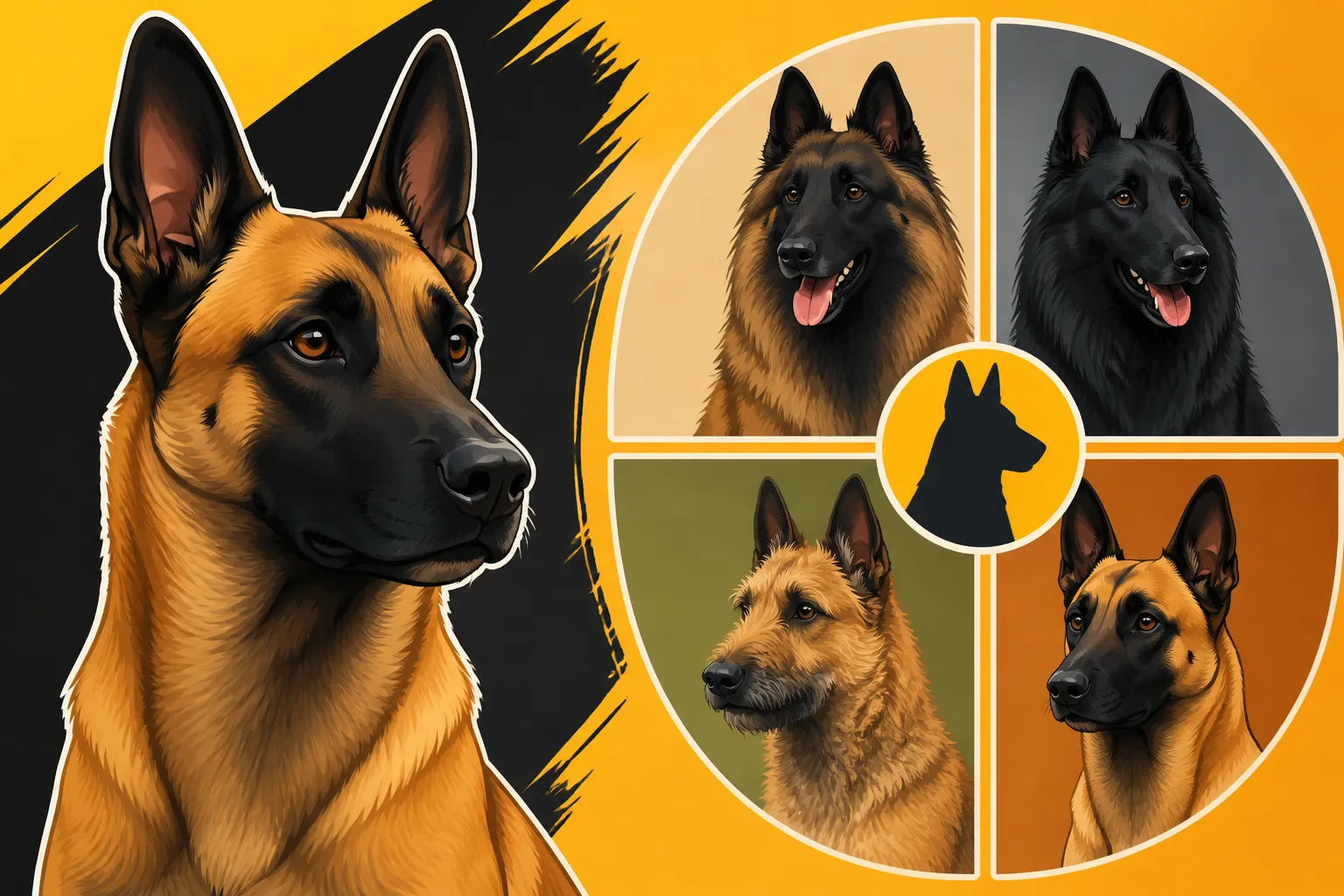
This sorting wasn't just arbitrary; it reflected the regional variations and preferences that had naturally developed over generations of local breeding. For instance, certain areas might have favored rougher coats for protection against harsh weather, while others preferred shorter coats for ease of maintenance in specific working environments. The decision to separate them by coat, rather than by working ability (which they all possessed), was pivotal. You can dive deeper into Why Belgium Sorted the Malinois Out by Coat. The four varieties were identified: the long-haired black (Groenendael), the long-haired fawn/red (Tervuren), the short-haired fawn/red (Malinois), and the wire-haired fawn/red (Laekenois). This distinction, formalized by the Belgian Shepherd Dog Club, set the stage for their individual journeys, even though they were still recognized as one breed with four varieties in their country of origin, Belgium.
The Malinois: The Short-Coated Dynamo
When most people think of a "Belgian," they’re usually picturing a Malinois. This variety has exploded in popularity around the world, primarily due to its incredible capabilities in police, military, and protection sports. Their reputation precedes them, and for good reason: they are often described as having an "on/off switch" that's rarely in the "off" position. This isn't just a physical trait; it’s a deep-seated mental intensity that defines the breed. If you've ever seen a Malinois work, you know that laser focus and explosive energy are practically their superpowers.
Defining Characteristics of the Malinois
The Malinois is unmistakable. They possess a short, relatively harsh double coat that typically comes in shades of fawn to mahogany, often with a striking black overlay and a characteristic black mask on their face. This short coat, by the way, is one of the key differentiators within the Belgian Shepherd family and is a point of distinction often highlighted in breed standards. For a closer look at these color patterns, check out Fawn to Mahogany and the Black Malinois Mask. Their physical build is athletic and well-muscled, without being bulky. They are built for endurance, speed, and agility, capable of turning on a dime and clearing obstacles with impressive ease. The combination of their build and coat gives them a sleek, powerful, and incredibly functional appearance.
Beyond their physical traits, the Malinois temperament is what truly sets them apart. They are known for their extremely high drive, unwavering confidence, and intense loyalty. This is not a dog for the faint of heart or the casual owner. A Malinois thrives on having a job to do, and without proper mental and physical stimulation, they can become destructive and anxious. They are incredibly intelligent, often described as thinking several steps ahead, which makes them both a joy and a challenge to train. For many, this drive is exhilarating; for others, it's simply too much to handle. This is why when people ask about what it's like to live with a Malinois, the answer always circles back to their insatiable need for purpose.
Why the Malinois Became a Global Working Dog Star
The Malinois's rise to global prominence in working dog roles isn't accidental; it's a testament to their exceptional combination of traits. They possess incredible endurance, remarkable bite work capabilities, superior scent detection abilities, and an almost unparalleled desire to please their handler. Unlike some other breeds that might be equally capable, the Malinois often combines these attributes with a slightly smaller, more agile frame than some of the larger shepherd breeds, making them ideal for tasks requiring speed and maneuverability. From drug detection to military operations and search and rescue, the Malinois excels in environments where precision and unwavering focus are critical.
Their trainability is legendary. While they require a skilled and consistent handler, they learn new commands and complex routines at an astonishing pace. This, coupled with their resilience under pressure and high pain tolerance, makes them invaluable assets in demanding fields. Many police departments and military units have increasingly turned to the Malinois, recognizing their efficiency and effectiveness. This shift has, in turn, fueled their popularity, though it also comes with the caveat that these are not "pet" dogs in the traditional sense. The commitment required to own and fulfill a Malinois is immense, something often discussed in detail when people look at What a Belgian Malinois Puppy Costs by Bloodline or question Why a Belgian Malinois Is the Wrong First Dog. They need more than just a walk; they need a career.
The Groenendael: The Elegant Black Beauty
If the Malinois is the intense, short-coated athlete, the Groenendael is the classic, elegant long-haired noble. Often mistaken for a long-haired German Shepherd by the uninitiated, the Groenendael carries itself with a distinct grace and has a captivating presence. While they share the deep intelligence and working drive of their Malinois cousins, their appearance often leads to a different set of expectations from potential owners. They are a striking vision, especially when their magnificent coat is well-maintained and flowing in the breeze.
The Distinctive Appearance of the Groenendael
The most striking feature of the Groenendael is, without a doubt, its luxuriant, long, black double coat. This coat is dense and weather-resistant, providing protection in various climates. It's not just long; it has a rich texture, forming a distinct ruff around the neck, feathering on the legs, and a dense plume on the tail. A properly presented Groenendael is truly a showstopper, and it's easy to see why they captivated early breeders focused on aesthetics as well as ability. Maintaining this coat requires dedication, much more than the wash-and-wear Malinois. Regular brushing, often daily, is essential to prevent matting and to keep it looking its best. This is a commitment that any prospective owner must be ready for, as neglect can quickly lead to an uncomfortable and unhealthy coat for the dog.
Beyond the coat, Groenendaels share the same underlying structure as the other Belgian Shepherds: a medium-sized, well-balanced, and muscular body built for agility and endurance. Their expression is often described as intelligent and questioning, with dark, almond-shaped eyes that convey their alertness. Their ears are erect and triangular, adding to their keen and watchful demeanor. When comparing the two, you can clearly see the differences when looking at The Malinois Against the Groenendael. While their primary historical role was similar to the Malinois—herding and guarding—their distinctive black coat quickly made them a favorite in the show ring, often overshadowing their working prowess in some lines, though strong working Groenendaels absolutely still exist.
Temperament and Training Needs of the Long-Haired Shepherd
The Groenendael, while possessing the signature Belgian intensity, often displays a slightly more reserved and sensitive temperament compared to the Malinois. They are still highly intelligent, incredibly loyal, and possess a strong protective instinct, but they might be a bit more aloof with strangers and can be more prone to shyness if not properly socialized from a young age. This sensitivity means that harsh training methods are counterproductive; they thrive on positive reinforcement, clear communication, and a strong, trusting bond with their handler. Consistency is key, as is patience, as they can sometimes be more thoughtful in their responses than the lightning-fast Malinois.
Like all Belgian Shepherds, the Groenendael requires significant mental and physical stimulation. They need a job, whether it's competitive obedience, agility, herding, or even complex trick training. Leaving a Groenendael bored and under-exercised is a recipe for disaster, leading to destructive behaviors, excessive barking, or anxiety. They attach deeply to their families and often thrive in homes where they are integrated into daily activities, rather than left alone for long stretches. Their beauty is undeniable, but it's vital for owners to remember that beneath that elegant coat is a highly intelligent working dog that needs purpose and engagement. Investing in good quality enrichment toys from places like Chewy can really help with keeping their minds busy.
The Tervuren: The Fawn or Red Long-Haired Companion
The Tervuren is another breathtaking long-haired variety, often causing double-takes as people try to discern if it's a Groenendael in a different color. While equally stunning, the Tervuren presents a unique combination of visual warmth and innate working ability. They are perhaps the most versatile of the long-haired Belgians, often excelling in a wide array of dog sports and family life, given the right environment. They possess that distinctive Belgian intensity, but sometimes wrapped in a slightly softer package, visually speaking.
The Tervuren's Rich Coat and Striking Presence
The Tervuren shares the long, luxurious double coat of the Groenendael, but it comes in a magnificent range of fawn to red shades, often with a striking black overlay, similar to the Malinois, and a mandatory black mask. This black tipping, known as "charbonnage," gives the coat depth and often darkens with age, creating a truly spectacular effect. Some Tervurens can appear quite light in their fawn coloring as puppies, only to mature into a rich, deep mahogany with heavy black overlay. This interplay of color against their elegant long hair makes them incredibly eye-catching. Like the Groenendael, their coat demands regular grooming to maintain its beauty and health, especially during seasonal sheds when they drop a surprising amount of undercoat.
Their physical structure mirrors that of the other Belgian Shepherds, with an athletic, well-balanced body. The overall impression is one of elegance combined with power. They possess the characteristic erect ears and alert, intelligent expression. Often, people struggle to tell them apart from the Malinois if they only focus on color, but the coat length is the clearest indicator. Comparing them more directly can be found in The Malinois Against the Tervuren. The Tervuren's striking appearance makes them popular in the show ring, but like all Belgian Shepherds, their looks belie a profound need for mental and physical engagement. Their beauty is just one facet of their complex and rewarding personality.
Balancing Drive and Sensitivity in the Tervuren
Temperamentally, the Tervuren often sits somewhere between the intense drive of the Malinois and the more reserved nature of the Groenendael. They are highly intelligent, incredibly eager to please, and possess a strong working drive that makes them excel in obedience, agility, tracking, and even herding. However, they can also exhibit a degree of sensitivity and watchful alertness that requires thoughtful socialization and consistent, fair training. They bond very closely with their families and can be wary of strangers, often taking time to warm up. This makes early and ongoing socialization absolutely crucial for a well-adjusted Tervuren.
Owners often describe Tervurens as highly perceptive, sometimes even reading their owner's moods. They thrive on having a role within the family and need consistent mental challenges to prevent boredom. A Tervuren left without sufficient stimulation might invent their own "jobs," which often involve rearranging your home or incessant barking. They need more than just physical exercise; their sharp minds crave puzzles, training sessions, and interactive play. Providing a variety of toys, perhaps exploring the puzzle toy selection at Chewy, can be a great way to meet some of these mental needs. They form incredibly strong bonds, making them devoted companions for those willing to invest the time and effort into their unique needs.
The Laekenois: The Rustic, Wire-Haired Gem
The Laekenois (pronounced Lahk-en-wah) is, without a doubt, the rarest and most distinctive of the four Belgian Shepherd varieties. Its rough, wire-haired coat immediately sets it apart from its smoother or long-coated cousins. Often described as having a rustic or scruffy charm, the Laekenois possesses a rugged appearance that speaks to its original role as a guardian of linen fields and royal estates. They embody a resilient spirit, and their unique look often garners curious stares, but most importantly, their character is as robust as their coat.
The Unique Wire Coat and Resilient Nature of the Laekenois
The defining characteristic of the Laekenois is its rough, harsh, and wiry coat, which gives it a distinctly unkempt yet charming appearance. The coat should not be soft or silky, nor should it be woolly. Instead, it's coarse and dry, often appearing slightly tousled. The color range is typically fawn to red, with some black overlay, and a black mask is usually present, though it can be less prominent than in the Malinois or Tervuren. This unique coat requires specific grooming techniques, primarily hand-stripping, rather than clipping, to maintain its texture and protective qualities. Clipping can soften the coat, compromising its wiry nature.
This tough, weather-resistant coat reflects the dog's historical role as a guardian working outdoors, enduring various conditions. The Laekenois carries an air of quiet confidence and vigilance. They are known for their strong protective instincts and can be quite independent, a trait likely developed from working autonomously on farms. Their expression is often intelligent and thoughtful, with keen eyes peeking out from beneath shaggy brows. For those curious about this specific variety, The Laekenois Beside the Malinois and Why It Is Rare provides more detail on why they aren't as commonly seen. Their appearance is less refined, more earthy, truly a working dog through and through in every fiber of their being.
The Rarity and Challenges of Owning a Laekenois
Due to their rarity, finding a Laekenois can be a significant challenge, and prospective owners often face long waiting lists for puppies. Their unique coat and temperament mean they are not for everyone. While intelligent and trainable, they can be more strong-willed and less immediately eager to please than a Malinois, requiring a patient, experienced handler who understands the nuances of working with an independent, protective breed. Early and thorough socialization is paramount to ensure they grow into well-adjusted adults, especially given their natural suspicion of strangers. Without it, they can become overly protective or reserved.
Like all Belgian Shepherds, the Laekenois demands a lifestyle that caters to its high energy and sharp mind. They need consistent exercise, mental stimulation, and a clear leadership structure within the home. They excel in dog sports like agility, obedience, and protection work, where their drive and problem-solving abilities can be channeled productively. Their protective nature makes them excellent guard dogs, but this trait also needs careful management to ensure they are discerning in their protective responses. While they form deep bonds with their families, they are not typically the type of dog to tolerate random affection from strangers. Their unique blend of ruggedness, independence, and intelligence makes them a truly rewarding, albeit challenging, companion for the right owner.
Distinguishing Between the Varieties: More Than Just a Coat
It's easy to look at pictures of these four beautiful dogs and get caught up in the obvious differences in their coats. The Malinois is short, the Groenendael and Tervuren are long, and the Laekenois is wiry. Simple, right? Well, yes and no. While coat type and color are indeed the primary differentiators recognized by most kennel clubs (especially outside of Belgium), there are often subtle nuances in temperament, working style, and even slight physical characteristics that dedicated enthusiasts and breeders will point out. Understanding these distinctions is crucial, not just for breed identification, but for knowing what to expect from any given Belgian Shepherd.
Beyond Color and Coat: Subtle Differences in Structure and Temperament
While the overall breed standard for the Belgian Shepherd Dog encompasses all four varieties, slight variations in emphasis or common characteristics can be observed. For instance, many working-line Malinois are often slightly leaner and more intense in their focus, bred explicitly for extreme drive and physical resilience. This might manifest in a slightly more angular head or a more tightly muscled physique. While a Groenendael or Tervuren can certainly be just as drivey, some lines may exhibit a slightly broader skull or a more substantial frame, particularly in show lines where aesthetics play a larger role. These aren't hard-and-fast rules, but rather observations within the breed.
Temperamentally, while all share intelligence, loyalty, and protective instincts, the expression of these traits can differ. The Malinois's intensity is often outward, eager to engage and work. A Groenendael might be more reserved, observing before acting, with a protective instinct that's more about guarding its family from a distance before direct engagement. Tervurens can often combine the Malinois's eagerness with a touch of the Groenendael's sensitivity, creating a highly responsive but sometimes more emotionally attuned dog. The Laekenois, with its independent guardian history, often brings a stubborn streak and a more pronounced 'think for myself' attitude. These are generalizations, of course, and individual personalities always vary, but these subtle leanings are worth noting.
Why Knowing the Variety Matters for Ownership
Understanding the nuances of each variety goes far beyond being able to correctly identify them at a dog show. It's absolutely critical for prospective owners. If you're looking for a dog that will excel in high-level protection sport or constant, fast-paced work, a Malinois from proven working lines might be your ideal match. If you appreciate elegance and a slightly more reserved protective nature, coupled with a commitment to meticulous grooming, a Groenendael or Tervuren could be a wonderful fit. And if you're an experienced handler looking for a truly unique and resilient companion who will challenge and reward you with fierce loyalty, the rare Laekenois might call to you.
Choosing the wrong variety for your lifestyle can lead to frustration and, sadly, dogs being rehomed. The needs of a working-line Malinois are different from a show-line Tervuren, even though they are closely related. Their exercise requirements, grooming demands, and typical temperament traits, though sharing a common core, diverge enough to make a significant impact on daily life. Consulting with reputable breeders for each specific variety is essential. They can offer insights into their particular lines and help you determine which Belgian Shepherd variety is truly the best match for your experience level, living situation, and goals for a canine companion.
| Feature | Malinois | Groenendael | Tervuren | Laekenois |
|---|---|---|---|---|
| Coat Type | Short, straight, harsh | Long, straight, abundant | Long, straight, abundant | Harsh, wiry, tousled |
| Coat Color | Fawn to mahogany, black mask | Solid black | Fawn to red, black overlay, black mask | Fawn to red, black overlay, black mask |
| Grooming Needs | Moderate (sheds heavily seasonally) | High (daily brushing for mats) | High (daily brushing for mats) | Moderate (hand-stripping preferred) |
| Typical Drive Level | Extremely High, intense | High, intelligent, often reserved | High, intelligent, versatile | High, independent, protective |
| Known For | Police/military work, agility, Schutzhund | Elegance, obedience, family guardian | Versatility, agility, show, family | Rarity, ruggedness, unique appearance |
| Rarity | Common in working circles | Moderate | Moderate | Very Rare |
Breeding and Registration: Keeping the Lines Clear
The intricate relationships between the four Belgian Shepherd varieties have led to specific rules and guidelines regarding their breeding and registration. While they all technically belong to the same overarching breed in Belgium and under the Fédération Cynologique Internationale (FCI), most kennel clubs outside of Belgium recognize them as distinct breeds. This difference in classification can sometimes be a source of confusion for new owners and even experienced breeders navigating international registries. The goal, regardless of the classification, is always to preserve the health, temperament, and working ability inherent in these magnificent dogs.
The Strict Rules of Breeding Within the Belgian Shepherds
In their country of origin, Belgium, and under the FCI system, the four varieties are considered a single breed: the Belgian Shepherd Dog, with varieties distinguished by coat and color. This means that, in some regions, inter-variety breeding was historically permitted under specific circumstances, often to improve genetic diversity or rectify issues within a particular variety. However, for the most part, breeders adhere to strict guidelines that discourage such crossings, prioritizing the preservation of each variety's unique characteristics. It’s a delicate balance between maintaining genetic health and upholding the distinct identities. For more details on this, you might be interested in Whether a Malinois Can Be Bred to Another Variety.
Within North America, for example, the American Kennel Club (AKC) recognizes each of the four varieties as separate breeds: the Belgian Malinois, the Belgian Sheepdog (Groenendael), the Belgian Tervuren, and the Belgian Laekenois. This classification means that inter-variety breeding is not permitted for AKC registration, and each breed is maintained as a separate gene pool. These strict guidelines are in place to ensure breed integrity and prevent the dilution of distinct traits that have been painstakingly developed over generations. Responsible breeders, regardless of the classification system they adhere to, prioritize health testing, temperament assessment, and the careful selection of breeding pairs to produce healthy, well-adjusted puppies true to their variety's characteristics.
Understanding the FCI and AKC Perspectives
The differing approaches of the FCI (Fédération Cynologique Internationale) and the AKC (American Kennel Club) in classifying the Belgian Shepherd Dogs can seem a bit contradictory at first glance. The FCI, being the global canine organization, generally holds to the original Belgian concept of one breed with four varieties. This means that an FCI-registered Belgian Shepherd Dog can, in theory, be one of the four varieties, and their pedigrees might, in older generations, show ancestors of a different variety. This historical interconnectedness is part of their heritage.
On the other hand, the AKC, along with many other national kennel clubs, has chosen to recognize them as distinct breeds. This decision was largely made to simplify registration and judging for their respective systems, ensuring clear categories for competition and breeding. What this means in practical terms for an owner is that if you purchase a Malinois from a breeder in the United States, its pedigree will show only Malinois ancestors, and it cannot be bred to a Groenendael and still register its offspring as purebred Malinois (or Groenendael) with the AKC. It's vital for prospective owners to understand which registry their breeder is using and what implications that has for their puppy's pedigree and future breeding potential, should they choose that path. This ensures clarity and helps maintain the distinct lines, even if their foundational roots are intertwined.
Living with Any Belgian Shepherd Variety
Regardless of whether you choose a Malinois, Groenendael, Tervuren, or Laekenois, you are committing to a dog that is fundamentally a Belgian Shepherd. This means embracing a certain lifestyle and understanding that these are not just pets; they are partners. They are dogs built for work, intensity, and deep connection, and they thrive when given purpose and clear guidance. The common threads weaving through all four varieties are strong, and recognizing them is the first step toward a successful and rewarding relationship with any Belgian.
The Common Thread: High Drive and Intelligence
The most undeniable commonality across all four Belgian Shepherd varieties is their exceptionally high drive and intelligence. These are dogs that are always thinking, always observing, and always ready to engage. This manifests as a tireless energy level, a relentless curiosity, and an inherent need for mental challenges. A simple walk around the block simply won't cut it for any of these dogs; they need structured activity, intense training sessions, and opportunities to use their brains. Without this outlet, that incredible intelligence can turn destructive, leading to dogs that chew through furniture, obsessively bark, or develop neurotic behaviors.
Their intelligence means they learn quickly, both good and bad habits. Consistency in training is paramount, as is early and ongoing socialization. These dogs bond incredibly strongly with their families, often becoming one-person dogs, though they can be excellent family companions with proper introduction and training. Their protective instincts are innate, so channeling these appropriately through training is essential to ensure they are discerning guardians, not reactive ones. Engage their minds with puzzle toys from Chewy, commit to advanced obedience, or explore dog sports—these activities are not optional for a Belgian Shepherd; they are fundamental to their well-being.
Preparing for the Commitment: What All Belgians Demand
Bringing any Belgian Shepherd variety into your home is a significant commitment, and it's not one to be taken lightly. These dogs demand a substantial investment of time, energy, and resources. They need an experienced handler who understands their unique needs and is prepared to dedicate themselves to providing a structured, enriching life. This includes daily rigorous exercise, consistent training, and ample mental stimulation. They thrive in active homes where they are central to the family's activities and are given clear boundaries and consistent leadership.
Prospective owners must also be prepared for the financial commitment, including high-quality food, potential costs for specialized training or dog sports, and vet care for an active breed. Their high energy and intelligence mean they can be challenging for first-time dog owners or those with limited time. However, for the right owner, a Belgian Shepherd, regardless of its coat type, is an unparalleled companion. They offer unwavering loyalty, incredible athleticism, and a partnership that runs deep, becoming a constant source of joy, challenge, and immense pride. Understanding their shared heritage and individual distinctions allows you to truly appreciate the incredible versatility and depth of this remarkable group of dogs.
Disclaimer
This article is for general informational purposes only and does not constitute professional advice. Laws, prices and regulations vary by location and change over time. Consult a qualified professional for guidance on your specific situation.