Grip Development in a Belgian Malinois
One of the most intense and often misunderstood aspects of owning a Belgian Malinois, especially one destined for sport or working roles, is the development of a strong, confident grip. Many new handlers struggle with everything from getting their dog interested in a bite object to ensuring a full, stable grip, leading to frustration and doubts about their dog's potential. This comprehensive guide aims to demystify the process of grip development, offering insights into building the foundational drives and mechanics required for a truly formidable Malinois bite.
Understanding the Malinois Drive for Grip
It’s easy to look at a working Malinois clamping down on a sleeve or tug with immense power and think it's all natural instinct. While the raw genetic material is certainly there, a truly effective and safe grip in a working Belgian Malinois is the result of careful cultivation, channeling that innate drive into a structured and controllable behavior. Without understanding why your Malinois wants to bite, you'll struggle to teach them how to bite effectively.
Instinctual Predation and the Malinois
Belgian Malinois are bred to be intense working dogs, and a significant part of their drive stems from their predatory instincts. This isn't about aggression towards humans, but rather an intrinsic desire to chase, catch, and hold. For a Malinois, the "grip" is often the culmination of this predatory sequence. They've located the "prey" (the tug, the sleeve, the decoy), they've chased it down, and now they need to secure it. This sequence, when properly channeled, is what we see as "prey drive" in working dog circles. It's exhilarating for them, a deeply satisfying primal act.
This inherent drive means that from a young age, many Malinois puppies will naturally gravitate towards chasing and mouthing objects. They might snatch towels, grab at clothing, or try to mouth your hands during play. Instead of suppressing this entirely, the savvy handler learns to redirect it onto appropriate targets. Think of it less as a problem to be stopped and more as a powerful river that needs a clear channel. Ignoring this drive or trying to extinguish it completely can lead to a frustrated dog, or one that finds less desirable outlets for its energy. This powerful instinct is also what makes a Malinois able to perform demanding tasks that require intense focus and commitment, like those described in Two Hours and a Job a Belgian Malinois Demands Daily.
The Role of Confidence in a Solid Bite
A confident Malinois is a dog that knows its job, trusts its handler, and isn't afraid to engage. Conversely, a dog lacking confidence might show hesitation, a soft bite, or even avoidance. Confidence in grip work isn't just about physical prowess; it's deeply psychological. The dog needs to believe it can "win" the tug-of-war, that it can hold onto the object despite resistance, and that its efforts are rewarding. This confidence is built through countless successful repetitions, where the dog feels strong, capable, and ultimately, victorious.
A good decoy or helper understands this implicitly. They don't just present an arm; they interact in a way that encourages the dog, making the engagement feel like a worthwhile challenge. If a young Malinois consistently feels overwhelmed or scared during bite work, their confidence will plummet, and their grip will suffer. This is why introducing bite work gradually and positively is absolutely crucial, especially during the formative adolescent period. Building confidence also involves ensuring the dog feels secure and safe during training, an aspect also crucial for broader training discussions like Building Engagement With a Belgian Malinois.
The Foundations of a Strong Grip
Before you ever introduce a full bite sleeve or get into complex protection scenarios, your Malinois needs a solid foundation in basic engagement and control. Rushing past these steps is a common pitfall that can lead to inconsistent grip quality and a dog that's difficult to manage in drive. Think of it like building a house: you wouldn't start framing before laying a proper foundation, and the same applies to your dog's training.
Engagement and Motivation as Precursors
A Malinois that isn't fully engaged with its handler or lacks motivation for the "game" will never develop a truly committed grip. Engagement is about connection – your dog choosing to focus on you, even amidst distractions. Motivation is what drives them to perform, whether it's the thrill of the chase, the reward of the tug, or simply pleasing you. These aren't just for obedience; they are the bedrock of all advanced working dog activities, including bite work. If your dog isn't excited to work with you, then any attempt at grip development will feel like pulling teeth.
Start building engagement through structured play, short bursts of obedience, and constant praise. Use high-value rewards and make yourself the most exciting thing in the environment. For example, if your Malinois loves toys, keep them exclusive to training. A great way to boost engagement is to use a flirt pole or a valued tug toy that only comes out during specific training sessions. This creates immense value and anticipation. Building an Off Switch Into a Belgian Malinois is also a crucial part of engagement, teaching them to calm down after intense play, which in turn helps them regulate their drive.
Building the "Out" Command for Control
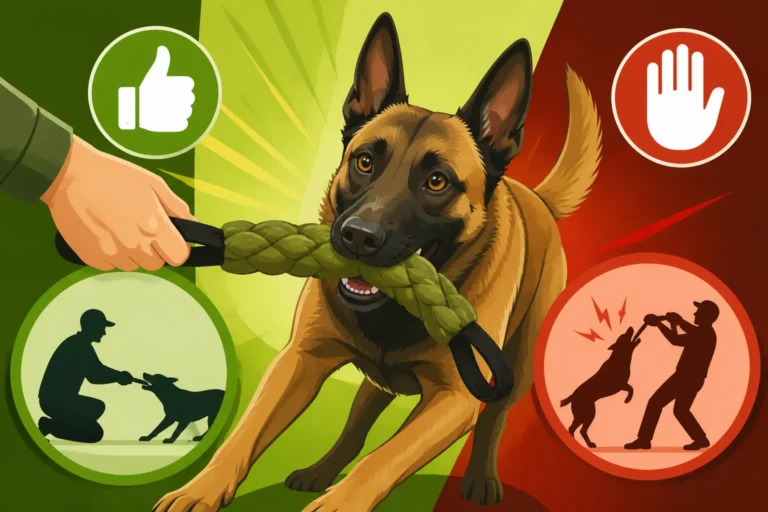
This is arguably the most critical command for any bite work. Without a reliable "Out," you have a dog that can't be controlled in drive, which is not only dangerous but entirely counterproductive to developing a skilled grip. The "Out" command means dropping the bite object immediately, regardless of how high their drive is. This isn't just about safety; it's about teaching the dog impulse control and that releasing the object leads to more play, not the end of it. It maintains the handler's control over the entire engagement process.
Start teaching "Out" with low-value toys in a low-distraction environment. When your Malinois has the toy, offer a higher-value treat directly to their nose, or offer a second, even more exciting toy. The moment they release the first toy to get the second, mark and reward. Gradually introduce more resistance and higher drive situations. Consistency is key. Every single time your dog bites a tug or sleeve, they must "Out" on command. This control is fundamental, and it helps Channeling a Belgian Malinois's Prey Drive Into a Tug constructively rather than letting it become wild and uncontrollable.
Body Mechanics for a Full Mouth Grip
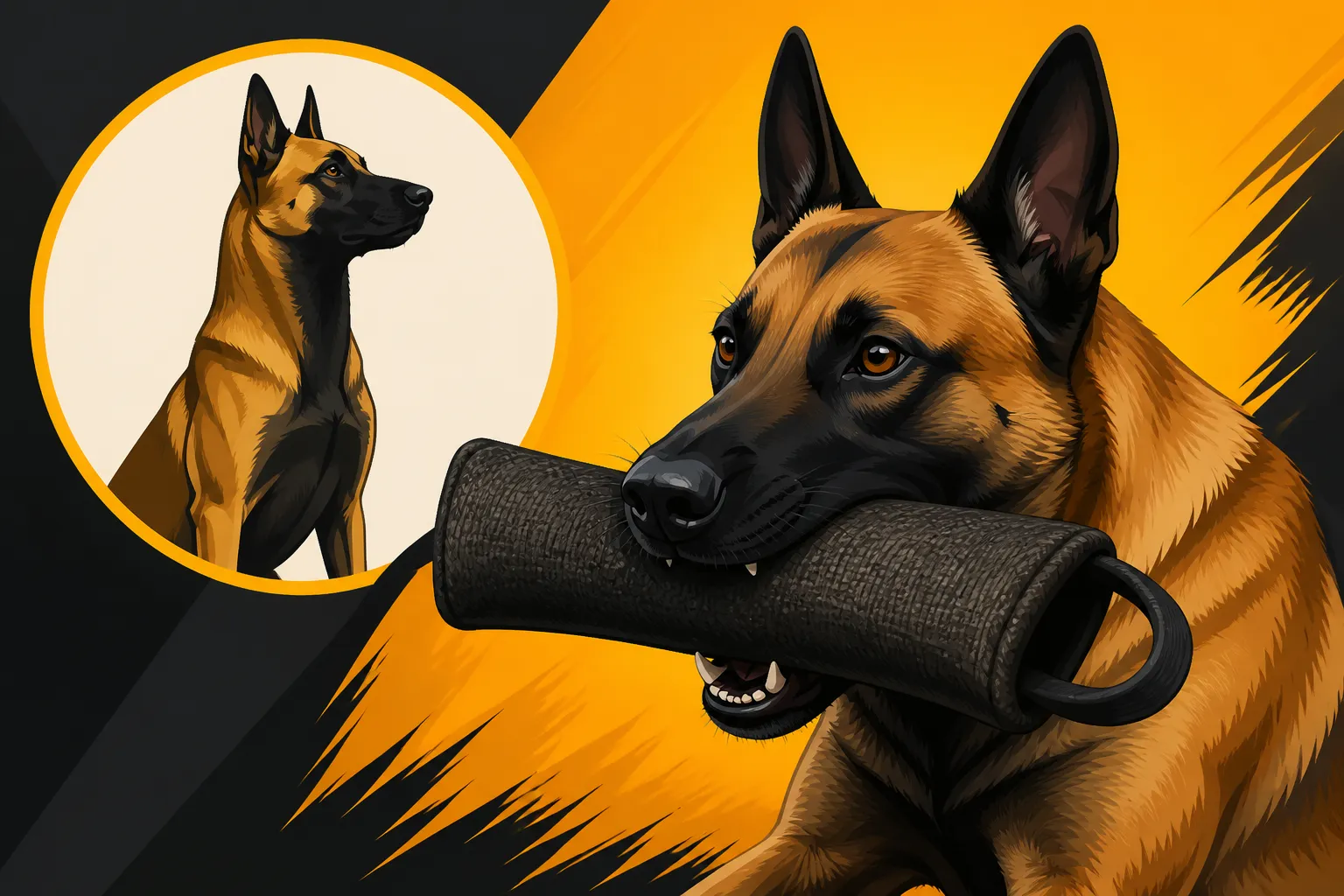
A strong grip isn't just about biting hard; it's about biting correctly. A full mouth grip means the dog is taking the deepest possible bite, using all their back molars, not just their front canines. This spreads the pressure across more teeth and jaw muscles, making the bite more powerful, stable, and less prone to slippage. It also significantly reduces the risk of dental injuries like chipped or broken teeth. A shallow grip, often called a "canine grip," is weaker, less stable, and can lead to damage to the dog’s front teeth.
To encourage a full grip, ensure the bite object is appropriately sized and presented correctly. For puppies, a soft, smaller tug allows them to get their whole mouth around it. As they mature, move to thicker, firmer tugs and sleeves. The decoy or helper plays a crucial role here, presenting the sleeve or tug in a way that encourages the dog to reach for a deep, committed grip. Don't let your Malinois get away with a sloppy, shallow bite. Gently reposition the object if necessary, or make it slightly harder for them to get a grip until they commit to taking it fully. This attention to detail in body mechanics is what separates a strong dog from a truly skilled one.
Early Grip Work and Puppy Development
The journey of grip development begins long before your Malinois is physically mature enough for serious protection work. The puppy stage is vital for laying the groundwork, building positive associations with bite work, and starting to shape the desired behaviors. This is where you capitalize on their natural playfulness and mouthiness, guiding it into structured activities.
Introducing Bite Toys and Tug Play
For Malinois puppies, bite work starts with simple tug play. Introduce soft, durable tug toys that are easy for small mouths to grip. The goal here isn't power or intensity, but building desire and a positive association with biting and holding. Make tug a fun, interactive game where the puppy always "wins" initially, reinforcing their confidence. Let them tug, shake, and feel successful in holding onto their "prey." Use an appropriate toy that they can latch onto firmly. You can find excellent starter tugs on platforms like Amazon, many of which are specifically designed for puppies and young dogs.
Keep sessions short, exciting, and always end on a high note, leaving the puppy wanting more. This means ending the game before they lose interest or get tired. Vary the speed and intensity of your movements, mimicking prey. Allow them to chase the tug and "catch" it. This builds their Channeling a Belgian Malinois's Prey Drive Into a Tug and teaches them the joy of the engagement. Remember, consistent positive experiences in these early stages are paramount to developing a dog that eagerly seeks the bite.
Transitioning from Soft to Firmer Materials
As your Malinois puppy grows, their jaw strength develops, and their bite becomes more powerful. This is the time to gradually transition them from very soft, fabric tugs to firmer materials. Start with slightly thicker, denser jute or synthetic tugs. These provide more resistance and require the puppy to engage their jaw more fully, encouraging a deeper grip. This progression isn't about increasing the difficulty for the dog but about providing appropriate stimulation for their developing physical capabilities.
Avoid jumping too quickly to very hard materials, as this can be discouraging or even painful for a young dog whose adult teeth are just coming in or settling. Monitor their grip closely. Are they still getting a full mouth? Is their confidence still high? If you see hesitation or a decrease in enthusiasm, you might be progressing too fast. The goal is to continuously build that full-mouth, confident grip, step by careful step. This gradual increase in material resistance is a natural part of preparing them for the more challenging work, much like The Age a Malinois Is Ready for Final Hip Films is a marker of physical maturity.
Progressing Grip Training as Your Malinois Matures
Once your Malinois has a solid foundation in basic tug play and a reliable "Out," you can start to build upon those skills, increasing complexity and introducing them to more advanced scenarios. This is where the real nuance of grip development comes into play, moving beyond just holding onto a toy to understanding the intricacies of sport or working dog bite work.
Developing a Consistent, Deep Grip
The goal is a grip that is not only full but also consistent and deep, regardless of the target or situation. This requires conscious effort and attention to detail from both the handler and the helper. When introducing a bite sleeve or developing bite work with a decoy, the presentation of the sleeve is critical. The decoy should present the sleeve in a way that encourages the dog to drive into it and take a deep, powerful bite. Sometimes this involves a slight "give" as the dog engages, making them feel like they've truly captured the prey.
Avoid letting the dog "pick" at the sleeve or take a shallow bite. If they do, immediately correct by withdrawing the sleeve and re-presenting it, demanding a better quality bite. The dog needs to understand that only a full, deep grip is rewarded with continued engagement. This consistency also applies to various scenarios – whether the dog is biting from a static position, on the move, or under pressure. The grip should be unwavering. For more on developing control and specific commands, consider resources like Building a Malinois's Place Command which can help with focus before engaging in drive work.
Dealing with Drive vs. Technique
This is a classic dilemma in working dog training. Many Malinois have incredible drive – they want to bite with every fiber of their being. However, raw drive without technique can lead to sloppy bites, re-gripping, or even self-injury. Conversely, too much focus on technique without harnessing drive can result in a robotic, unenthusiastic bite. The art lies in finding the balance, channeling that immense drive into technically sound mechanics.
Initially, prioritize building drive and desire. A dog that wants to bite fiercely is easier to mold than one that is indifferent. Once the drive is high, then you can start refining the technique. This often involves slowing things down momentarily, breaking down the bite into components, and rewarding precise, full-mouth engagement. The decoy can also help by being very clear with their presentation, making it easy for the dog to succeed with a good technique. It's an ongoing dance between encouraging their natural enthusiasm and shaping it into a polished, effective skill. Remember, a dog that is too high in drive without an "off switch" can also be challenging, as discussed in A Belgian Malinois That Never Stops Moving.
Introduction to Different Bite Surfaces
As your Malinois progresses, expose them to a variety of bite surfaces. Initially, you might use soft jute or synthetic tugs. Then move to intermediate sleeves (often made of a firmer jute or French linen). Eventually, for advanced sport or working dogs, you'll introduce full bite suits and hidden sleeves. Each material and type of equipment feels different to the dog and requires slight adjustments in their grip and approach. This exposure builds versatility and confidence.
- Soft Tug/Pillow: Great for puppies and building initial drive.
- Jute/French Linen Tugs: Stepping up in density, helps encourage deeper bites.
- Puppy Sleeve: A softer, smaller sleeve for early decoy work.
- Intermediate Sleeve: Thicker, firmer, for dogs developing their full grip.
- Full Sleeve/Suit: For advanced work, providing maximum resistance and protection.
This varied exposure prevents the dog from becoming "surface specific," meaning they only bite well on one type of material. You want a dog that can transition confidently and effectively between different bite objects, demonstrating a consistent, strong grip across the board. Look for quality equipment from reputable suppliers on sites like Amazon or through specialized K9 gear retailers to ensure durability and safety.
Common Grip Issues and How to Address Them
Even with the best intentions and training, handlers often encounter specific challenges when developing their Malinois's grip. These issues can be frustrating, but with a clear understanding of their roots and consistent intervention, most can be overcome. It's about diagnosing the problem, not just treating the symptom.
Shallow or Slippy Bites
A shallow bite is when the dog only uses its front teeth (canines) to grip, rather than engaging its molars for a full, deep bite. A slippy bite occurs when the dog's mouth slides on the surface, unable to maintain a firm hold. Both indicate a weakness in technique or confidence.
Causes:
- Lack of confidence: The dog might be hesitant to commit fully.
- Improper presentation: The decoy might not be presenting the sleeve/tug in a way that encourages a deep bite.
- Over-excitement/Frustration: The dog might be too hyped up and not thinking about how it's biting, just that it is biting.
- Poor body mechanics: The dog hasn't learned to drive into the bite properly.
Solutions:
- Re-evaluate decoy presentation: Ensure the sleeve is offered in a way that encourages the dog to "reach" for a deep grip. Sometimes, a slight angle or movement away can encourage the dog to drive harder into the bite.
- Build confidence: Go back to easier tugs and scenarios where the dog consistently gets a full, rewarding bite. Always let them "win" initially.
- Demand a deeper bite: If the dog takes a shallow bite, disengage the sleeve briefly and re-present, waiting for a better grip before re-engaging. Don't reward the shallow bite.
- Use appropriate equipment: Ensure the tug or sleeve is the right size for your dog's mouth. Sometimes a slightly thicker tug can force a deeper engagement. Tugs and Bite Pillows a Malinois Destroys emphasizes the need for durable and appropriately sized equipment.
Refusing to Engage or Out
A Malinois that refuses to engage at all, or one that refuses to "Out" on command, presents significant challenges. Refusal to engage often points to a lack of drive or negative association, while refusing to out is a control issue.
Refusal to Engage:
Causes:
- Negative past experience: The dog may have been scared or hurt during previous bite work.
- Lack of drive/motivation: The game isn't exciting enough for the dog, or they don't see the value.
- Handler/Decoy issues: The handler or decoy might be intimidating the dog or not making the game fun.
Solutions:
- Re-build drive: Go back to very high-value tugs and make play incredibly exciting. Use a flirt pole to build chase drive.
- Positive reinforcement: Shower the dog with praise and rewards for even minimal engagement.
- Change decoys/environment: Sometimes a new person or a less intimidating environment can help.
- Address underlying fear: If fear is the issue, work with a professional to counter-condition the negative association.
Refusal to Out:
Causes:
- Inconsistent training: The "Out" command hasn't been consistently enforced.
- High drive with poor control: The dog is too high in drive and hasn't learned impulse control.
- Rewarding holding: The dog perceives holding onto the object as the ultimate reward.
Solutions:
- Re-teach "Out" in low drive: Go back to basics with low-value toys and clear rewards for releasing.
- Use a trade-off system: Always trade the bite object for an even higher-value treat or another equally exciting toy. The release must lead to something better.
- Physical intervention (if safe and necessary): In controlled environments with experienced trainers, a gentle but firm physical interruption may be used to elicit the release, immediately followed by reward for compliance. However, this should only be done by experienced individuals. This relates to the broader discussion on Whether Corrections Work on a High Drive Malinois.
- Prevent prolonged holding: Don't let the dog just hang onto the sleeve. Keep the game dynamic and require frequent "Outs."
Nipping and Re-gripping
Nipping the decoy or constantly re-gripping the sleeve are frustrating habits that can also be unsafe and inefficient. They often indicate a lack of commitment to the initial bite or an inability to settle into the grip.
Causes:
- Uncertainty/Anxiety: The dog might be unsure of its grip or the situation.
- Excitement/Frustration: The dog is too wound up and unable to focus on a stable grip.
- Improper technique: The dog hasn't learned to "lock down" its bite.
- Poor fit of equipment: The sleeve might be too large or small, making a stable grip difficult.
Solutions:
- Demand a full bite immediately: Don't allow the initial nip. If the dog nips, pull the sleeve away and re-present, demanding a strong, deep, committed bite from the start.
- Increase resistance after a good bite: Once the dog has a full, committed grip, the decoy can apply steady pressure to encourage the dog to really lock down and hold, rather than letting it re-grip.
- Shorten sessions: Sometimes, nipping is a sign of overstimulation. Keep sessions brief and intense, focusing on quality bites.
- Build confidence in the hold: Reward the dog for holding the grip steady for increasing durations. Use verbal praise ("Good hold!") to reinforce the behavior.
- Address handler/decoy consistency: Ensure everyone working with the dog is on the same page regarding expectations for the bite.
Equipment and Safety for Grip Development
Developing a strong grip in a Belgian Malinois is a physically demanding activity for both dog and human. Proper equipment and a strong focus on safety are not just recommendations; they are non-negotiable requirements. Cutting corners here can lead to injury, behavioral issues, or severely undermine your training efforts.
Selecting Appropriate Bite Equipment
The right equipment is crucial for both effective training and safety. It needs to be durable, appropriate for the dog's age and stage of development, and designed to protect the helper. Using substandard equipment can cause injuries to the dog (e.g., broken teeth) or the decoy, and can create negative associations with bite work.
- Tugs: Start with soft, multi-layered jute or synthetic tugs for puppies. As the dog matures, transition to firmer, thicker tugs made of French linen or fire hose material. These are excellent for building drive and practicing the "Out" command. Many durable tugs are available on Amazon from brands specializing in K9 equipment.
- Bite Pillows: Larger than tugs, bite pillows encourage a full-mouth grip and can be used for developing holding power.
- Sleeves:
- Puppy/Young Dog Sleeves: Lighter, softer, and smaller, designed for introductory work and building confidence.
- Intermediate Sleeves: Offer more protection and resistance, suitable for dogs progressing in their training.
- Full Sleeves: Heavy-duty sleeves for advanced dogs and experienced decoys.
- Bite Suits: For advanced protection training, offering full-body protection to the decoy. What a Full Bite Suit Costs a Malinois Club highlights the investment involved.
Always inspect equipment before each session for tears, loose stitching, or damage that could compromise safety or functionality. Replace worn-out equipment promptly.
| Equipment Type | Recommended Age/Stage | Purpose | Material Examples |
|---|---|---|---|
| Soft Tugs | Puppy (8-16 weeks) | Building initial drive, full-mouth habit | Fleece, cloth, soft jute |
| Intermediate Tugs | Adolescent (4-12 months) | Increasing jaw strength, "Out" practice | Jute, French linen, fire hose |
| Puppy Sleeve | Young Dog (6-12 months) | First introduction to decoy work, confidence | Softer jute/synthetic |
| Intermediate Sleeve | Adult Dog (12+ months) | Developing strong, consistent grip, resistance | Firmer jute, French linen |
| Full Sleeve/Suit | Advanced Adult Dog | High-level protection work, maximum realism | Heavy jute, leather |
Decoy Safety and Handler Awareness
Safety is paramount in any bite work scenario. The decoy (the person wearing the bite equipment) is in a potentially vulnerable position, and the handler has a crucial role in ensuring their dog is controlled and working safely.
Decoy Safety:
- Proper Equipment: Decoys must wear appropriate, well-maintained bite equipment that fits correctly and offers adequate protection. Never use damaged equipment.
- Experience: Only experienced and skilled decoys should work with Malinois, especially as the dog progresses. They know how to read a dog, present equipment safely, and absorb a bite correctly.
- Communication: Clear communication between the decoy and handler is vital for planning the session and reacting to unexpected situations.
- Body Mechanics: Decoys need to know how to present the sleeve to minimize injury risk to themselves and optimize the dog's bite.
Handler Awareness:
- Dog Control: The handler is ultimately responsible for their dog's behavior. This means having a strong leash, collar, and absolute control over the dog, especially during transitions (e.g., approaching the decoy, releasing the bite).
- Reading Your Dog: Handlers must be able to read their Malinois's body language and drive level. Is the dog over-aroused? Fatigued? Exhibiting stress? Adjust the session accordingly. Spotting the Moment a Malinois Goes Over Threshold is a critical skill here.
- "Out" Command: The "Out" command should be rock-solid and enforced without hesitation. If the dog won't out, the handler must be prepared to intervene safely.
- Environment: Ensure the training environment is safe, free of hazards, and has adequate space for the dog and decoy to move freely.
Platforms like BAXTER & Bella, while focused on puppy training and obedience, emphasize foundational control and positive reinforcement techniques that are essential precursors to safe and effective grip development. A well-socialized, well-behaved Malinois puppy is more likely to grow into a controlled and safe working dog.
Preventing Injuries During Grip Work
Bite work, by its nature, carries some risk of injury for both the dog and the human. Proactive measures are essential to minimize these risks and ensure the longevity of your Malinois's working career.
For the Dog:
- Warm-up and Cool-down: Just like human athletes, dogs need to be properly warmed up before intense physical activity and cooled down afterward. This prevents muscle strains and other orthopedic issues.
- Proper Conditioning: A physically fit Malinois is less prone to injury. Regular exercise and appropriate conditioning are vital. Muscle Strains in a Belgian Malinois can be a significant setback.
- Dental Health: Regularly check your dog's teeth for chips, cracks, or excessive wear. A strong, full bite helps distribute pressure and protect teeth. Consider dental check-ups, especially for working dogs. Whether a Malinois That Bites Needs Yearly Dentals is an important question for owners.
- Surface Consistency: Avoid slippery or unstable surfaces during bite work, which can lead to falls or awkward landings.
- Avoid Over-training: Don't push your dog beyond its physical or mental limits. Overtraining can lead to physical injuries, burnout, and a decrease in desire. Know How Many Hours a Belgian Malinois Should Work Daily is appropriate.
- Veterinary Care: Regular veterinary check-ups are crucial to catch any subtle injuries or underlying health issues early. Ensure your vet is familiar with working dog needs.
For the Decoy/Helper:
- Always be protected: Never engage a Malinois in bite work without appropriate, well-fitting, and undamaged protective gear.
- Understand dog behavior: A good decoy knows how to read dog body language and avoid putting themselves in unnecessarily risky positions.
- Respect the dog's power: Even a well-trained Malinois has immense power. Always approach bite work with respect for that power and an understanding of the potential consequences.
By prioritizing safety and using common sense, you can create a positive and productive environment for your Belgian Malinois to develop a truly impressive and reliable grip, ready for whatever challenges lie ahead in their working journey.
Disclaimer
This article is for general informational purposes only and does not constitute professional advice. Laws, prices and regulations vary by location and change over time. Consult a qualified professional for guidance on your specific situation.