A Malinois That Stops Answering the Whistle
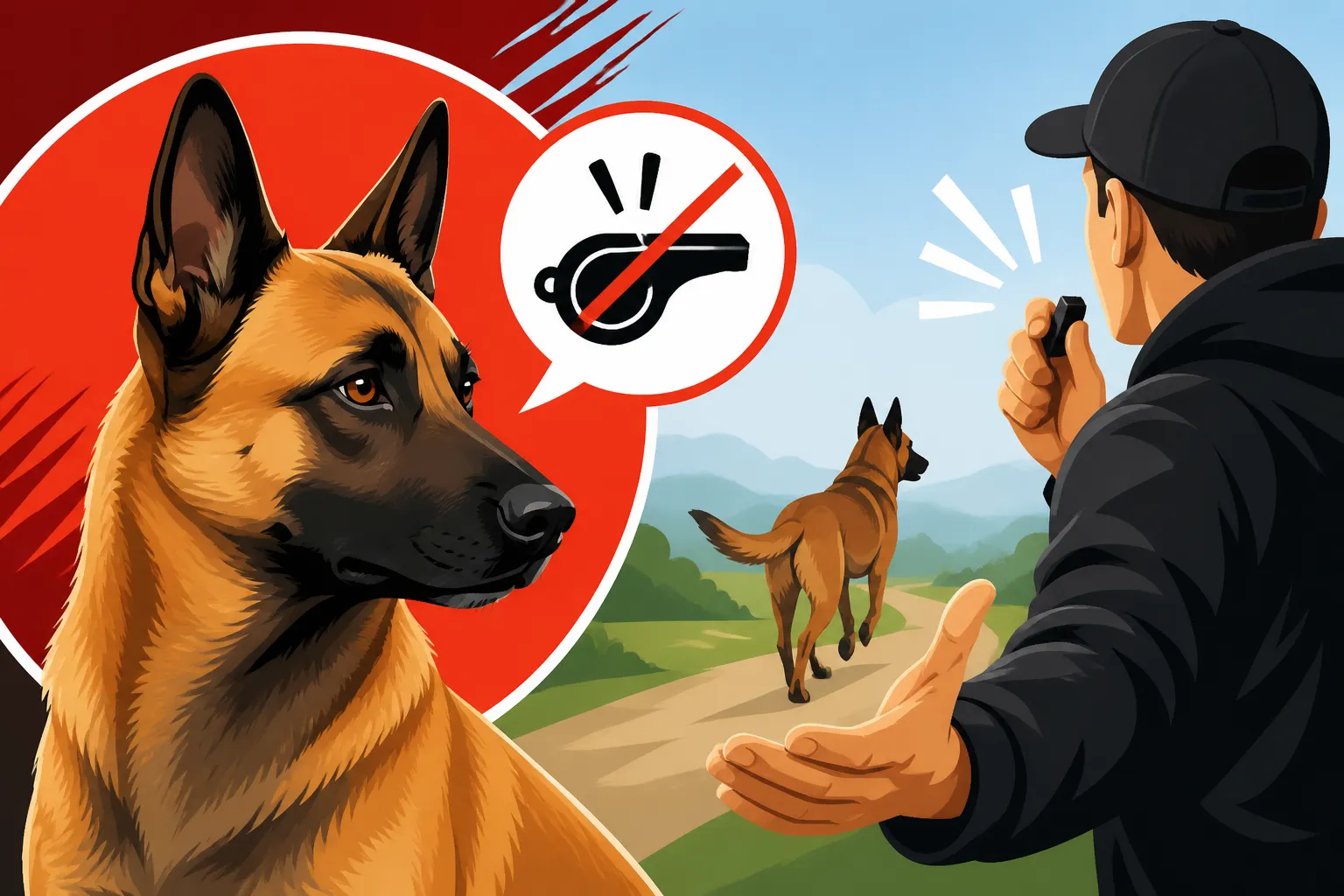
It’s incredibly frustrating when your Belgian Malinois, a dog typically known for its laser focus and lightning-fast responses, suddenly starts acting like they didn’t even hear you blow the whistle. You call, you whistle, you try every cue in the book, and you just get a blank stare or, worse, a continued obsession with whatever they’re currently investigating. This can be more than just annoying; it can be downright dangerous if you rely on that recall for their safety. This guide will help you unpack the many reasons why your Malinois might be tuning you out and how to address them, from health issues to training gaps.
Ruling Out Physical and Medical Causes
Before you start questioning your training methods or your dog’s loyalty, the very first place to look when your Belgian Malinois stops answering the whistle is their physical health. Dogs, just like us, can experience a myriad of health problems that manifest as a change in behavior. What looks like stubbornness might actually be a cry for help or a simple inability to perform.
Age-Related Hearing Loss and Sensory Decline
One of the most common, yet often overlooked, reasons a Malinois might stop responding to a whistle or verbal cues is a decline in their hearing. As dogs age, their senses can naturally dull. What started as subtle changes might progress to significant hearing loss, especially in older dogs. You might notice them not reacting to the doorbell, sleeping through louder noises, or simply seeming less alert to sounds they once responded to instantly. It’s easy to miss these subtle shifts because Malinois are so good at reading body language and contextual cues that they can often "fake" hearing for a while. They might still respond to a visual cue or the vibration of your footsteps, leading you to believe their hearing is fine. However, a whistle, being purely auditory, becomes an immediate challenge when hearing deteriorates. This is a natural part of The Age a Working Malinois Starts to Slow and can really impact their daily life.
Consider the environment: if you're in a busy park with lots of ambient noise, a dog with even mild hearing loss will struggle far more than one with perfect hearing. They simply can't filter out the distractions to pick up on your specific sound. You might try different whistles, like those that produce ultrasonic sounds, but if the issue is a broad decline in auditory processing, even that might not help. A simple test at home, like making a noise when they aren't looking and observing their reaction, can give you a preliminary indication, but a vet visit is crucial for a proper diagnosis.
Pain, Discomfort, and Underlying Illnesses
Imagine having a toothache or a sore back and someone demanding you jump up and perform complex tasks. You’d probably be less than enthusiastic, right? The same goes for your Malinois. Pain or discomfort from an injury, arthritis, or an underlying illness can significantly reduce their willingness or ability to respond to commands, especially those that require movement or quick action. For a breed known for its intense drive and athleticism, things like Arthritis in a Belgian Malinois at Nine can start to really affect their day-to-day. They might not show overt signs of limping or whining, especially Malinois, who are notorious for masking pain. Instead, they might exhibit a general reluctance, slower responses, or a decreased interest in activities they once loved.
Conditions such as hip or elbow dysplasia, spinal issues, or even an upset stomach can cause enough discomfort to make them ignore cues. Systemic illnesses, like thyroid problems or early-stage organ disease, can also lead to lethargy, decreased energy, and a general lack of enthusiasm. If your Malinois is also showing other Signs a Belgian Malinois Is Slowing Down, such as changes in appetite, increased sleeping, or an altered gait, it's definitely time for a vet check-up. A full physical examination, possibly including bloodwork and imaging, can help uncover these hidden issues. Insurance providers like Healthy Paws can be a real lifesaver when these unexpected health issues pop up, helping manage the costs of diagnostics and treatment.
Cognitive Dysfunction in Older Malinois
Just as humans can experience cognitive decline with age, so too can our canine companions. Canine Cognitive Dysfunction (CCD), sometimes referred to as "doggy dementia," can manifest in various ways, including disorientation, changes in sleep-wake cycles, house-soiling, and, yes, a decrease in responsiveness to known commands. Your Malinois might genuinely forget what the whistle means or struggle to process the command, even if they hear it. This isn't stubbornness; it's a neurological issue. If you’ve noticed your older Malinois engaging in behaviors like An Old Malinois That Paces the House at Night or getting stuck in corners, CCD might be a factor.
The Malinois brain, while incredibly sharp for many years, is not immune to the effects of aging. You might find them staring blankly, seemingly confused, or taking much longer to process information. This can be incredibly heartbreaking to witness in a dog that was once so sharp. It's not just about forgetting commands; it's about a broader decline in their ability to learn, remember, and adapt. While there’s no cure for CCD, early diagnosis can lead to treatments and management strategies, including specialized diets, supplements, and medications, that can slow its progression and improve their quality of life. Keeping an Old Belgian Malinois Mentally Busy is still vital, even if the exercises need to be adapted to their changing abilities.
Examining Training and Behavioral Factors
Once you’ve had a clean bill of health from the vet, it’s time to turn the magnifying glass onto the training and behavioral aspects. Even with the best intentions, subtle shifts in training, environmental changes, or even your dog’s natural developmental stages can lead to a decline in their responsiveness.
Lack of Motivation or Engagement
A Belgian Malinois is a dog that thrives on engagement and a clear purpose. If your whistle cue used to mean "exciting play" or "high-value reward" but now it means "come back to leash for boring walk" or "session over," their motivation to respond will naturally plummet. Dogs, particularly intelligent working breeds, are always weighing the cost-benefit analysis of their actions. If the reward for coming when called isn't as appealing as the reward for ignoring you (like sniffing that interesting scent or chasing that squirrel), they'll choose the latter. This isn't malice; it's basic behavioral economics. If you find yourself needing to keep Building Engagement With a Belgian Malinois, it might be time to re-evaluate your reward system.
Perhaps you've become predictable. If the whistle always means the same, less-than-thrilling outcome, your Malinois will learn that too. Varying your rewards, using higher-value treats (think cooked chicken or cheese, not just kibble), or incorporating exciting play with a favorite tug toy can re-ignite that spark. For a Malinois, the act of engaging with you is often a huge reward in itself, so make coming back a party. Don’t just reward; celebrate! This also ties into their innate drive. If that drive isn’t being properly channeled or fulfilled, they might seek satisfaction elsewhere, making your whistle irrelevant in comparison.
Environmental Distractions and Overstimulation
Let’s be honest: the world is a fascinating, distracting place for a dog with a keen nose and high prey drive. A busy park, a field full of wildlife, or even a novel smell on the breeze can be incredibly powerful motivators that easily overshadow a practiced whistle cue. A Malinois is particularly susceptible to these external stimuli. Their intense focus can be a double-edged sword; when they focus on you, it’s amazing, but when they focus on anything else, it’s like you cease to exist. This isn't necessarily a training failure, but rather a failure to properly proof the behavior in increasingly distracting environments. It's a common issue when trying to achieve Recalling a Belgian Malinois Off a Moving Target.
Overstimulation can also play a huge role. If your Malinois is constantly bombarded with new sights, sounds, and smells without adequate decompression time, they might become overwhelmed, leading to a decreased ability to process commands effectively. They might be in a state of hyper-arousal, where their brain is simply too busy filtering sensory input to properly register your whistle. This is especially true for younger Malinois still navigating adolescence, or those who haven't had consistent, structured exposure to different environments. Sometimes, the solution isn't more training, but rather a quieter environment and more opportunities for mental and physical rest.
Handler-Related Issues and Inconsistent Training
It’s tough to admit, but sometimes, the problem isn’t the dog; it’s us. Inconsistent training is a huge culprit in weakening any command, and especially recall. If you only use the whistle when you really need them, and sometimes you let them ignore it without consequence, your Malinois quickly learns that the whistle isn't always mandatory. They'll start to gamble: "Will handler actually enforce it this time? Maybe I'll just keep doing what I'm doing." This breeds a lack of respect for the cue itself. Every single time you give a command, you must be prepared to follow through, even if it means walking out to them and physically bringing them back.
Furthermore, how you use the whistle matters. Is your tone consistent? Are you blowing it too many times, making it background noise? Are you associating the whistle with negative outcomes, like always ending a fun session or going to the vet? Dogs are brilliant at pattern recognition. If the whistle consistently precedes something undesirable, they'll learn to avoid it. Your overall relationship and bond with your Malinois also play a critical role. If they don't see you as a source of all good things, a reliable leader, and the most fun thing in the park, your voice (or whistle) will carry less weight than a novel scent or another dog. This is why The Structure a Belgian Malinois Needs Every Day and consistent leadership are so vital.
Rebuilding Communication and Trust
Now that we’ve explored the potential reasons, let’s talk about how to mend that broken communication line. Rebuilding a reliable response to the whistle is a multi-faceted approach that requires patience, consistency, and a fresh perspective on your training dynamic.
Refreshing Foundation Training
Before anything else, you need to go back to basics. This means taking your Malinois into a low-distraction environment – your backyard, a quiet room, or even just inside the house – and starting from scratch with your whistle cue. Treat it as if you’re teaching a brand new puppy. Use your highest value rewards. Blow the whistle once, and immediately reward them the moment they turn their head or take a step towards you. Gradually increase the distance and introduce very minor, controlled distractions.
The key here is to build a rock-solid, 100% positive association with the whistle. Every single time they hear it, something amazing should happen. Don't use it in situations where you doubt they will respond. If they ignore it, you know the environment or distraction level is too high, and you need to scale back. This is about building a new history, one where the whistle is synonymous with joy and incredible payoffs. You are essentially creating a new mental picture for them: "Whistle = instant jackpot!" This careful re-training can help rebuild the foundation for other crucial behaviors as well.
Increasing Value and Reinforcement
As mentioned earlier, your Malinois's motivation is directly tied to the value of the reward. To make your whistle irresistible, you need to "super-size" the reinforcement. This means not just using high-value treats, but also delivering them in an exciting way. Think of it as a mini-celebration every time they return. Get excited, praise them lavishly, and then give them a handful of delicious treats or engage in a quick, intense game of tug. The goal is to make coming to you the most thrilling thing that could possibly happen at that moment.
Consider what truly motivates your individual Malinois. Is it a specific toy they go crazy for? A certain type of praise? While food is a universal motivator, tailoring the reward to their preferences will yield better results. Don't just hand them a treat; toss it, make them work for it a tiny bit, or offer a variety. Also, don't make the whistle always mean the end of fun. Sometimes, call them, reward them, and then release them back to continue playing or exploring. This teaches them that coming to you doesn't necessarily mean the party's over, reinforcing the positive association. For some dogs, the interactive play itself is the highest value reward.
Managing the Training Environment
You can’t expect your Malinois to respond flawlessly to a whistle in a high-distraction environment if they haven’t been systematically trained for it. This is where environmental management becomes crucial. Start your whistle training in quiet, familiar places, then slowly and incrementally introduce distractions. Don't jump from your backyard to a dog park with a hundred new smells and dogs. Instead, progress like this:
- Quiet Home: Inside your house, no distractions.
- Quiet Backyard: Familiar outdoor space, minimal distractions.
- Leashed Walks, Quiet Street: Introducing mild outdoor sounds.
- Long Line, Quiet Park: Controlled freedom with more open space and slightly more distractions.
- Gradual Increase: Slowly move to busier parks, trails with other people or dogs at a distance, always ensuring you can succeed.
Each step should only be taken when your Malinois is responding consistently and joyfully at the current level. If they fail, it means you moved too fast, and you need to regress to a simpler environment. Using a long line (20-30 feet) in these intermediate stages is invaluable. It gives them the illusion of freedom while giving you the ability to gently guide them back if they choose to ignore the whistle, preventing them from self-rewarding for disobedience. Remember, every successful response strengthens the behavior, and every ignored command weakens it.
When to Seek Professional Help
Sometimes, even after your best efforts, the problem persists. This is not a sign of failure but an indication that it’s time to bring in the cavalry. Seeking professional guidance from a veterinarian or a certified dog trainer can provide insights and strategies you might have overlooked.
Consulting Your Veterinarian for Diagnostics
If you haven't already, a comprehensive veterinary check-up is paramount. Even if you initially ruled out obvious physical issues, a persistent lack of response to the whistle warrants a deeper dive. Ask your vet specifically about potential neurological conditions, hidden pain, or early-stage sensory decline. They might recommend specific tests like advanced blood panels to check for Hypothyroidism and a Malinois That Loses Drive, x-rays, or even specialized hearing tests (BAER testing) to accurately assess auditory function.
Discuss any subtle changes you've observed, even if they seem unrelated. Things like changes in thirst, appetite, sleep patterns, or subtle lameness can all be pieces of a larger puzzle. Your vet can provide a professional diagnosis and recommend appropriate medical interventions or management strategies. For instance, if arthritis is present, medication, supplements, or physical therapy could dramatically improve your Malinois's comfort and willingness to move and engage. Services like Healthy Paws can often alleviate the financial burden associated with extensive diagnostics and long-term medical care, allowing you to prioritize your Malinois's health without added stress.
Working with a Certified Professional Dog Trainer or Behaviorist
For behavioral challenges, particularly those rooted in training gaps, distraction management, or lack of motivation, a certified professional dog trainer or behaviorist can be an invaluable resource. Look for someone experienced with working breeds like Belgian Malinois and who uses positive reinforcement or balanced training methods. They can objectively assess your training techniques, identify communication breakdowns, and help you tailor a specific plan to re-establish a reliable whistle recall.
A good trainer will observe your interactions, evaluate your Malinois's drives and motivations, and help you understand the nuances of canine learning. They can also guide you through the process of proofing your recall in various environments, ensuring that the behavior holds up under real-world distractions. If the issue is complex, perhaps involving fear or reactivity, a certified professional dog behaviorist, often with veterinary backing, might be necessary. They are equipped to handle more deeply ingrained behavioral issues that go beyond basic obedience training.
Potential Causes and Initial Actions for a Malinois Ignoring the Whistle
| Potential Cause | Initial Action | Further Steps |
|---|---|---|
| Age-Related Hearing Loss | Observe for other signs of hearing decline (e.g., sleeping through noises). | Vet check-up for a hearing assessment; use visual cues; try hand signals. |
| Pain or Discomfort | Check for limping, reluctance to move, changes in posture, or decreased enthusiasm for activities. | Comprehensive vet examination, including bloodwork and imaging (X-rays); discuss pain management options. |
| Underlying Illness | Monitor for changes in appetite, thirst, energy levels, weight, or other general health indicators. | Vet work-up for What Actually Ends a Belgian Malinois's Life or specific conditions; follow treatment plan. |
| Cognitive Dysfunction (CCD) | Note signs like disorientation, pacing (An Old Malinois That Paces the House at Night), altered sleep. | Consult vet for CCD diagnosis and management strategies; adapt mental enrichment for older dogs. |
| Lack of Motivation/Engagement | Evaluate current rewards; are they high-value enough? Is training predictable or boring? | Use jackpot rewards; vary rewards; incorporate exciting play; make recall a "party." |
| Environmental Distractions | Identify specific triggers (e.g., squirrels, other dogs, new smells); assess training environment. | Return to lower-distraction environments; gradually introduce distractions on a long line; manage surroundings. |
| Inconsistent Training | Reflect on whether you always follow through; are you sometimes letting them ignore you? | Commit to 100% follow-through; re-teach in controlled settings; ensure whistle means only positive outcomes. |
| New Handler/Relationship Issues | Assess the bond and trust; does the Malinois see you as the most valuable resource? | Rebuild foundation and engagement; spend quality time together; Building Engagement With a Belgian Malinois. |
Disclaimer
The information provided in this article is for educational and informational purposes only, and does not constitute veterinary advice. Always consult with a qualified veterinarian or certified professional dog trainer for any health concerns or before making any decisions about your Belgian Malinois's care, training, or health. Individual results may vary.