The Years the Belgian Malinois Was Standardized
Have you ever looked at a magnificent Belgian Malinois and wondered about the journey it took to become the incredibly athletic, intelligent, and focused dog we know today? It wasn't always a distinct breed with a clear identity. The path to standardizing the Belgian Malinois was a fascinating and sometimes contentious one, marked by dedicated individuals striving to preserve and define these remarkable working dogs. This guide will delve into the critical years and efforts that shaped the Malinois breed standard, giving you a deeper appreciation for its rich history.
The Genesis of the Belgian Shepherd Dog Varieties
Before the Belgian Malinois was recognized as its own distinct breed, it was simply one of several types of hardworking shepherd dogs found across Belgium. These were utilitarian dogs, bred for their ability to herd sheep, guard livestock, and assist farmers with various tasks. Their appearance varied widely, with different coat lengths, textures, and colors, all dependent on the specific region and the individual farmer's preferences for practical working traits over aesthetic uniformity.
Early 19th Century Farm Dogs
In the rural landscapes of Belgium during the early to mid-19th century, dogs that would later contribute to the Belgian Malinois lineage were integral to daily life. They weren't considered "breeds" in the modern sense but rather landraces—populations of dogs adapted to their local environment and specific duties. Farmers primarily valued intelligence, work ethic, courage, and stamina. A dog that could effectively manage a flock, deter predators, and alert to strangers was a prized possession, regardless of its exact coat color or ear set. This focus on function meant there was significant genetic diversity, but also a lack of consistency in appearance, which would later become a point of discussion for breed enthusiasts.
The Need for Recognition and Preservation
As the 19th century drew to a close, a growing awareness emerged among canine enthusiasts and veterinarians in Belgium that these native shepherd dogs, while invaluable, were at risk of being diluted or lost entirely due to cross-breeding with foreign breeds. There was a strong desire to identify, categorize, and preserve these distinct types of Belgian shepherd dogs before they disappeared. This sentiment was a critical driving force behind the initial efforts to standardize what would eventually become the Belgian Malinois and its related varieties. The idea was to create order out of the diverse working dog population, setting the stage for formal breed development.
Organizing for a Breed Standard: The Late 1800s
The pivotal moment for the Belgian Malinois, and indeed all Belgian Shepherd varieties, came in the late 1800s. A group of passionate individuals, primarily led by Professor Adolphe Reul of the Cureghem Veterinary School, embarked on a mission to formally define and standardize Belgium's native shepherd dogs. This was not a simple task, as it involved bringing together diverse regional types under a unified set of criteria, and making decisions that would inevitably leave some beloved dogs outside the newly drawn lines. This period saw the foundational work that still influences the Malinois today.
The Club du Chien de Berger Belge and Professor Reul's Influence
In 1891, the Club du Chien de Berger Belge (Belgian Shepherd Dog Club) was founded. This organization became the primary vehicle for the standardization efforts. Professor Adolphe Reul, a keen observer and scholar of canine morphology and function, played an instrumental role. He traveled extensively across Belgium, examining hundreds of shepherd dogs, documenting their characteristics, and identifying common traits. His work was methodical and thorough, laying the groundwork for a scientific approach to breed classification. He was particularly interested in the working aptitude of these dogs, understanding that their utility was their most defining feature. It was his deep understanding of their history and purpose that shaped the initial standard. You can learn more about how these efforts came together in How Malinois Breeders Organized in the 1890s.
The First Official Gathering and Provisional Standard
On November 15, 1891, a momentous event took place at the Cureghem Veterinary School: the first official gathering of Belgian Shepherd Dogs. Around a hundred dogs were brought together and examined by Professor Reul and other experts. Based on these observations, a provisional breed standard was drafted. This initial standard outlined general characteristics, prioritizing temperament, working ability, and overall structure suitable for herding, rather than focusing solely on superficial appearance. The dogs were broadly classified based on coat type, leading to the identification of the four varieties we know today: the short-haired, long-haired, and rough-haired types. This was a monumental step, giving these dogs a formal identity for the first time. The man himself, The Professor Who Named the Malinois Type, had a profound impact on this process.
The Role of Coat Type in Early Distinctions
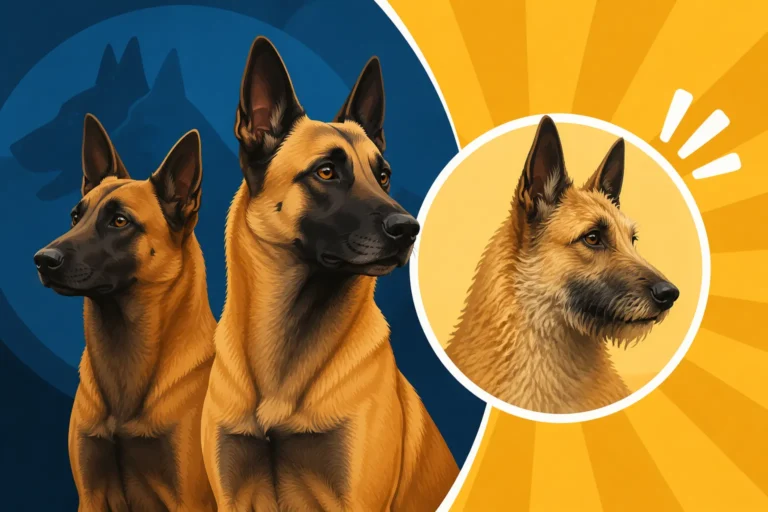
One of the most immediate and visible differentiators among the Belgian Shepherd Dogs was their coat. This became the primary basis for their initial separation into distinct varieties. The Malinois was designated as the short-haired variety. Other varieties included the Groenendael (long-haired black), the Tervuren (long-haired fawn/sable), and the Laekenois (rough-haired). While all shared a common heritage and working purpose, the coat type was an easily identifiable trait for classification. This decision to separate by coat was crucial and remains the defining characteristic for distinguishing these beautiful dogs. Why Belgium Sorted the Malinois Out by Coat explores this in more detail.
Defining the Malinois: Temperament, Type, and the Short Coat
Once the general framework for Belgian Shepherd Dogs was established, the specific characteristics of the Malinois began to crystallize. It wasn't just about having a short coat; it was about defining the ideal form, function, and personality of this particular variety. The process involved rigorous observation, selective breeding, and ongoing refinement of the standard to ensure consistency without sacrificing the essential working qualities.
The Malinois's Signature Short Coat
The short, fawn coat with black overlay and mask became the hallmark of the Malinois. This coat was deemed practical for working dogs, offering protection against the elements while being relatively low maintenance. It was a utilitarian choice, reflecting the breed's origins as a no-nonsense worker. While other coat colors and markings might have existed in the broader population, the standard honed in on the fawn to mahogany with a distinct black mask. This specific look, combined with its compact, muscular build, started to distinguish it visually from its long-haired cousins. Breeders began to focus on preserving and enhancing these visual traits, which were intrinsically linked to the geographical region of Malines (Mechelen).
Emphasizing Working Temperament and Drive
Even more important than appearance was the Malinois's inherent working temperament. From the outset, the breed standard emphasized qualities like intelligence, courage, alertness, and a strong drive. These were the traits that made them exceptional herding and guarding dogs. Breeders aimed to produce dogs that were fearless yet controllable, energetic yet trainable. The intensity, focus, and unwavering dedication seen in today's Malinois were deliberately selected for during these standardization years. They wanted a dog that could excel in any task asked of it, whether it was managing a flock or providing protection. This unwavering drive is a fundamental part of The Herding Job the Belgian Malinois Was Built For.
Formalizing the Malinois Name and Identity
The short-haired variety quickly became associated with the region of Malines (Mechelen), a city and district in the province of Antwerp. It was here that many of the most prominent short-haired shepherd dogs were found, and where breeders took a particular interest in their development. Thus, the name "Malinois" was adopted, formally linking the variety to its geographical origin. This naming convention helped to solidify its identity, distinguishing it from the other Belgian varieties. This early recognition of the Malinois as a distinct entity, even while being part of the broader Belgian Shepherd Dog family, was crucial for its independent development. If you're curious about the naming, check out The Belgian Town the Malinois Is Named After.
The Path to International Recognition and Separation
The initial standardization efforts were primarily national, focused on Belgium itself. However, as the breeds gained popularity, there was a push for international recognition, which brought its own set of challenges and decisions. The desire for a clear, unified standard across different kennel clubs worldwide led to further refinement and, eventually, a significant divergence in how the varieties were treated.
Early 20th Century: A Unified Belgian Shepherd Standard
For many years after their initial standardization, all four Belgian Shepherd varieties—the Malinois, Groenendael, Tervuren, and Laekenois—were considered a single breed with different coat types. They competed under a unified standard, and in some countries, it was even permissible to breed different varieties together under certain circumstances, particularly if a specific coat type was desired in the progeny. This reflected their shared genetic heritage and common working abilities. Kennel clubs like the AKC initially grouped them together, which sometimes caused confusion for the public and judges alike. Whether the Malinois Shares a Standard With the Others delves into this period.
The 1959 Split: Malinois Becomes Its Own Breed (Internationally)
A monumental shift occurred in 1959, particularly within the American Kennel Club (AKC). The AKC officially recognized the Belgian Malinois as a distinct breed, separate from the other Belgian Shepherd Dogs. This decision was largely driven by the practicalities of showing and breeding, as maintaining a single standard for four visually distinct varieties proved cumbersome. The Malinois's growing popularity as a working dog in its own right, especially in police and military roles, also contributed to its formal separation. This separation meant that Malinois could no longer be bred to, say, Groenendaels, and offspring would be registered as Malinois only if both parents were Malinois. This decisive move had a profound impact on the breed's trajectory, allowing it to carve out its own niche. You can read more about this significant event in The 1959 Split That Made the Malinois Its Own Breed. Other national kennel clubs followed similar paths, solidifying the Malinois's independent status.
The Parent Club's Enduring Influence
Throughout these years of standardization and separation, the various parent clubs for the Belgian Malinois played a vital role. These clubs, both in Belgium and internationally, were responsible for upholding the breed standard, promoting responsible breeding practices, and organizing events that showcased the Malinois's working abilities. They provided a crucial forum for breeders and enthusiasts to discuss issues, share knowledge, and collectively guide the breed's development. For example, clubs ensured that dogs shown and bred met the physical and temperamental requirements outlined in the standard, preserving the breed's integrity. Such resources could often be found through pet supply retailers like Chewy, where educational materials, books, and other resources supported responsible ownership and breeding practices. The dedication of these clubs is why we have such a well-defined and consistent breed today. Understanding The Parent Club Behind the Belgian Malinois is essential for any enthusiast.
Modern Influences: Maintaining the Standard in the Working Dog World
Even after formal standardization, the evolution of the Belgian Malinois hasn't entirely ceased. The breed standard, while relatively stable, is subject to interpretation and adaptation, especially in response to the demands of modern working roles and contemporary breeding philosophies. The constant challenge is to maintain the core characteristics that define the Malinois while ensuring its continued health, versatility, and working prowess.
The Balance Between Type and Temperament
Today, breeders and judges strive to maintain a delicate balance between physical "type" (conformation) and essential "temperament" (working ability). A Malinois must not only look the part but also possess the intense drive, intelligence, and courage that are its hallmarks. The standardization process focused heavily on selecting for these traits, and they remain paramount. Dogs with excellent conformation but lacking the quintessential Malinois temperament are generally not considered ideal. Conversely, a dog with incredible drive but poor structure might struggle with the physical demands of intensive work. The ongoing goal is to produce dogs that embody both the physical and mental attributes prescribed by the standard, capable of excelling in various fields from protection sports to detection work.
The Global Impact of Working Lines
The Belgian Malinois's rise to prominence in police, military, and protection sports worldwide has significantly influenced its modern development. Working lines, often bred for extreme drive and resilience, have become highly sought after. This focus on performance means that while adherence to the breed standard in terms of physical characteristics is important, the dog's functional capability often takes precedence. Breeders of working lines meticulously select for traits like nerve stability, bite intensity, and trainability, which are vital for dogs engaged in high-stakes operations. These global demands reinforce the breed's reputation as the ultimate working dog, ensuring that its powerful drives remain intact.
Standard Review and Interpretation
While the core of the Malinois standard is well-established, kennel clubs and parent organizations periodically review and clarify aspects to ensure its relevance and prevent misinterpretations. These aren't usually radical changes but rather refinements in wording or emphasis. For instance, discussions might arise regarding precise definitions of coat color, height, or bite structure to ensure consistency across different judges and countries. These ongoing efforts are critical for maintaining the breed's integrity and ensuring that all Malinois, regardless of where they are bred, conform to a unified ideal. Even small details, like The Black Overlay on a Belgian Malinois Coat, are carefully considered.
Key Standardization Milestones for the Belgian Malinois
To put the journey into perspective, here's a timeline of key standardization efforts and defining characteristics:
| Year | Event/Development | Significance |
|---|---|---|
| 1891 | Founding of Club du Chien de Berger Belge | Formal organization to preserve native Belgian Shepherd Dogs. |
| November 1891 | First gathering and provisional standard drafted | Initial classification based on coat type, emphasizing working ability. |
| 1892 | First detailed Belgian Shepherd Dog standard published | Formalized the four varieties: Groenendael, Malinois, Tervuren, Laekenois. |
| Early 1900s | Malinois gains regional recognition in Malines | Short-haired variety strongly associated with its geographical origin. |
| Mid-1900s | Increasing international presence | Exposure to other countries, leading to growing interest and breeding. |
| 1959 | AKC recognizes Belgian Malinois as a distinct breed | Separated Malinois from other Belgian Shepherd varieties in North America. |
| Present Day | Ongoing standard interpretation and working dog focus | Emphasis on balancing conformation with high-level working drive and temperament. |
This table illustrates the long-term commitment to defining and preserving the Belgian Malinois as a distinct and highly capable working breed. Its characteristics are not accidental but the result of decades of careful selection and passionate dedication. For specific details on physical traits, such as The Height Limits a Belgian Malinois Is Judged Against, referring to the standard is always key.
Caring for a Standardized Malinois
Understanding the standardization years of the Belgian Malinois isn't just a historical exercise; it directly impacts how we care for them today. These dogs were standardized for a reason: to be high-drive, intelligent, and robust working animals. Their needs reflect this intense history. If you're a Malinois owner, or considering becoming one, recognizing the purpose behind their standardized traits will help you provide the best possible environment and care for your canine partner.
Meeting the Demands of a Highly Standardized Breed
A standardized Malinois is a testament to purposeful breeding, and that purpose was always work. This means they require significant physical and mental stimulation. Simply letting them run in a yard, while better than nothing, often doesn't cut it. Their intelligence and drive, meticulously selected for during the standardization process, demand a job. Whether that's advanced obedience, detection work, protection sports, or a combination, their lineage dictates a need for structured activity. Ignoring this fundamental aspect of their standardized temperament can lead to frustration for both dog and owner. When looking for appropriate tools and toys to fulfill these needs, resources like Chewy can be invaluable, offering a wide range of enrichment activities.
Health and Longevity Considerations from Standardization
Part of standardization also involves safeguarding the health of the breed. While the Malinois is generally a robust dog, conscientious breeders focused on the standard also prioritize health testing. During the standardization years, early pioneers recognized the importance of strong, sound bodies for working dogs. Today, this translates to screening for conditions like hip and elbow dysplasia, eye diseases, and certain genetic conditions. A well-bred Malinois from reputable lines, adhering to the health aspects of the standard, is more likely to lead a long and active life. Understanding potential health issues and how to mitigate them is a key responsibility for any Malinois owner. You might want to look at The Hip and Elbow Numbers Behind a Malinois Clearance to understand some of these considerations.
Training and Socialization Rooted in Breed History
The standardization efforts created a dog with intense guarding and herding instincts, coupled with high intelligence and sensitivity. This means their training and socialization require a thoughtful, consistent approach. Early and proper socialization is paramount to channel their protective instincts appropriately. Their intelligence means they learn quickly, but their drive can also make them challenging for inexperienced handlers. The standards also emphasized a confident, stable temperament, which means they thrive on clear communication and fair, consistent leadership. Understanding the breed's origins helps owners approach training with the right mindset, focusing on positive reinforcement and clear boundaries to shape their inherent traits into desirable behaviors. For more on this, consider The Handler Experience a Belgian Malinois Needs.
Disclaimer
This article is for general informational purposes only and does not constitute professional advice. Laws, prices and regulations vary by location and change over time. Consult a qualified professional for guidance on your specific situation.