A Belgian Malinois That Will Not Release the Sleeve
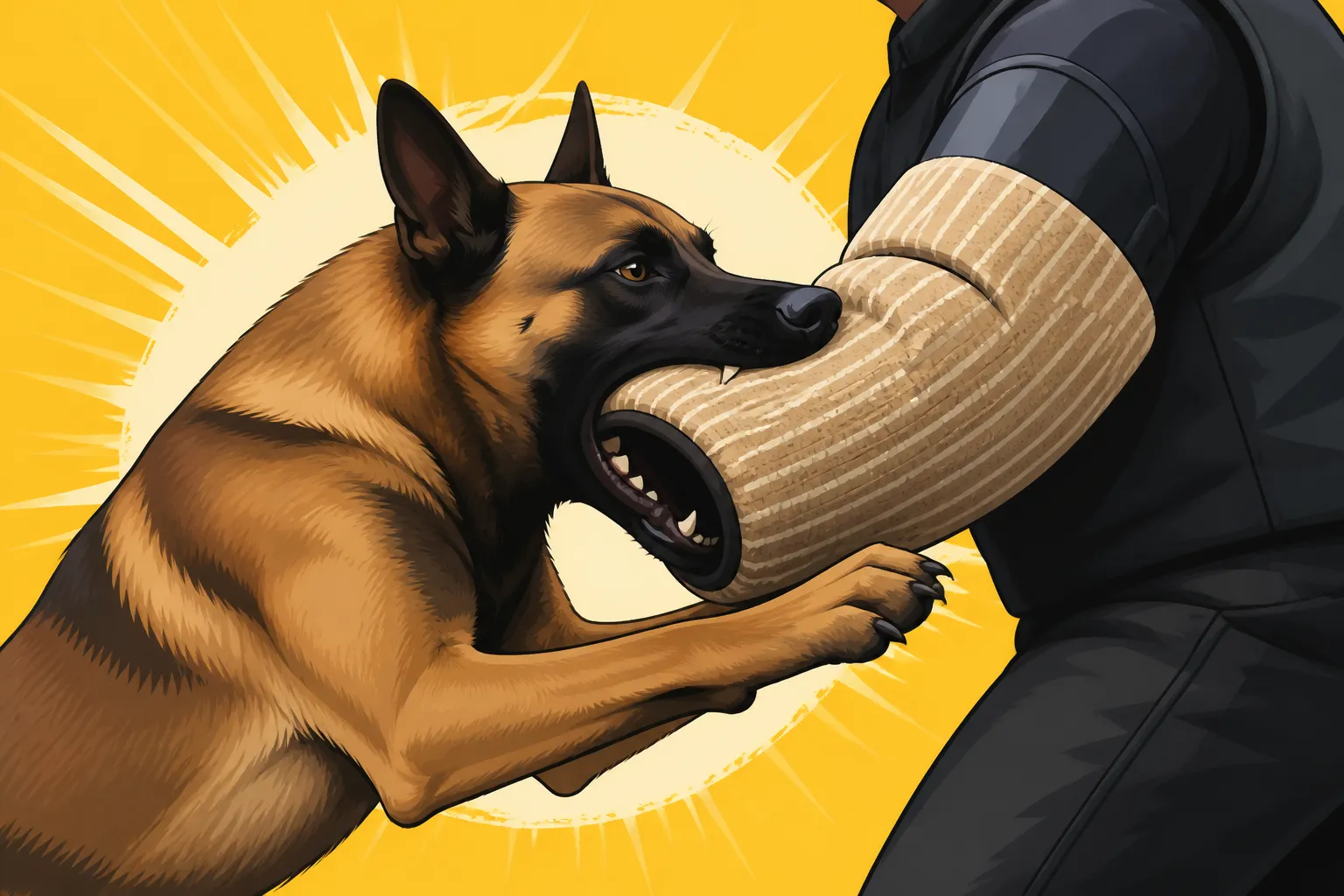
There are few things more frustrating and, frankly, a little intimidating than a Belgian Malinois in full drive, latched onto a bite sleeve or tug, refusing to let go. You’re asking for the "out," you’re offering trades, you’re trying everything you know, but your powerful Malinois just stares back with those intense eyes, muscles coiled, holding tight. This guide is here to walk you through why this happens and, more importantly, how to systematically build a rock-solid release command that keeps you in control and your training progressing safely.
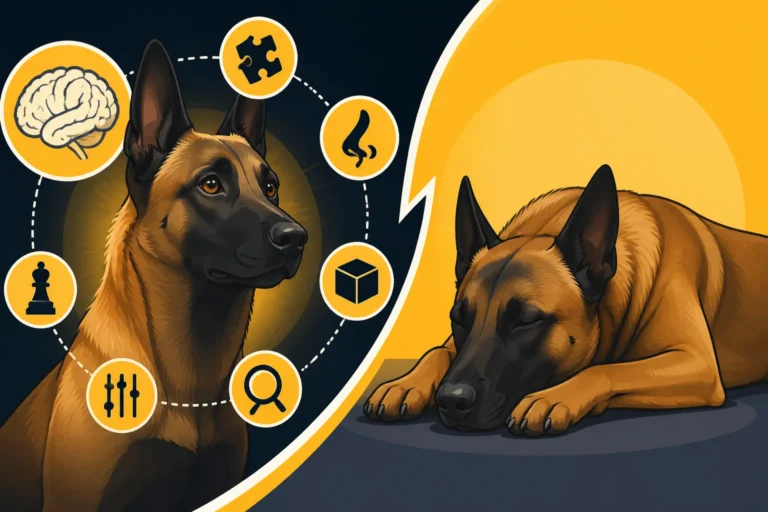
Understanding the "Hold" Instinct in Your Malinois
It's easy to feel like your Malinois is being stubborn or defiant when they refuse to release. But for these high-drive dogs, holding onto a toy or a sleeve isn't an act of disrespect; it's often a deeply ingrained instinct, combined with a lack of clear understanding or insufficient motivation to do otherwise. You're dealing with generations of selective breeding for tenacity and grip.
The Power of Prey Drive: It's Not Just Stubbornness
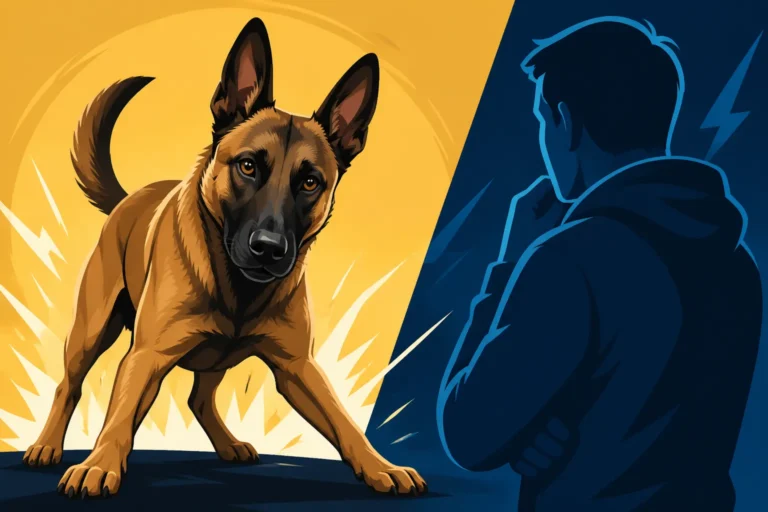
Belgian Malinois are absolutely dripping with prey drive, and that's exactly what makes them so phenomenal in sport and working roles. When they lock onto a tug or a sleeve, they're not just playing; they're fulfilling a primal urge to "kill" their prey. That sleeve, in their mind, is a living, struggling entity that they must incapacitate and possess. To them, letting go willingly feels counter-intuitive, like giving up their hard-won meal. This isn't a cognitive choice to disobey; it's a powerful, almost reflexive response to a strong drive state.
Imagine being in the middle of your favorite intense activity, whether it's solving a complex puzzle, being deeply engrossed in a thrilling book, or pushing through the last mile of a marathon. Then, someone abruptly tells you to stop and walk away without finishing. Your internal response might be similar to what your Malinois experiences: a strong reluctance, a feeling of incompleteness, and perhaps even frustration. For a Malinois, the "out" command asks them to interrupt the absolute peak of their drive cycle, to let go of the "prey" they've successfully "caught." This is why a simple "drop it" often falls on deaf ears. We need to respect that drive while channeling it into a controlled behavior. Channeling a Belgian Malinois's Prey Drive Into a Tug is an art, and the release is a critical part of that.
Confusion, Not Disobedience: What They Actually Understand
Sometimes, a lack of release isn't about drive at all, but simply a gap in their understanding. Have you truly taught the "out" command in a way that makes it intrinsically rewarding and crystal clear? Or have you just been trying to pry things from their mouth? Many owners, myself included, start by wrestling the toy away, which actually teaches the dog to hold tighter. If the dog only ever lets go when physical force is applied, or when the object is suddenly taken away, they haven't learned an active "out" command; they've learned to tolerate handler intervention.
Furthermore, the timing of your cues and rewards is everything. If you're inconsistent, or if you're not making the release immediately more rewarding than the hold, your Malinois will naturally default to the behavior that offers the most internal satisfaction – holding onto their "prize." They might also be confused if the word "out" is used for other things, or if the consequences for not releasing aren't clear and fair. For dogs like Malinois, ambiguity is often interpreted as an invitation to continue doing what feels good. It's not malicious; it's logical within their world.
Building the Foundation: The "Out" Command
The "out" command is not just about letting go of a toy; it's a foundational piece of impulse control and handler respect, especially vital for a Belgian Malinois. Without a reliable "out," you risk not only frustration in training but also potential safety issues if your dog won't release an inappropriate or dangerous item.
Starting Small: From Tug to Toy
You don't teach a dog to release a high-value bite sleeve when they're already over-threshold. You start with lower-value items, in calm environments, and build up.
- Choose the Right Toy: Begin with a tug toy that isn't their absolute favorite, or even a soft rubber toy they enjoy but aren't obsessive about. Avoid anything too stimulating initially. You can find a good variety of starter tugs on Amazon that aren't quite the same as their sport equipment.
- Calm Environment: Work in a quiet room with minimal distractions. Your focus is 100% on the dog and the task at hand.
- The Play and Prompt: Engage your Malinois in a short game of tug. Let them win sometimes, let them grip hard. While they are holding, but before their drive goes through the roof, stop the movement of the tug. Hold it still.
- The "Out" Command: Firmly, but calmly, say "Out."
- The Trade: Immediately, present a higher-value food treat to their nose. The moment they open their mouth to sniff or take the treat, release the tug from your hand (or let it go if you're holding it loosely enough). Praise them enthusiastically.
- Repeat and Increase Value: Repeat this many, many times. Gradually, you can introduce slightly higher-value tugs. The key is to make the act of releasing for a treat a positive experience. You are teaching them that letting go voluntarily brings an even better reward. This is a crucial step in Teaching a Belgian Malinois to Out.
The Art of the Trade: Making Release Rewarding
Trading is the backbone of a successful "out" command. Your Malinois needs to understand that releasing one item immediately leads to something even better, or at least equally desirable. This strategy leverages their natural desire for reward rather than trying to overpower their drive.
Think of it as a transaction. They have something good (the tug), and you are offering something better (a high-value treat, or even permission to chase another toy). The speed of the trade is critical. The instant they release, the reward must appear. No hesitation. If you delay, they won't connect their action (releasing) with your reward.
Sometimes, the trade isn't just a treat. For a Malinois, the opportunity to re-engage with the tug, or to chase a ball, can be a powerful reward in itself. After they release the tug for a treat, immediately pick up the tug and offer to play again, or throw a ball. This teaches them that "out" doesn't mean the end of fun, but rather a temporary pause before more exciting things happen. This makes the release a part of the game, rather than ending it. Establishing clear Tug Rules for a Belgian Malinois from puppyhood makes this much easier down the line.
Introducing Pressure and Consequences (Carefully!)
While positive reinforcement and trading are paramount, for a high-drive Malinois, there might come a point where a simple trade isn't enough, especially as they get more confident and closer to real bite work. This is where measured pressure and consequences come into play, but they must be applied with extreme care, precision, and understanding of your dog's temperament. This isn't about punishment; it's about clear communication.
- No Reward for Not Releasing: If you offer a trade and your Malinois stares at the treat but doesn't open their mouth, the treat disappears. The game of tug also stops. The toy goes lifeless. There is no more fun to be had while they are holding. This isn't harsh; it's simply a lack of reward for the undesired behavior. The instant they do release, even if it's because they got bored or confused, you immediately mark it and reward.
- Verbal Correction and Re-direction: For some Malinois, a sharp, firm "No!" or "Wrong!" followed by the cessation of the game can be a clear signal. This needs to be paired with immediate re-engagement when they do release correctly. The goal is to interrupt the undesirable behavior, not to punish the dog's drive.
- Leash Pressure (Advanced and Cautious): In more advanced stages, especially with a dog that truly understands "out" but chooses to ignore it in high drive, a slip lead or prong collar (used by experienced handlers only) can be used to apply a quick, firm correction simultaneously with the "out" command. The pressure is immediately released the instant the dog lets go. This is a very sensitive technique and should only be employed under the guidance of a qualified professional, as improper use can damage a dog's confidence or create negative associations. You need to understand Whether Corrections Work on a High Drive Malinois and how your specific dog responds.
It's critical to remember that harsh or poorly timed corrections can cause a Malinois to shut down or become defensive. The goal is always to teach, not to instill fear. If you find your Malinois reacting negatively, you've gone too far or too fast, and need to re-evaluate your approach. Resources like BAXTER & Bella offer online training programs that can guide you through foundational obedience and impulse control, which is incredibly helpful even if you're working on advanced concepts.
Advanced Strategies for the Stubborn Holder
Once your Malinois has a solid foundation for "out" in low-distraction environments with low-value toys, you can start building consistency and proofing the command under more challenging conditions. This is where the real work of a sport Malinois handler begins.
The Role of the Decoy/Helper: Consistent Communication
In bite sports, the decoy (or helper) plays an absolutely crucial role in teaching the "out." They are not just there to take bites; they are integral to the dog's learning process, especially regarding the release.
- Decoy's Awareness: A good decoy understands that they are training the dog, not just being a rag doll. They know when to stop moving the sleeve, when to make it "die," and when to offer passive resistance versus active struggle. When the "out" command is given by the handler, the decoy must immediately stop all movement and become completely still. Any movement from the decoy will reinforce the dog's grip and make releasing much harder. What a Decoy Does With a Young Malinois is about shaping behavior, not just taking a hit.
- Strategic Reward Placement: After a successful "out," the decoy or handler might present a reward, whether it's a food treat or the chance to re-engage with a different toy. This reinforces the idea that releasing the sleeve leads to another positive outcome.
- Building Drive, Then Asking for Out: The decoy helps build the dog's drive on the sleeve, allowing for strong, full grips. However, they also know when to create a moment of stillness or slight discomfort that makes the "out" command easier to execute. This might involve a slight upward or downward pressure that encourages the dog to adjust its bite, making it momentarily less satisfying to hold.
The communication between handler and decoy is paramount. Before a session, they should discuss the exact protocol for the "out" command, including timing, rewards, and any potential consequences for non-compliance. This ensures the dog receives a clear, unified message.
Managing Drive and Frustration: Finding the Balance
A Malinois's drive is a double-edged sword. It's what makes them incredible, but it can also make them intensely frustrated or overstimulated, leading to non-compliance on commands like "out." Learning to read your dog's arousal levels is vital.
- Short Sessions: Don't push your Malinois past their mental breaking point. Short, successful sessions are far more effective than long, frustrating ones. End on a high note, even if it's just one perfect "out."
- Varying Intensity: Not every session needs to be 110% intensity. Some days, focus on calmer, more controlled tug games where the "out" is practiced frequently. Other days, you can push the drive higher, but always with the knowledge that you have a plan for the release.
- Cool-Down Protocols: After an intense session, have a ritual to help your Malinois decompress. This might be a quiet walk, some calm petting, or a chew toy. This prevents them from staying in a hyper-aroused state, which can make them harder to manage later.
- "Place" and "Down" Commands: A strong "place" command or a rock-solid "down-stay" can be invaluable for teaching your Malinois to settle and manage their arousal. If they can't calm down on command, they'll struggle even more to release an exciting toy. Building a Malinois's Place Command is a critical skill for any high-drive dog. Similarly, if your Malinois is prone to shutting down under too much pressure, you'll need to adjust your approach carefully, as discussed in A Belgian Malinois That Shuts Down Under Correction.
Equipment Considerations: What Helps, What Hinders
The equipment you use can significantly impact your Malinois's grip and willingness to release.
- Tug Materials: Different materials feel different in the mouth. A soft fleece tug might be easier to release than a hard, dense jute or leather bite sleeve. Varying your tugs can help introduce the "out" command with less resistance. You can find a range of training tugs and bite pillows on Amazon.
- Sleeve Design: In protection work, the design of the sleeve matters. Some sleeves offer a very full, satisfying bite that encourages a deep, tenacious grip. Others might be designed to be less engaging initially, or have areas that make releasing easier. For serious sport work, consider What a Hidden Sleeve Costs for Malinois Training and how different sleeves impact grip.
- Leashes and Collars: A sturdy training collar (like a properly fitted prong or slip collar) with a strong leash provides necessary control for executing corrections if needed, or simply for managing your dog's body while you work on the "out." An e-collar, when used correctly and with precise timing, can also be a valuable tool for communicating the "out" command at a distance, especially for dogs who ignore verbal cues in high drive. However, E-Collar Timing on a Belgian Malinois is an advanced skill that should be learned from an experienced professional to avoid creating negative associations or making your dog shut down.
- Muzzles: For safety during the early stages of training a very problematic dog, or if you're working with an unknown temperament, a properly fitted muzzle (like a basket muzzle) can allow you to work on the "out" command without fear of accidental bites. This is particularly important if you are trying to retrieve an object your Malinois won't drop, and you need to handle their mouth. Muzzle Conditioning Before a Malinois Ever Needs One is a responsible step for any Malinois owner, regardless of training level.
| Training Phase | Recommended Approach | Equipment to Consider | Key Focus |
|---|---|---|---|
| Foundation | Calm environment, low-value toys, consistent trading. | Soft tugs (fleece, rubber), high-value food treats. | Clear communication, positive association with "out". |
| Intermediate | Varying tugs, short bursts of higher drive, decoy work. | Jute tugs, bite pillows, slip lead, varied treats. | Proofing "out" under mild distraction/drive. |
| Advanced/Problem | Strategic use of pressure, e-collar (pro guidance), decoy consistency, drive management. | Sleeves, e-collar, prong collar, muzzle (safety). | Reliability in high-drive, complex scenarios. |
Remember, the goal is not to eliminate your Malinois's drive, but to teach them to channel it and to turn it on and off on command. This is what separates a chaotic dog from a highly skilled working partner. It also helps to ensure your Malinois learns to distinguish between appropriate bite targets and your arm, an important consideration for Whether a Malinois Distinguishes Sleeve From Arm.
When to Call in the Professionals
It's okay to admit when you need help. Belgian Malinois are complex, powerful dogs, and some training issues, especially those rooted in high drive, can be incredibly challenging to tackle alone. There's no shame in seeking expert guidance.
Identifying Red Flags: When the Problem Is Beyond DIY
How do you know when it's time to bring in a professional? Here are some clear indicators that you might be in over your head:
- Escalating Frustration: If you or your dog are consistently becoming frustrated during training sessions, it's a sign that your current methods aren't working, or are potentially damaging your relationship. Training should be challenging, but not a battle.
- Aggression or Resource Guarding: If your Malinois is showing any signs of growling, snapping, or physically defending the toy or sleeve when you try to get them to "out," this is a serious issue that requires immediate professional intervention. This isn't just a training problem; it's a behavioral one that needs careful management.
- Lack of Progress: Despite consistent effort, you're seeing no improvement, or the problem is actually getting worse. If your "out" is only reliable in certain contexts but falls apart in others (e.g., only with certain toys, or only when no one else is around), you need a fresh perspective.
- Safety Concerns: If you worry about getting bitten, or if your Malinois is accidentally grabbing skin instead of the sleeve, the situation is dangerous and you need professional help to ensure both your safety and your dog's.
- Loss of Engagement: If your Malinois starts to disengage from training or seems less enthusiastic about tug because the "out" has become a point of contention, you need to re-evaluate. You want to build engagement, not diminish it. Building Engagement With a Belgian Malinois is key to all successful training.
Finding the Right Coach: Experience with High-Drive Dogs
Not all dog trainers are equipped to handle the unique challenges of a Belgian Malinois, especially one with strong drives and a specific issue like a sticky "out."
- Seek Out Sport Trainers: Look for trainers who specialize in bite sports (IGP, Ring Sport, KNPV) or professional working dog training. These individuals have extensive experience with high-drive breeds and understand the nuances of prey drive, grip, and release mechanics. They often have access to experienced decoys, which is invaluable.
- Ask for Recommendations: Talk to other Malinois owners, especially those who compete in sports. They can often recommend reputable trainers or clubs in your area.
- Observe a Session: Before committing, ask if you can observe a training session with the trainer and other dogs. Watch how they interact with the dogs, how they address similar issues, and how their clients' dogs are performing. Pay attention to how they handle corrections and rewards. Does it align with your philosophy, and does it seem fair and effective?
- Inquire About Methods: Ask about their training philosophy and specific methods for teaching the "out" command. A good trainer will be able to explain their approach clearly and justify why they use certain tools or techniques for a Malinois. They should emphasize clear communication and consistency.
- Consider Online Resources (for foundational work): While hands-on coaching is usually best for complex issues like this, for foundational obedience and general handling, online platforms like BAXTER & Bella provide comprehensive puppy and dog training programs that can strengthen your overall handler skills. This can make you a more prepared and capable student for in-person sport training.
Ultimately, mastering the "out" command with a Belgian Malinois is a journey that requires patience, consistency, a deep understanding of canine drive, and sometimes, the wisdom of an experienced mentor. It's a testament to your commitment to your incredible dog, and a critical step in building a truly harmonious working relationship.
Disclaimer
This article is for general informational purposes only and does not constitute professional advice. Laws, prices and regulations vary by location and change over time. Consult a qualified professional for guidance on your specific situation.